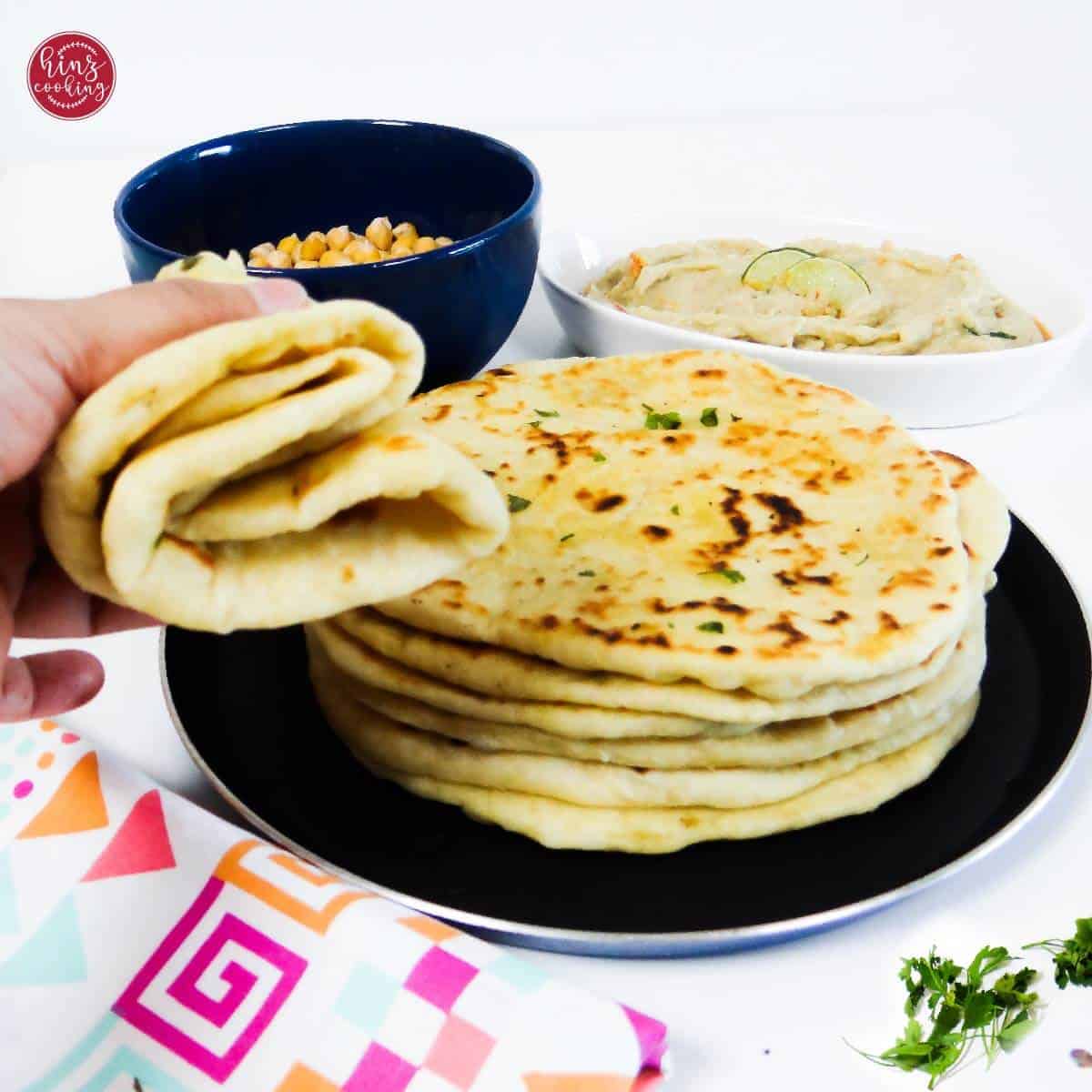
No-Knead Bazlama ― Soft Turkish Yogurt Flatbread
A soft, pillowy Turkish yogurt flatbread that needs no kneading — just crumble the dough together, let it rise, roll, and cook on a hot skillet. Known as köy ekmeği (village bread) in rural Turkey, bazlama is enriched with Greek yogurt for a tender, slightly tangy texture that's softer than most flatbreads. Ready with minimal hands-on effort and perfect alongside dips, kebabs, or any rich curry.
Print
Pin
Servings: 5 Persons
Calories: 220kcal
Ingredients
- 11 g Instant yeast
- ½ cup Lukewarm Water for activating yeast
- 1 tablespoon Sugar
- 3 cups All purpose flour
- 1 teaspoon Salt
- ½ cup Greek yogurt full-fat
- 1 tablespoon Olive Oil extra virgin olive oil
- ⅓ cup Warm water [optional] added gradually while bringing dough together
- 2 tablespoon Butter (melted) for brushing
- 2 tablespoon Fresh Parsley finely chopped — for topping
Instructions
- Activate the yeast: In a deep bowl, combine 11 grams instant yeast, 1 tablespoons sugar, and 0.5 cups lukewarm water — for activating yeast. Mix well and cover. Rest for 5–10 minutes until the surface turns foamy and bubbly. If no foam forms, the yeast is inactive — discard and start again with fresh yeast before proceeding.
- Bring the dough together (no kneading): To the activated yeast, add 3 cups all-purpose flour, 1 teaspoons salt, 0.5 cups Greek yogurt, full-fat, and 1 tablespoons extra virgin olive oil. Use your hands to crumble and bring everything together — this is not kneading, just combining until a rough dough forms. Gradually add 0.3 cups warm water — added gradually while bringing dough together as needed until the dough is soft, holds together, and is no longer dry or crumbly.
- Rise for 2 hours: Cover the bowl tightly with a damp cloth or plastic wrap. Place in a warm, draft-free spot for 120 minutes (2 hours), until visibly puffed and risen. Do not disturb the dough during this time.
- Knead briefly and divide: Uncover the risen dough and briefly knead for 2–3 minutes just to bring it back together — oil your hands or dust lightly with flour if it feels sticky. Divide into 5 equal portions and roll each into a smooth ball.
- Shape each bread: Take one dough ball, flatten by hand, then use a rolling pin to shape into a circle — roll evenly and avoid going too thin, as the dough is elastic and can tear. Make it as thick or thin as you prefer, keeping in mind thicker rounds puff up more during cooking.
- Preheat skillet and cook first side: Preheat a heavy skillet or griddle over medium heat — a heavy pan gives even, consistent heat. Place the rolled bread on the dry, hot surface. Cook undisturbed until bubbles form across the top and the underside turns golden, about 2–3 minutes
- Flip and cook second side: Flip the bread with tongs and cook the second side the same way until golden with puffed bubbles, about 2–3 minutes more.
- Butter, garnish, and serve: While still hot, brush generously with 2 tablespoons butter, melted — for brushing and sprinkle with 2 tablespoons fresh parsley, finely chopped — for topping. Rest briefly on a paper towel to absorb excess steam, then serve immediately. Repeat cooking and buttering for the remaining dough portions.
Video
Notes
NO KNEADING REQUIRED — this is the defining feature of bazlama. The Greek yogurt's acidity gently tenderizes the gluten the way kneading normally would. Just crumble the ingredients together until combined — overworking the dough is unnecessary and won't improve the result.
USE A HEAVY SKILLET, NOT A LIGHTWEIGHT ONE — a heavy cast iron or thick-bottomed pan holds consistent heat and gives even golden color. A thin pan loses heat quickly and burns the base before the inside cooks through.
THE DOUGH SHOULD FEEL SOFT, NOT STIFF — if it feels tight while bringing it together, add water a tablespoon at a time. Stiff dough produces dense, tough bread instead of the soft, pillowy texture bazlama is known for.
DON'T DISTURB THE DOUGH DURING ITS RISE — find a warm, draft-free spot and leave it completely alone for the full 2 hours. Moving or uncovering the bowl slows fermentation.
ROLL EVENLY AND DON'T GO TOO THIN — bazlama puffs significantly during cooking. Rolling too thin risks tearing given how elastic this dough is.
BRUSH WITH BUTTER WHILE STILL HOT — this is what gives bazlama its glossy, fragrant finish. Butter brushed onto cooled bread just sits on the surface rather than melting in.
BAZLAMA VS NAAN — both are leavened, enriched flatbreads cooked at high heat, but bazlama uses only yogurt (no oil/ghee in the dough itself) and is generally thicker and softer with a more pronounced tang. Naan typically adds oil or ghee and is thinner with a slightly chewier bite.
NO YEAST OR YOGURT OPTION — without yeast, use baking powder plus a little baking soda to leaven instead. Without yogurt, simply omit it and add a touch more water — the bread will be slightly less soft and tangy.
STORAGE — wrap cooled bazlama tightly in cling film or foil. Refrigerate up to 1 week, or freeze up to 2 months. Reheat on a preheated dry skillet for the best texture (oven or microwave both work but can make it slightly soggy).
Nutrition
Serving: 1bread | Calories: 220kcal | Carbohydrates: 38g | Protein: 6g | Fat: 5g | Saturated Fat: 2g | Sodium: 320mg | Fiber: 1g
