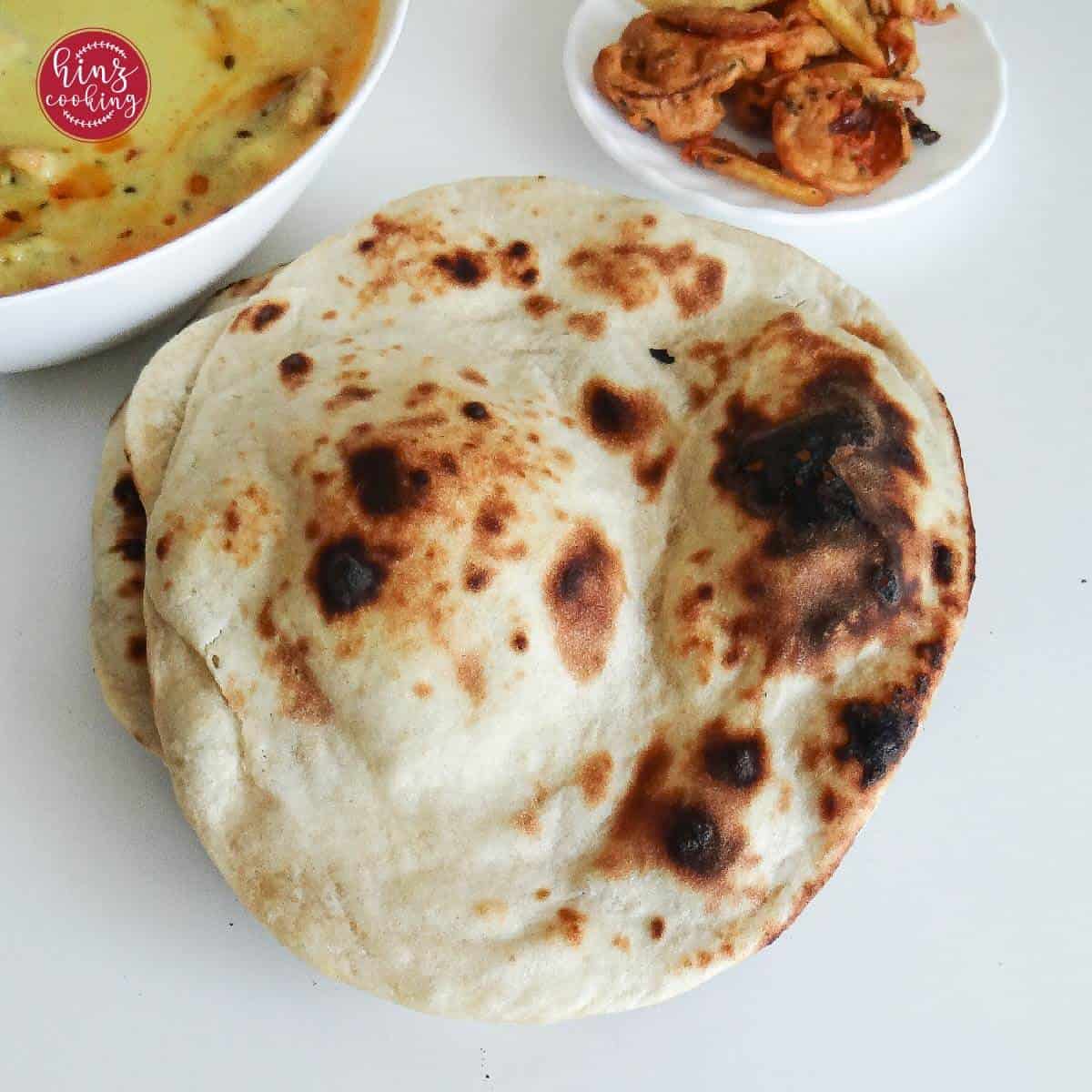
Easy Tawa Naan — Soft Plain Naan Without Yeast
The everyday Pakistani naan — six ingredients, no yeast, no tandoor, ready to eat in under 2 hours including resting time. Soft, slightly chewy, with a blistered surface from the direct flame technique. The base recipe for every stuffed and flavored naan in my collection. Once you know this dough, everything else follows.
Print
Pin
Servings: 6 Persons
Calories: 185kcal
Equipment
- Skillet
Ingredients
Naan Dough
- 2.5 cups all-purpose flour (maida) The foundation. All-purpose flour gives the characteristic soft, slightly chewy naan texture. For a wholemeal version, substitute up to half with whole wheat flour (atta) — the naan will be slightly denser with a brownish color.
- ½ teaspoon Salt Seasons the dough and adds structure. Add to the flour before the wet ingredients — never directly onto the baking powder as salt can reduce its effectiveness if they come into direct contact.
- 1 teaspoon Sugar Not added for sweetness — the naan will not taste sweet. Sugar accelerates the gentle fermentation process during the resting period and helps the surface brown more evenly on the tawa. Do not skip.
- ½ teaspoon Baking powder The leavening agent in place of yeast. Creates air pockets in the dough during resting and cooking that expand on the hot tawa, giving the naan its characteristic puff and slight chew. Use exactly ½ teaspoon — more makes the naan taste slightly chemical, less and it won't puff properly.
- 1 tablespoon oil (vegetable or neutral) Coats the gluten strands in the dough, keeping the naan soft and preventing it from drying out during the resting period. Use a neutral oil — olive oil is too strong a flavor for plain naan.
- 1.5 tablespoons plain yogurt, full-fat The most important ingredient for softness. Yogurt tenderizes the gluten strands in a way that water alone cannot, giving the naan its pillowy interior and slight tang. Full-fat yogurt only — low-fat yogurt has less tenderising effect and produces a slightly tougher result.
- ¾ cup cup warm water, added gradually (180 ml) Based on the 2:1 flour-to-liquid ratio — 2.5 cups flour needs approximately ¾ cup total liquid. Since yogurt contributes some liquid, warm water makes up the rest. Add gradually, one tablespoon at a time — the exact amount varies by flour brand and kitchen humidity. The finished dough should be soft, smooth, and slightly tacky. Not wet, not stiff.
Finish
- Few drops water (for wetting one side of shaped naan) Patted or brushed onto one side of the shaped naan before it goes onto the tawa. This wet side goes face down against the hot surface. The moisture creates an initial burst of steam inside the dough that puffs the naan from within while the tawa sears the base. This technique is what separates tawa naan from just flat bread on a pan.
- 1 tablespoon butter or ghee, melted (for finishing) [optional] Brush within 30 seconds while still steaming. Cold naan + butter = butter sitting on top. Hot naan + butter = butter absorbed into the surface.
Instructions
Make the dough
- Combine dry ingredients:In a large mixing bowl, add all-purpose flour, salt, sugar, and baking powder. Whisk together briefly so the baking powder distributes evenly through the flour. Uneven baking powder creates bitter spots in the finished naan — this 30-second step prevents that completely.
- Add oil and yogurt:Add the oil and yogurt to the flour mixture. Use your hands to crumble everything together until the mixture resembles rough, sandy breadcrumbs. This pre-mixing step distributes the fat and yogurt evenly before water is added — making the dough come together faster and more consistently when you begin kneading.
- Add water gradually and knead:Begin adding warm water — start with ½ cup and add more a tablespoon at a time as you knead. Work the dough continuously for 10–15 minutes until smooth, soft, and slightly tacky. It should spring back slowly when you press it with a finger. Stop adding water when the dough feels soft and pillowy — not wet and sticky, not tight and stiff.
- Rest for 1–2 hours:Lightly brush the dough ball with oil, place back in the bowl, and cover tightly with plastic wrap or a damp kitchen towel. Rest in a warm, draught-free spot for a minimum of 1 hour. 2 hours gives noticeably better results — the baking powder reaction continues slowly during the rest and the gluten relaxes completely, making the dough easy to roll and the naan more tender. I keep mine in a switched-off microwave — consistent warmth, no draughts.
💡 Hina's Note: The most common mistake is adding too much flour to fix what feels like a sticky dough. Don't. Soft, slightly sticky dough = soft, pillowy naan. A tight, well-floured dough = hard naan with no fix. When in doubt, knead more rather than adding flour.
Do not open or disturb the dough during the rest period. After resting, the dough will look slightly puffed. Uncover and knead gently for 2 minutes before shaping.
Shape
- Divide and form balls:After resting, turn the dough onto a lightly floured surface and knead gently for 2 minutes until smooth and elastic. Divide into 6 equal portions and roll each into a smooth ball. Keep the balls you're not using covered with a damp cloth — they dry out and form a skin within minutes of being exposed to air.
- Shape each naan:Using your hands (preferred) or a rolling pin, flatten each ball into a rough oval or teardrop shape — approximately 8–9 inches long and about ¼ inch thick. Use minimal dusting flour — just enough to prevent sticking. Irregular edges and uneven thickness are traditional, not mistakes. Perfectly uniform naan was made by a machine.
- Wet one side:Pat or brush a thin, even layer of water onto one side of the shaped naan. This becomes the side that goes face-down against the hot cooking surface. The moisture creates an initial burst of steam inside the dough that puffs the naan from within while the surface above blisters and chars from the heat.
Hand-stretching gives a more open, irregular surface with natural variation in thickness — exactly what tawa naan should look like. Hold the dough flat in both hands and rotate gently, letting gravity stretch the edges slightly.
Cook (choose method)
Cooking Method 1 — Tawa Gas (Priority 1)
- Preheat tawa on medium-high for 3–4 minutes:Place your cast iron tawa or heavy iron skillet over medium-high heat for 3–4 minutes until very hot. Test by flicking a drop of water onto the surface — it should evaporate immediately on contact. Do not add any oil to the tawa.
- Cook the first side — 60–90 seconds:Place the naan wet-side down onto the hot dry tawa. Press lightly with the back of a flat spoon for the first 10 seconds to ensure full, even contact. Cook on medium heat for 60–90 seconds. You will see bubbles forming across the surface and the edges changing from translucent to opaque. The underside should have golden-brown spots.
- Invert over gas flame — 30–60 seconds:Using thick oven gloves, grip the tawa handles firmly with both hands. In one confident motion, flip the tawa upside down over the gas flame. Hold it 5–8cm above the flame. Move the tawa in a slow, steady circular motion so the heat reaches every part of the naan surface evenly. Cook for 30–60 seconds until the surface blisters and develops dark char spots in places.
- Remove and butter immediately:Return the tawa to upright position and remove the naan with tongs. Brush immediately and generously with melted butter or ghee while still steaming hot. Stack on a plate and cover with a clean kitchen towel while you cook the remaining naans.
Cast iron only for the inverted flame method. Thin non-stick pans warp under high heat and the non-stick coating degrades at direct flame temperatures. If you only have a non-stick pan, use the electric/induction method instead.
💡 Hina's Flip Note: The naan is held to the tawa by the moisture layer on its underside — it will not fall unless you shake the pan. The mistake most people make is hesitating halfway through the flip. Commit to the motion completely and keep moving the tawa in circles. After two naans this feels natural. I've done this hundreds of times in my Dubai kitchen and the technique becomes automatic quickly.
Serve within 10 minutes of cooking. Tawa naan is at its absolute best in the first few minutes — the surface is slightly crisp, the interior is pillowy, and the butter is still fragrant.
Topping with butter is optional!
Cooking Method — Tawa Electric/Induction
- Preheat tawa on high for 3–4 minutes:Place your skillet on the highest setting for 3–4 minutes until very hot. Test with a water drop — it should evaporate immediately. No oil on the pan.
- Cook first side — 1–2 minutes:Place naan wet-side down on the hot dry skillet. Press lightly for 10 seconds. Cook for 1–2 minutes until bubbles form across the surface and the underside has golden-brown spots. Don't move the naan during this time.
- Flip and cook second side — 1–2 minutes:Flip using tongs. Cook the second side uncovered for 1–2 minutes until golden spots appear. For extra puff: place a lid over the skillet for the final 30 seconds. The trapped steam mimics some of the direct heat effect from the gas flame method.
- Butter finish immediately: Brush generously with melted butter or ghee the moment the naan comes off the skillet. Cover with a kitchen towel while cooking remaining naans.
The electric/induction result is excellent — slightly less charred than the gas flame method but equally soft and flavourful. The difference is mainly visual, not in taste.
Topping with butter is optional!
Video
Notes
Soft dough is the #1 rule: the dough should feel softer and more tacky than you expect. Resist adding extra flour to make it easier to handle. Tight, well-floured dough produces hard naan with no fix. The softness of the dough is the single most reliable predictor of the softness of the finished naan.
Water quantity — add gradually: start with ½ cup and add more one tablespoon at a time. The exact amount varies by flour brand and humidity — you may need anywhere from ½ cup to ¾ cup (120ml–180ml). The target feel: smooth, soft, and slightly tacky. Not wet, not stiff. Note from reader Trish who correctly pointed this out — always add water gradually and trust the feel of the dough over any fixed measurement.
Rest for at least 1 hour — 2 is better: the baking powder continues to work slowly during the rest, developing air pockets. The gluten relaxes, making the dough easier to roll and the finished naan more tender. Do not open the bowl or disturb the dough during resting. Overnight in the fridge produces the most flavorful, most relaxed dough of all.
The inverted flame technique — safety first: use cast iron only. Grip both handles firmly with thick oven gloves. Move in slow circles over the flame for even heat. The naan will not fall — it is held by the moisture layer. The one rule: commit to the flip without hesitating. Stopping halfway through causes uneven heat. After two naans it feels completely natural.
Electric and induction hob — use both sides: cook first side 1–2 minutes, flip, cook second side 1–2 minutes, cover with lid for final 30 seconds. No inverted flame. The result is slightly less charred but equally soft and delicious. Do not feel this is an inferior method — it's simply a different, equally valid result.
If naan turned out hard: four causes — dough was too tight (not enough water or too much flour added), tawa was not hot enough, naan was cooked too long, or left uncovered after cooking. Always cover finished naans immediately with a kitchen towel to trap steam and keep them soft while you cook the rest.
Wheat flour version: replace up to half the all-purpose flour with whole wheat flour (atta) for a healthier naan — slightly denser, brownish color, earthier flavor. Full wheat substitution also works and gives a thick, soft flatbread between naan and roti. My personal preference for weekday lunches is half and half — you get the softness of naan with the nutrition of wheat flour.
Storage: wrap cooled naans in foil or a clean cloth. Room temperature: 1 day. Refrigerator: 3 days. Reheat: 60 seconds each side on a hot dry skillet with a small knob of butter — restores the surface much better than a microwave. Air fryer reheat at 170°C for 2 minutes gives the closest result to fresh-off-the-tawa naan.
This is the base dough for all my naan recipes: once you know this dough, making garlic naan (add garlic powder + garlic butter), aloo naan (add potato filling), keema naan (add spiced meat filling), and roghni naan (add sesame topping + ghee) all become simple variations on the same skill.
Nutrition
Serving: 1g | Calories: 185kcal
