
The first time I made Chicken Mandi at home, I was convinced it wasn't going to work. Mandi is a tandoor dish. It belongs underground, cooked over smoldering wood for five hours in the desert heat — not in a kitchen oven in 90 minutes. But I had eaten it too many times in Saudi Arabia and the UAE to give up on the idea of making it at home, and after testing this recipe several times, I can tell you: the oven version is genuinely excellent.
The key is not trying to perfectly replicate the tandoor — it's understanding what the tandoor actually does and recreating those effects with what you have. The steam trap. The dry fragrant heat. The charcoal smoke finish. Once you understand those three things, the oven becomes a surprisingly capable substitute.
Watch - How Did I Make Chicken Mandi
This is the recipe I make for family gatherings, Eid dinners, and any occasion that deserves something more special than everyday rice. It uses homemade Hawaij spice mix (ready in 5 minutes), a simple saffron-tinted rice that bakes in the same oven as the chicken, and an optional charcoal smoke step that takes the flavor from "very good oven chicken" to something that genuinely tastes like it came out of a pit.
Looking for Middle eastern dinner recipes? Check out, Chicken Kabsa, Shish Tawook, Falafel, Saudi Albaik Chicken, and Chicken Maqluba. You will surely love these recipes to add value to your dinner table.
Jump to:
- Watch - How Did I Make Chicken Mandi
- What is Chicken Mandi?
- Mandi Vs Kabsa - The Real Difference
- Traditional Mandi Cooking — And What We Replicating
- Hawaij Spice Mix — The Heart of Mandi
- INGREDIENTS
- How to Make Chicken Mandi In The Oven — Step By Step
- Pro Tips From Experience
- What To Serve With Chicken Mandi
- HOW TO STORE, FREEZE & REHEAT
- Frequently Asked Questions
- You Might Like This
- Chicken Mandi (Oven-Baked) — Authentic Yemeni Rice & Chicken
What is Chicken Mandi?
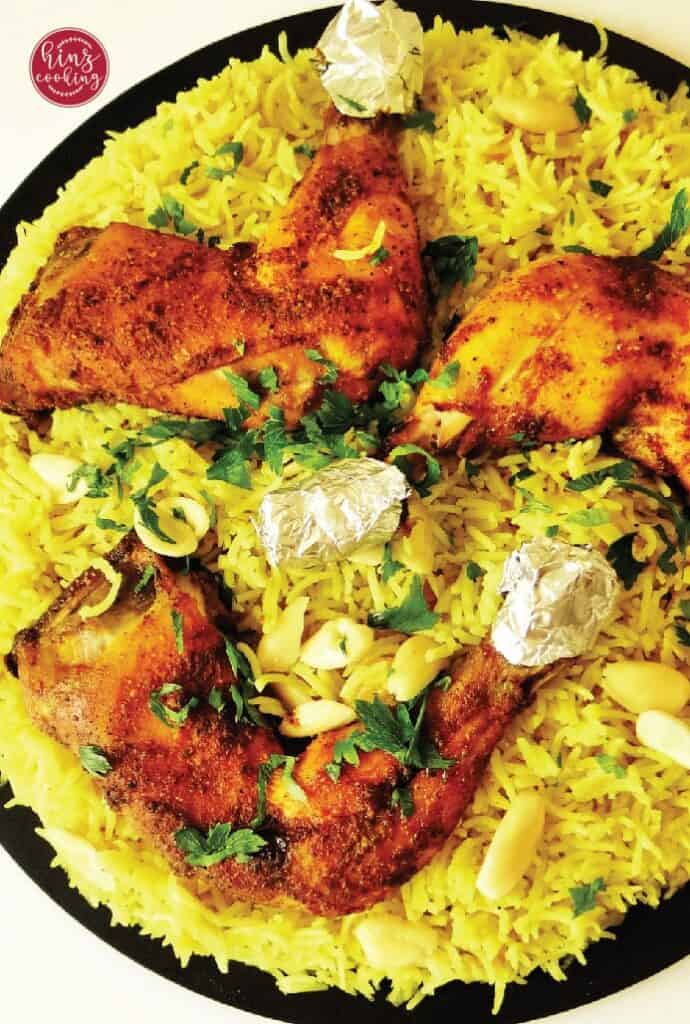
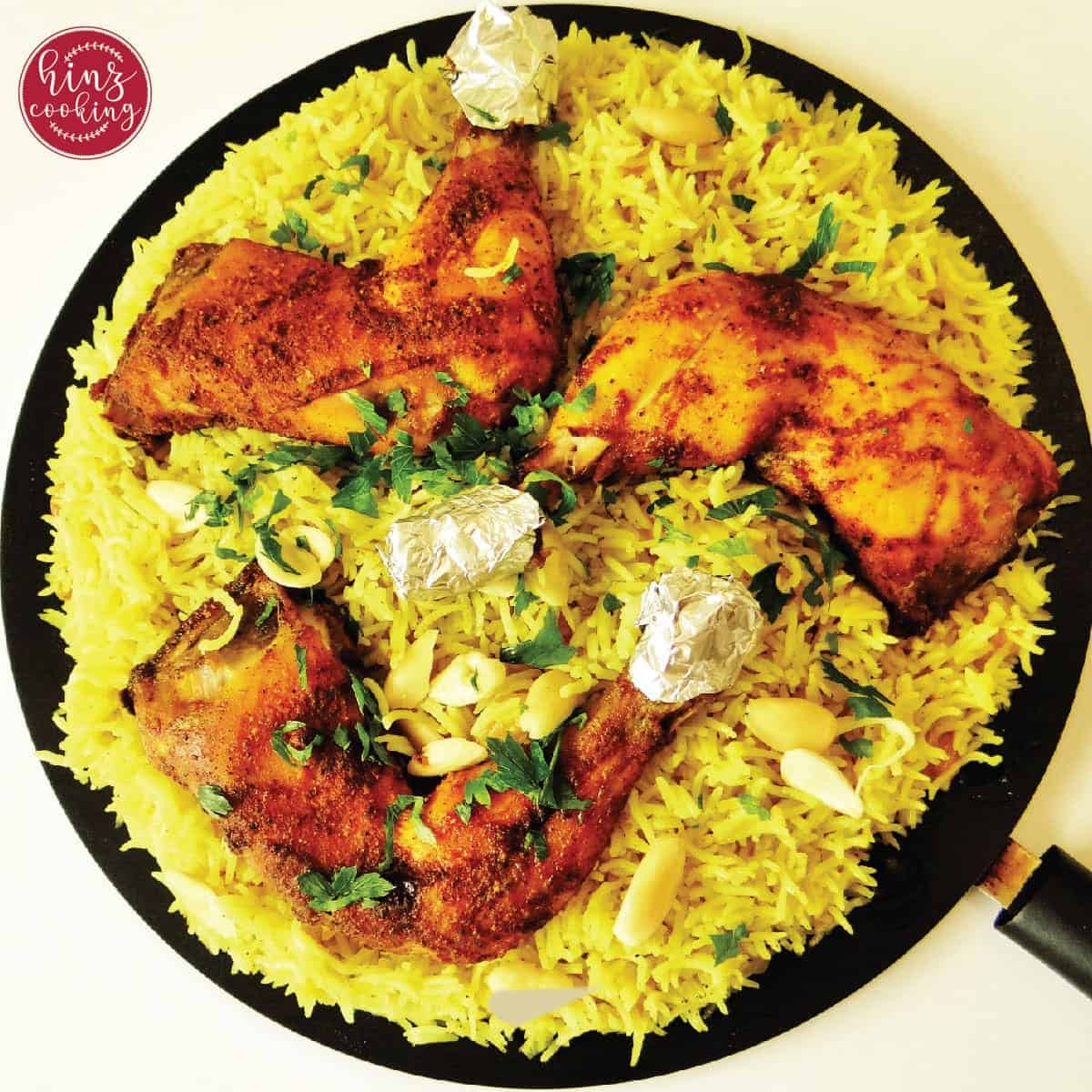
Chicken Mandi (مندي الدجاج) is a traditional Yemeni rice and chicken dish in which chicken marinated in Hawaij spice mix is slow-cooked over fragrant rice, trapping steam to produce tender, fall-off-the-bone meat and aromatic, saffron-yellow grains. Originally cooked in an underground clay pit (tandoor) over smoldering wood, it is now widely prepared in home ovens across Saudi Arabia, UAE, Kuwait, Yemen, and across the Gulf.
The meaning behind the name
The word "Mandi" comes from the Arabic "Nada" (ندى), meaning dew — a reference to the moisture and tenderness of the meat when it is cooked properly. The steam trapped inside the sealed pit or oven creates a dew-like condensation that bastes the chicken continuously throughout the cooking process. That is what gives Mandi its signature juicy texture — not fat, not oil, but moisture management.
Why Mandi tastes different from all other Arabic rice
Three things make Mandi unique:
1. The steam trap. The rice and chicken cook simultaneously in a sealed environment. The steam rising from the rice carries the Hawaij spices upward into the chicken. The fat and juices from the chicken drip downward into the rice. They cook together and flavor each other in a way that no other cooking method achieves.
2. The Hawaij spice mix. Hawaij is a Yemeni spice blend built around coriander, cumin, cardamom, and black pepper, with saffron and turmeric for color. It is warm rather than hot — deeply aromatic without being spicy. It gives Mandi its characteristic golden color and complex fragrance.
3. The smoke. Traditional Mandi is cooked over wood or charcoal, and the smoke penetrates the rice and chicken throughout the cooking period. In a home kitchen, you can replicate this with a charcoal finishing technique — explained in detail in the Pro Tips section below.
Mandi Vs Kabsa - The Real Difference
These two dishes are often confused, and while they share the same Gulf heritage and both pair with Dakkous sauce, they are fundamentally different dishes.
Mandi is defined by its cooking method: steam-sealed, oven or pit-cooked, minimal liquid, dry fragrant heat. The chicken is marinated in Hawaij and cooked above the rice. The flavor is subtle, clean, and smoke-forward. Color: golden-yellow from saffron and turmeric.
Kabsa is defined by its cooking liquid: the chicken is cooked in a spiced tomato-and-dried-lime broth, which becomes the stock in which the rice is then cooked on the stovetop. The flavor is richer, more complex, and tomato-forward. Color: deep reddish-brown.
The simplest distinction: Mandi is about technique (the steam and smoke). Kabsa is about the stock. If you want to explore Kabsa next, see the full Chicken Kabsa recipe here.
Traditional Mandi Cooking — And What We Replicating
In Yemen and Saudi Arabia, traditional Mandi is made by digging a deep pit in the ground — typically 1–1.5 meters deep — lined with clay or stone. A fire of Samer or Gadha wood burns at the bottom and is left until it becomes glowing embers. The marinated meat is suspended above the embers on a rack, the rice is placed below, and the entire pit is sealed with a domed clay cover and earthed over.
It cooks for 4–6 hours in the retained heat of the pit, with the sealed environment creating an intensely steamy, smoky atmosphere that no indoor oven can fully replicate — but can meaningfully approximate.
What we're replicating in the oven:
- Broiling finish → replicates the char and color from open embers above
- Sealed environment → aluminum foil tent
- Steam trap → hot water added to the rice before sealing
- Dry aromatic heat → oven at 250°C
- Smoke penetration → charcoal finish technique (see Pro Tips)
Hawaij Spice Mix — The Heart of Mandi
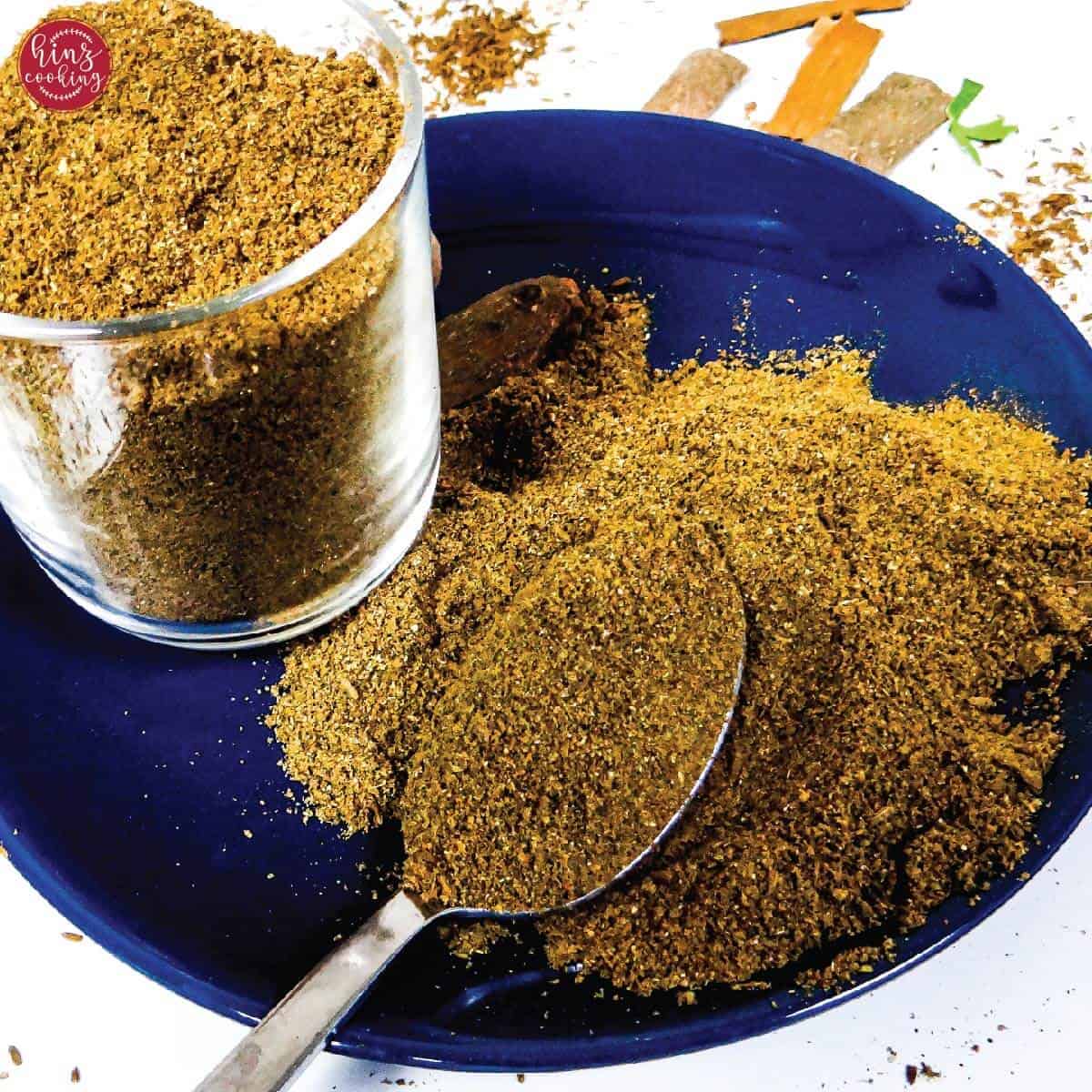
Hawaij (هوايج) means "mixture" in Arabic and is the spice blend that defines Mandi. Every family has their own version, but the core is always the same: coriander, cumin, black pepper, cardamom, and cinnamon, with saffron and turmeric for color.
You can buy store-bought Hawaij, but homemade takes 5 minutes and tastes noticeably better — the spices are fresher and you can adjust the balance to your preference.
| Spice | Amount | Role |
|---|---|---|
| Saffron powder | ⅓ tsp | Signature golden color; most important spice |
| Turmeric powder | ½ tsp | Color depth and mild earthiness |
| Coriander powder | 1 tsp | Floral, citrusy warmth — backbone of Hawaij |
| Cumin powder | 1 tsp | Earthy depth; essential |
| Black pepper | ½ tsp | Gentle heat without chili sharpness |
| Cinnamon powder | ½ tsp | Sweetness and aroma |
| Cardamom powder | ½ tsp | Fragrance — lifts the whole blend |
| Garlic powder | ½ tsp | Savory base note |
| Chili powder | ½ tsp | Optional — adjust to your heat preference |
| Salt | 1 tsp | Seasoning |
To make: Combine all in a small bowl and mix. That's it. Store remaining Hawaij in an airtight jar in your pantry for up to 2 months, or in the fridge for up to 6 months.
You'll use 2.5 teaspoon of this mix for the chicken marinade and 2 teaspoon in the rice. This recipe is calibrated for 500g of chicken.
Can I Store Hawaij For Later Use? Yes, you can! Store in a air tight jar and keep it in your pantry shelve. It will last for 2 months. If you want to extend shelf life then keep it in refrigerator for 6 to 8 months.
INGREDIENTS
For the chicken (serves 3–4)
- 500g chicken (bone-in pieces — legs and thighs work best)
- 2.5 teaspoon Hawaij spice mix (from above)
- 1 tablespoon olive oil
- ½ teaspoon salt
For the Mandi rice
- 2.5 cups basmati rice (soaked 30–60 minutes)
- 1 tablespoon cooking oil
- 1 cup onion, finely chopped
- 1 teaspoon ginger-garlic paste (fresh crushed)
- 2 teaspoon Hawaij spice mix
- 1 teaspoon salt (adjust to taste)
- 4 cups hot water
- A handful of golden raisins
- A handful of blanched almonds (for garnish)
- Fresh cilantro (for garnish)
Optional — for the smoke finish
- A small piece of aluminum foil (to hold the charcoal)
- 1 small piece of natural charcoal
- 1 teaspoon ghee or oil
Why bone-in chicken? Bone-in pieces survive the 60-minute bake without drying out. Boneless chicken breast will dry out completely in this cooking time and lose the moisture that defines Mandi. If you only have boneless thighs, reduce baking time to 45 minutes.
Why basmati rice? Basmati's long grains stay separate after baking and absorb the Hawaij fragrance without becoming sticky. Jasmine rice can be used but gives a slightly softer, stickier result. Short grain rice is not suitable.
How to Make Chicken Mandi In The Oven — Step By Step
Step 1 — Prepare the Hawaij and marinate the chicken
Mix all Hawaij ingredients in a bowl. Take 2.5 teaspoons of the mix and combine with olive oil and ½ teaspoon salt in a separate bowl to form a loose paste.
Pat the chicken pieces dry with paper towels — this is important. Wet chicken will not absorb the marinade and will steam rather than brown in the oven. Rub the Hawaij paste thoroughly over every surface of the chicken, including under any loose skin.
Place in an airtight container and refrigerate for a minimum of 4 hours. Overnight (8–12 hours) is genuinely better — the saffron deepens in color, the spices penetrate further, and the resulting chicken has more fragrance throughout the meat, not just on the surface.
From experience: if you're making this for a special occasion, marinate the chicken the night before. The difference between a 4-hour and overnight marination is visible and noticeable in both color and taste.
Step 2 — Soak the rice
Wash the basmati rice under cold running water until the water runs clear (this removes excess starch and keeps the grains separate after baking). Soak in cold water for 30–60 minutes, then drain completely.
Step 3 — Sauté the rice base
In a large frying pan, heat 1 tablespoon oil over medium heat. Add the chopped onion and sauté for 6–8 minutes, stirring occasionally, until soft, translucent, and just beginning to turn golden at the edges. Do not rush this step — properly caramelized onion is what gives the rice its sweet, savory depth.
Add the ginger-garlic paste and cook for 1–2 minutes until fragrant. Add the 2 teaspoons of Hawaij spice mix and stir to coat the onions. Cook for 30 seconds until the spices bloom (you'll smell them sharpen). Remove from heat.
Add a handful of golden raisins and mix through. The raisins will plump and sweeten the rice from the inside as it bakes.
Step 4 — Assemble the baking dish
Take a large, deep baking dish. Add the drained soaked rice and spread evenly. Pour the sautéed onion-Hawaij mixture over the rice and mix gently to distribute evenly. Add 1 teaspoon salt and mix again.
Pour 4 cups of hot boiling water over the rice. The water must be hot — cold water added to the raw rice will throw off the timing and result in undercooked grains. Stir gently once.
Place the marinated chicken pieces directly on top of the rice. The chicken should sit above the rice, not submerged.
Step 5 — Seal tightly and bake
Cover the baking dish with a tight layer of aluminum foil. Press the edges firmly against the dish to create an airtight seal. This is critical — the steam is what cooks both the rice and the chicken together. Any gaps will let the steam escape and you'll end up with dry rice and undercooked chicken.
Create a steam vent: Use a toothpick or skewer to poke 4–5 small holes in the top of the foil. This lets a small amount of steam release slowly, which prevents the foil from inflating and lifting off the dish during baking.
Preheat oven to 250°C / 482°F. Place the baking dish in the middle rack and bake for 1 hour.
Step 6 — Broil the chicken for color
After 1 hour, carefully remove the foil. The steam will be intense — open the foil away from you.
Check the rice: press a grain between your fingers — it should be fully cooked and not chalky. If undercooked, re-seal and bake for 10 more minutes.
Remove the chicken pieces and place on a separate small baking tray. Switch your oven to broil/grill mode (top heat only). Place the chicken on the top rack and broil for 12–15 minutes until the skin is deep golden-brown and slightly charred at the edges. This is the color and char that makes Mandi look authentic.
Step 7 — The smoke finish (optional but highly recommended)
This step takes 3 minutes and transforms the dish from "very good oven Mandi" to something that genuinely has the smoky character of a tandoor-cooked version.
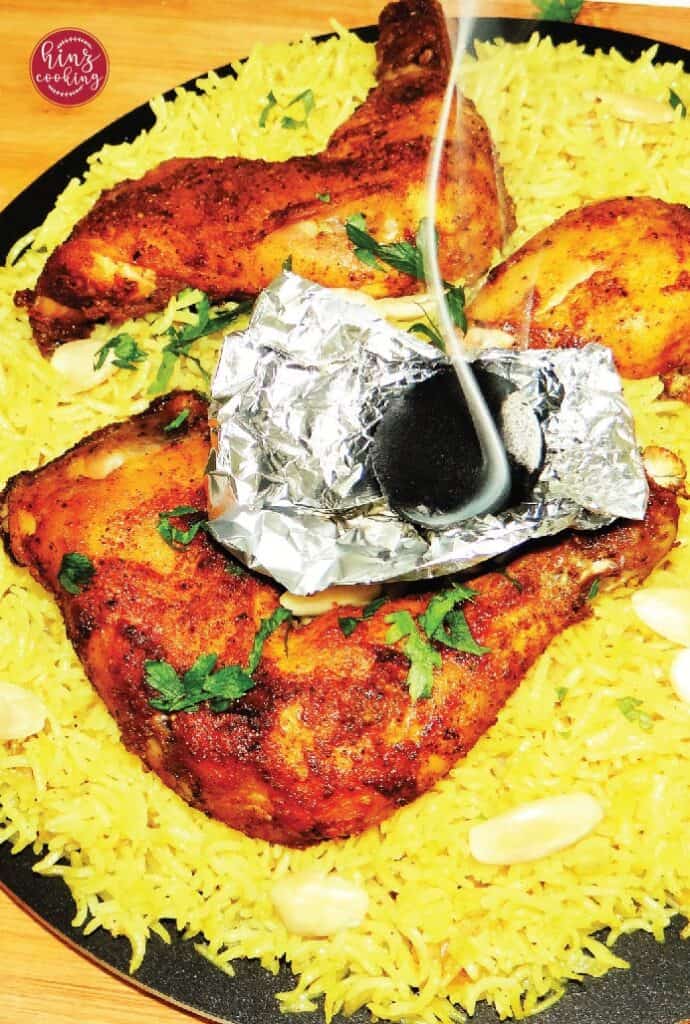
While the chicken is broiling, burn a small piece of natural charcoal directly on a gas flame or using a kitchen torch until it is glowing orange and lightly ashing on the surface. Place a small piece of aluminum foil in the center of the rice and set the glowing charcoal on it. Drizzle ½ teaspoon of ghee over the charcoal — it will immediately smoke. Cover the baking dish tightly with foil and let the smoke infuse for 2–3 minutes. Remove the charcoal and foil piece.
This technique is used in restaurant Mandi kitchens across the Gulf when a proper tandoor isn't available. The ghee smoke has a different character than wood smoke but it genuinely elevates the dish. Do this step outside or with your kitchen ventilation on high.
Step 8 — Plate and serve
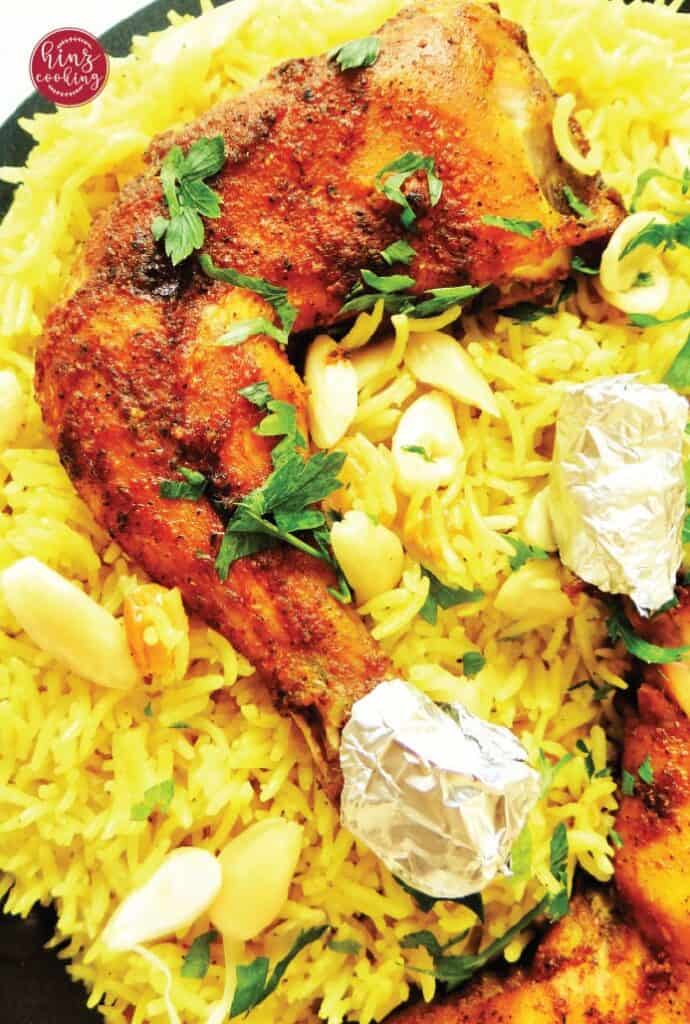
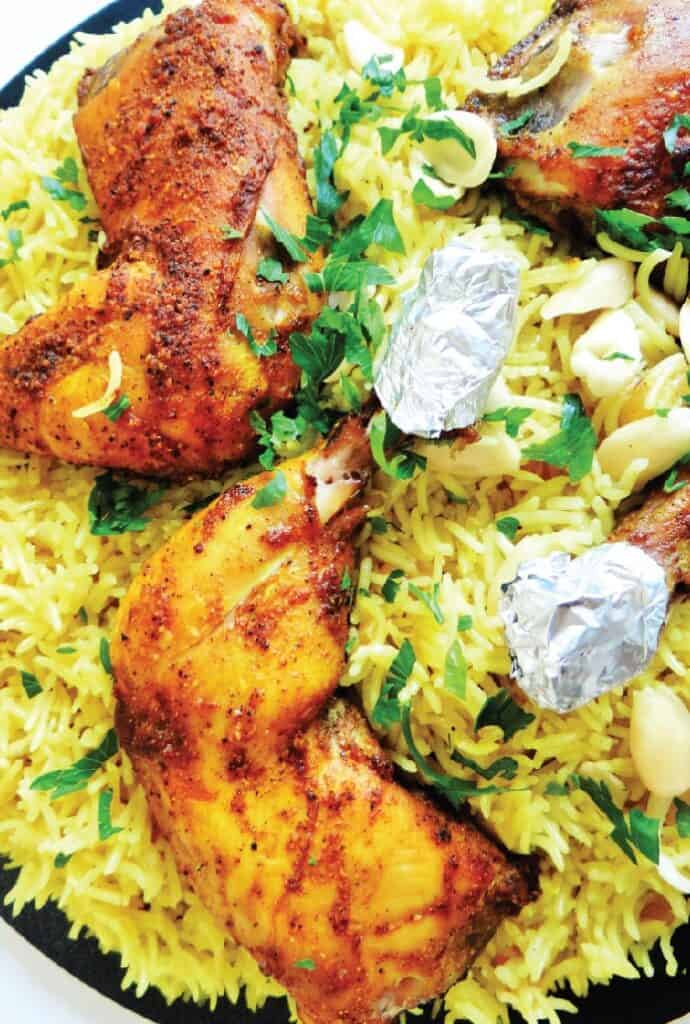
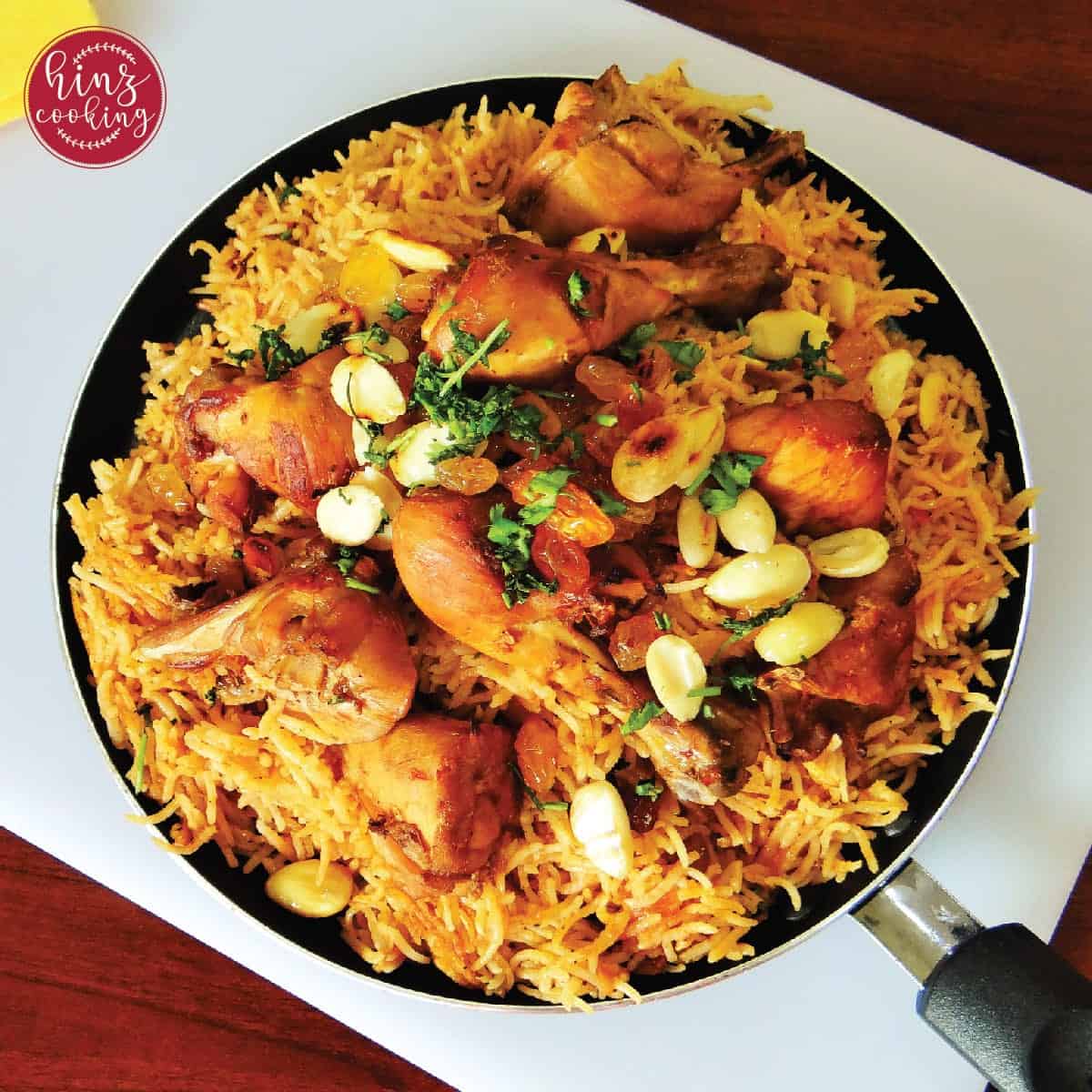
Spread the rice on a large serving platter. Place the broiled chicken pieces on top of the rice. Scatter the blanched almonds and fresh cilantro over everything.
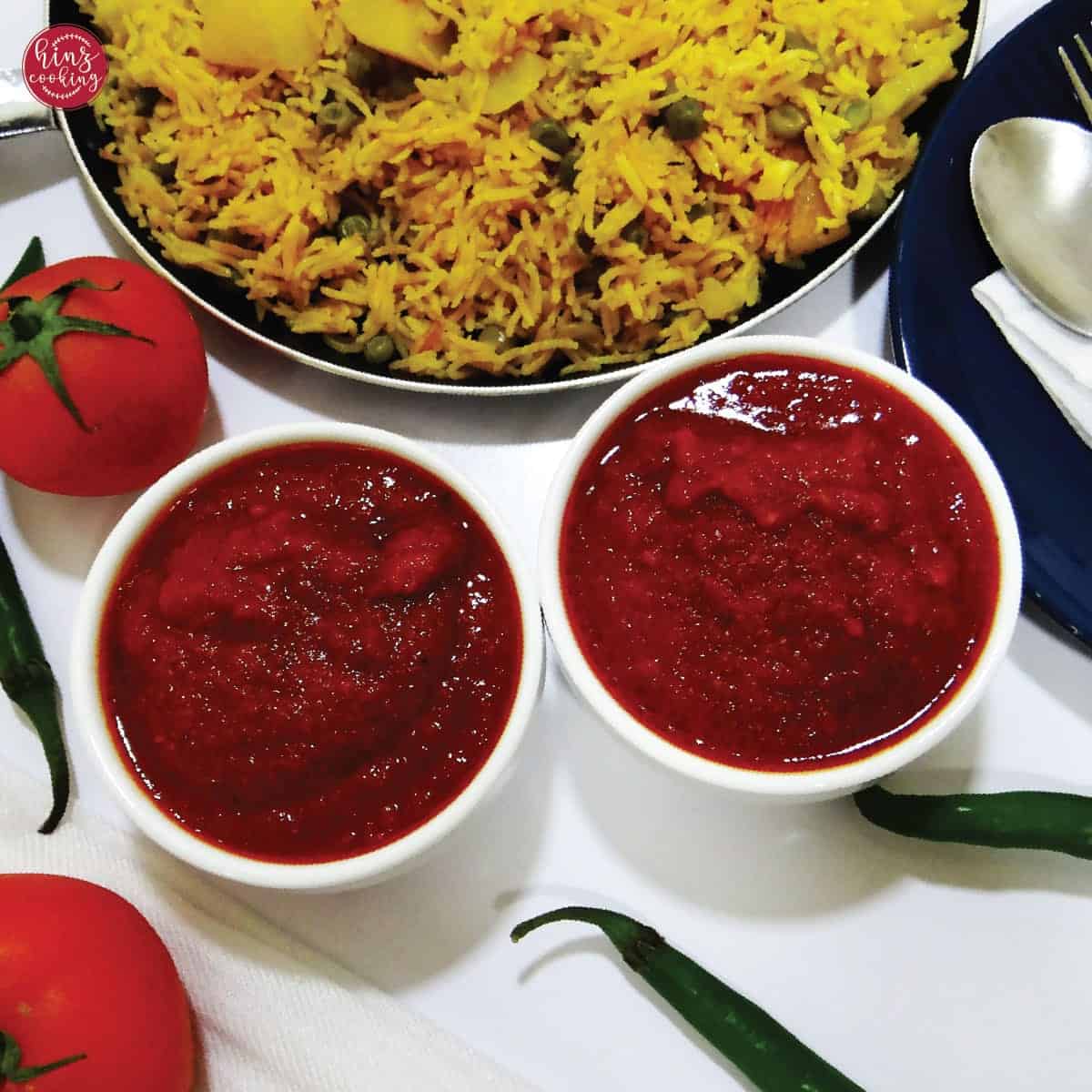
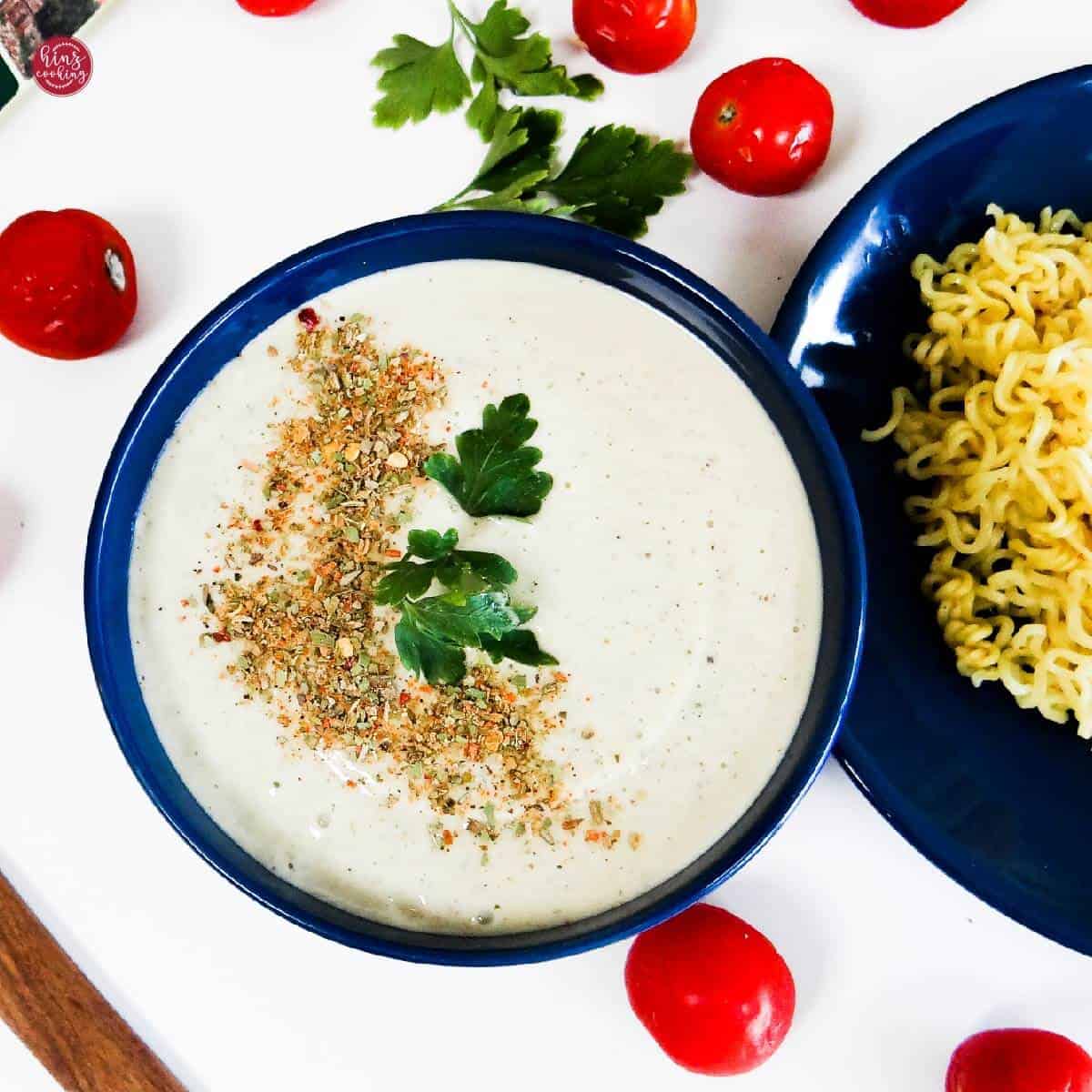
Serve immediately alongside a bowl of Dakkous sauce — the Arabic tomato sauce that is traditionally and inseparably paired with Mandi. Dakkous is not optional here; its acidity and freshness balance the richness of the spiced rice and chicken in a way nothing else does.
Pro Tips From Experience
- Dry the chicken before marinating. Wet chicken steams instead of browning and the marinade slides off rather than penetrating. Paper towels, 30 seconds — it makes a real difference.
- Overnight marination gives you a different dish. The saffron has time to fully bloom into the chicken flesh, the color goes from surface-level yellow to golden all the way through, and the spices develop a mellower, more integrated flavor.
- Water ratio is the most common point of failure. The ratio for oven-baked rice is 4 cups water to 2.5 cups rice (soaked). If your rice regularly comes out undercooked, add an extra ¼ cup of water. If it comes out mushy, reduce by ¼ cup. Basmati brands vary in how much water they absorb.
- Don't open the foil early. The temptation to check is real, but every time you open the seal, you lose the trapped steam and the rice cooking dynamics shift. Set a timer and trust the process.
- Golden raisins, not black. Black raisins are too tart and can turn the rice bitter during the long bake. Golden raisins sweeten as they cook and are the traditional Mandi addition.
- Charcoal must be natural, not briquette. Briquette charcoal contains chemical binders that will give the food an unpleasant petroleum flavor. Use natural lump charcoal (the kind used for shisha/hookah works perfectly).
What To Serve With Chicken Mandi
Essential:
- Dakkous (Arabic Tomato Sauce) — The traditional Mandi accompaniment. No Mandi meal in the Gulf is served without it. The sauce's tomato acidity cuts through the richness of the spiced rice.
- Sahawiq (Sahaweq, Sahawqa, or Zhug): It's a Yemeni condiment! This is created using a mixture of raw tomatoes, garlic, chili, freshly chopped cilantro, and a fresh squeeze of lemon juice.
- Cucumber Yogurt Salad: Refreshing and bright, this mix of yogurt, chopped cucumber, and mint perfectly complements spicy or strong tastes.
- Toum (Garlic Sauce ): Composed solely of garlic, oil, lemon, and salt, Lebanese Toum is a light and highly flavorful emulsion.
- Tabbouleh: Pairing tabbouleh with mandi creates a delightful harmony by balancing fresh and rich flavors. The secret lies in allowing the vibrant, zesty herbs to contrast with the rich, smoky tastes of the rice and meat.
- Baba Ganoush — Smoky eggplant dip as a starter alongside the Mandi platter.
- Fried Nuts & Raisins: Cashews, almonds, or raisins to add texture.
- Lemon Wedges & Fresh Herbs: Extra acidity and aroma.
- Pickles & Olives: For a tangy, salty crunch.
- Laban: A refreshing, salted yogurt drink
To explore more Gulf rice dishes:
- Chicken Kabsa — The tomato-braised rice dish most often compared to Mandi
- Chicken Maqluba — The Palestinian upside-down rice; the most dramatic presentation of the three
To finish the meal:
Karak Chai — Sweet spiced Gulf tea; the traditional end to any Saudi or Emirati meal
HOW TO STORE, FREEZE & REHEAT
Refrigerator: Store rice and chicken separately in airtight containers for up to 3 days. Rice stored with the chicken tends to absorb moisture from the meat and becomes soft.
Freezer: Both the rice and chicken freeze well. Portion into individual servings in freezer bags. Freeze flat for up to 2 months.
Reheating rice: Sprinkle 2 tablespoons of water over the rice, cover tightly, and microwave for 2–3 minutes. Or reheat in a covered pan on low heat with a splash of water. Never reheat rice uncovered — it will dry out completely.
Reheating chicken: Oven at 180°C for 10–12 minutes covered with foil, or microwave covered for 2 minutes. If reheating in the oven, add a small splash of water to the tray before covering to keep moisture in.
Make-ahead tip: The Hawaij spice mix can be made weeks ahead and stored. The chicken can be marinated up to 24 hours in advance. The sautéed rice base (onion + spices step) can be done 2 hours ahead. Final assembly and baking should be done fresh.
Frequently Asked Questions
Chicken Mandi is a traditional Yemeni dish of spiced chicken and rice, cooked together in a sealed environment — originally an underground clay pit (tandoor), now commonly made in a home oven. The chicken is marinated in Hawaij spice mix and steam-cooked above saffron-yellow rice, producing tender meat and fragrant, separated grains.
Hawaij (هوايج) is the Yemeni spice blend used to season Mandi. Its core spices are coriander, cumin, black pepper, cardamom, and cinnamon, with saffron and turmeric for color. It is warm and aromatic rather than spicy, and it is what gives Mandi its golden color and distinctive fragrance. You can make it in 5 minutes at home or buy it from Arabic grocery stores.
Yes — this recipe is specifically designed for a home oven. The oven replicates the sealed heat of the tandoor, and the optional charcoal smoke step adds the smoky character that the pit would provide. The result is not identical to a tandoor-cooked Mandi, but it is genuinely excellent and recognizable as the same dish.
A minimum of 4 hours, but overnight (8–12 hours) is significantly better. The saffron and spices need time to fully penetrate the chicken. If you're planning this for a special occasion, marinate the chicken the night before.
The most common causes are:
(1) the foil seal had gaps and steam escaped,
(2) the water was not hot when added to the rice,
(3) the rice was not soaked for the full 30–60 minutes before baking.
If this happens, re-seal the dish tightly and return to the oven for 10–15 more minutes.
Too much water, or the foil was too loose and condensation dripped back into the rice. Reduce water by ¼ cup in your next attempt. Make sure the foil is domed slightly above the rice rather than sitting directly on it.
Yes — lamb Mandi is actually the more traditional version in Yemen and Saudi Arabia. Use bone-in lamb shoulder pieces and increase the baking time to 2–2.5 hours. The rice should still be added in the final hour of cooking (add it 60 minutes before the lamb finishes).
Mandi is defined by its cooking method — steam-sealed, oven or pit-baked, minimal liquid. Kabsa is defined by its cooking liquid — the chicken is simmered in a spiced tomato and dried lime broth, and the rice is cooked in that stock on the stovetop. Mandi is golden-yellow; Kabsa is deep brown-red. Both are served with Dakkous. For a detailed comparison and the full Kabsa recipe, see the Chicken Kabsa post.
Yes, with a dum (slow steam) method. After assembling the rice and chicken in a heavy-bottomed pot, seal tightly with foil and then the lid and cook on the lowest possible heat for 45–60 minutes. Place a heavy skillet under the pot as a heat diffuser to prevent the bottom rice from scorching.
This recipe using 500g chicken and 2.5 cups rice serves 3–4 people as a main course. For 6 people, use 1kg chicken, 4.5 cups rice, and 7 cups hot water. Marination spice quantity: multiply the 2.5 teaspoon chicken mix and 2 teaspoon rice mix proportionally.
You Might Like This
Chicken Mandi (Oven-Baked) — Authentic Yemeni Rice & Chicken
Equipment
- Aluminum Foil
- Baking Dish
Ingredients
- ⅓ teaspoons Saffron Powder
- ½ teaspoon Turmeric Powder
- 1 teaspoon Coriander Powder
- 1 teaspoon Cumin Powder
- ½ teaspoon Black Pepper Powder
- ½ teaspoon Cinnamon Powder
- ½ teaspoon Cardamom Powder
- ½ teaspoon Garlic Powder
- ½ teaspoon Chili Powder (optional — omit for mild)
- 1 teaspoon Salt
- 500 g Chicken bone-in chicken pieces — legs and thighs
- 1 tablespoon Olive Oil for marinade
- Mandi Powder - 2.5 Tsp
- 2.5 cups Basmati Rice soaked 30–60 minutes then drained
- 1 tablespoon Cooking Oil for rice base
- 1 cup Onions Finely chopped
- 1 teaspoon Garlic Ginger Finely Crushed
- 1 teaspoon Salt For Rice
- 4 cups Hot Boiling Water
- 30 g Golden Raisins
- 30 g Almonds blanched almonds for garnish
- 5 teaspoon Fresh Cilantro finely chopped (for garnish)
- Charcoal 1 small piece (optional, for smoke finish)
- 1 teaspoon Ghee or butter For smoke finish
Instructions
Make Hawaij & marinate chicken
- Combine 0.3 teaspoons saffron powder, 0.5 teaspoons turmeric powder, 1 teaspoons coriander powder, 1 teaspoons cumin powder, 0.5 teaspoons black pepper, 0.5 teaspoons cinnamon powder, 0.5 teaspoons cardamom powder, 0.5 teaspoons garlic powder, and 0.5 teaspoons chili powder (optional — omit for mild) in a small bowl — this is your Hawaij spice mix.
- Take 2.5 teaspoon of this mix and combine with 1 tablespoons olive oil (for marinade) and 0.5 teaspoons salt (for marinade) to form a loose paste.
- Pat 500 grams bone-in chicken pieces — legs and thighs completely dry with paper towels — wet chicken won't absorb the marinade. Rub the paste over every surface of the chicken including under the skin. Cover and refrigerate for a minimum of 4 hours. Overnight (8–12 hours) is strongly preferred — the saffron deepens in color and the spices penetrate all the way through the meat.
Soak the rice
- Wash 2.5 cups basmati rice, soaked 30–60 minutes then drained under cold running water until the water runs completely clear — this removes excess starch and keeps the grains separate after baking. Soak in cold water for 30–45 minutes, then drain fully before using.
Sauté the rice base
- Heat 1 tablespoons cooking oil (for rice base) in a frying pan over medium heat.Add 1 cups onion, finely chopped and sauté for 6–8 minutes until soft and just golden at the edges — do not rush this step, caramelized onion is what gives the rice its depth.
- Add 1 teaspoons ginger-garlic paste, freshly crushed and cook for 2 minutes until fragrant. Add 2 teaspoon of the remaining Hawaij spice mix and stir for 30 seconds until the spices bloom. Remove from heat and stir in 30 grams golden raisins.
Assemble the baking dish
- Spread the drained rice evenly in a large deep baking dish. Pour the sautéed onion-Hawaij mixture over and mix gently to distribute. Add 1 teaspoons salt (for rice) and stir through. Pour 4 cups hot boiling water over the rice — the water must be hot, not cold, or the rice timing will be thrown off. Stir once gently. Place the marinated chicken pieces directly on top of the rice. The chicken should sit above the rice, not submerged in it.
Seal tightly and bake:
- Preheat oven to 250°C / 482°F. Cover the baking dish with a tight layer of aluminium foil, pressing the edges firmly to create a near-airtight seal — the trapped steam is what cooks both rice and chicken together. Poke 4–5 small holes in the top of the foil with a toothpick to allow slow controlled steam release. Place on the middle rack and bake for 60 minutes. Do not open the foil during baking.
Broil the chicken for color
- Carefully remove the foil — open it away from you, the steam is intense. Check the rice by pressing a grain between your fingers — it should be fully cooked with no chalkiness. Remove the chicken pieces and place on a small baking tray. Switch oven to broil / top grill mode. Place chicken on the top rack and broil for 12–13 minutes until the skin is deep golden-brown with slightly charred edges.
Charcoal smoke finish (optional but recommended)
- While chicken is broiling, burn one small piece of natural lump charcoal directly on a gas flame or with a kitchen torch until it glows orange and is lightly ashing. Place a small piece of foil in the center of the rice and set the glowing charcoal on it. Drizzle 1 teaspoons ghee or butter (for smoke finish) over the charcoal — it will immediately smoke. Quickly cover the baking dish tightly with foil and let the smoke infuse for 2–3 minutes. Remove the charcoal foil piece. Do this with ventilation on high.
Plate and serve
- Spread the rice across a large serving platter. Place the broiled chicken pieces on top. Scatter 30 grams blanched almonds, for garnish and 0.3 cups fresh cilantro, for garnish over everything. Serve immediately alongside a bowl of Dakkous Arabic tomato sauce — it is the traditional and essential accompaniment to Mandi. The acidity of the sauce balances the richness of the spiced rice perfectly.
Video
Notes
- Marination: 4 hours minimum — overnight produces visibly deeper color and more fragrant meat throughout, not just on the surface.
- Rice water ratio: 4 cups water to 2.5 cups soaked basmati. If your rice comes out undercooked, add ¼ cup more water next time. If mushy, reduce by ¼ cup. Basmati brands vary.
- Bone-in chicken is essential. Bone-in legs and thighs survive the 60-minute bake. Boneless chicken breast will dry out completely — reduce to 45 minutes if using boneless thighs.
- Golden raisins only — not black. Black raisins are too tart and can turn the rice bitter during the long bake.
- Charcoal must be natural lump charcoal (the kind used for shisha/hookah). Never use briquette charcoal — it contains chemical binders that give the food an unpleasant flavor.
- Stovetop dum method: Assemble in a heavy-bottomed pot, seal with foil then lid, cook on lowest heat for 45–60 minutes with a heavy skillet underneath as a heat diffuser. See the complete guide to for technique details.
- Storage: Rice and chicken separately, airtight containers, 3 days refrigerator / 2 months freezer. Reheat rice with 2 tablespoon water, covered, in microwave or low-heat pan.
- Serve with: Dakkous Arabic tomato sauce · Baba Ganoush & Karak Chai to finish.

Ayesha
Easy to Make Chicken Mandi at home - اسهل مندي دجاج و مدخن في الفرن