
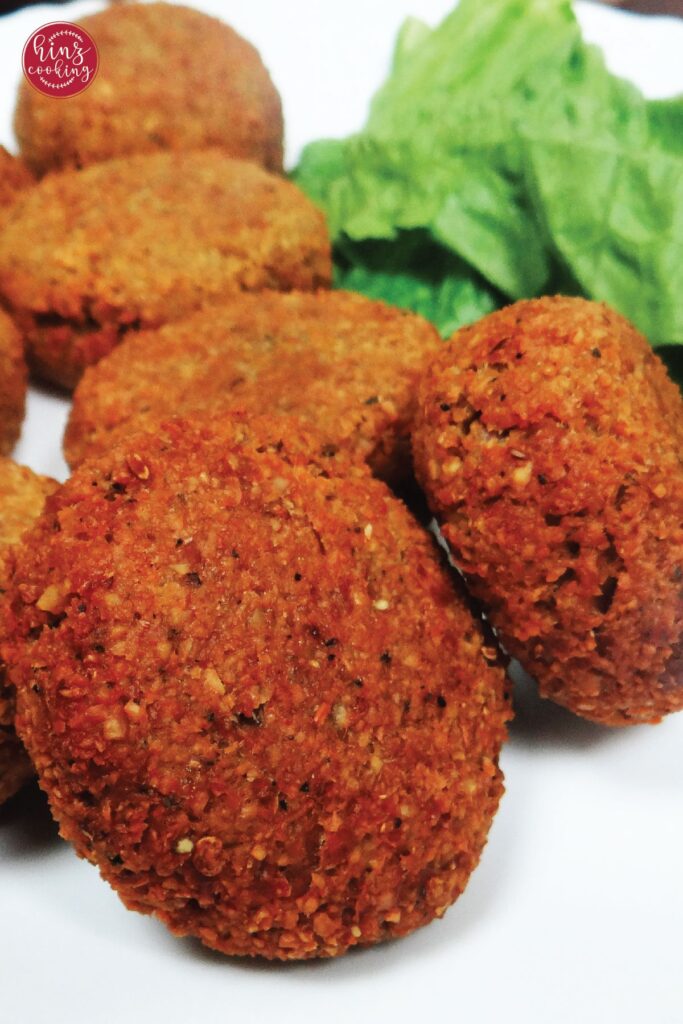
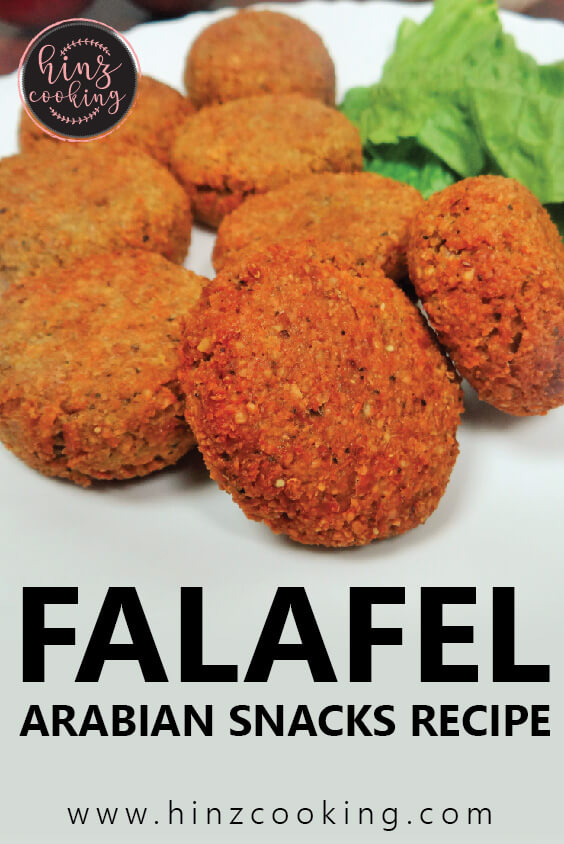
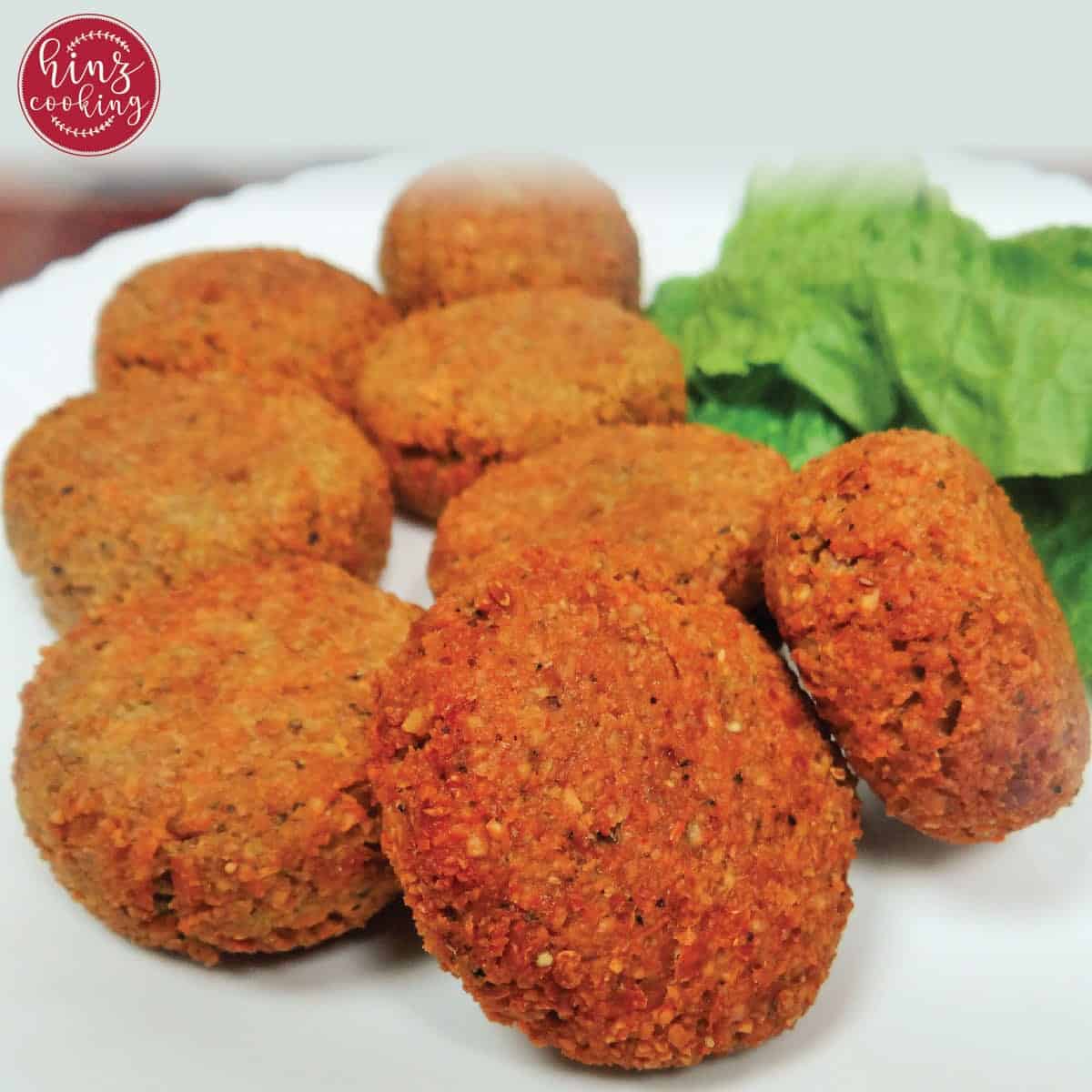
This easy homemade Lebanese falafel recipe delivers perfectly crispy and crunchy bites with a soft, herb-packed center. Made from chickpeas, fresh herbs, and warm spices, these authentic Middle Eastern fritters are savory, flavorful, and perfect for wraps, mezze platters, or snacks.
Watch - How Did I Make Crispy Falafel
I got this recipe from a Lebanese grandmother.
Not metaphorically — literally. My friend's grandmother, who had spent her whole life in Beirut, watched me eat what I thought was perfectly good falafel at a restaurant, shook her head, and the next day made me a batch herself. What she put on the table was completely different from what I'd been making. The crust was darker and crispier. The inside was green, not grey. And the texture — soft and grainy at the same time — was nothing like the dense, doughy falafel I had accepted as normal.
She made me watch every step. The soaking time. The coarse blend — never smooth. The resting in the fridge. The oil temperature. "People rush it," she said. "That is why it breaks."
This is that recipe. I've tested it dozens of times since, adjusted the spice balance for what works best from a home kitchen, and added the baked and air fryer variations for when you want something lighter. But the core technique — soaked dried chickpeas, coarse blend, cold rest, correct oil temperature — is exactly what she showed me.
Jump to:
- Watch - How Did I Make Crispy Falafel
- What is Falafel?
- Dried Chickpeas Vs Canned - The Most Important Choice
- Falafel Ingredient
- How To Make Crispy Falafel From Scratch
- Alternative Cooking Methods
- Pro Tips From Experience
- How to Store Falafel
- What to Serve With Falafel
- Frequently Asked Questions
- More Ideas With Chickpeas
- Falafel Recipe — Crispy Authentic Lebanese Falafel From Scratch
What is Falafel?
Falafel (فلافل) is a Middle Eastern deep-fried patty or ball made from ground soaked dried chickpeas blended with fresh herbs (parsley, cilantro), garlic, onion, and spices (cumin, coriander, paprika), then fried until the exterior is dark golden and crispy while the interior remains soft, green, and herbaceous. Originally from Egypt and the Levant, falafel is now eaten across the Arab world and globally as street food, a sandwich filling, and a high-protein main course.
Why authentic falafel is green inside — and what it means
The green color inside falafel is the single most reliable sign that it was made correctly. That color comes from fresh parsley and cilantro — used generously, blended raw, not cooked. If your falafel is grey or brown inside, one of three things happened: the herbs were stale, they were cooked rather than blended raw, or the chickpeas were canned rather than soaked dried.
The green interior is not just visual. It tells you the herbs are fresh, the chickpeas were soaked long enough to grind properly, and the mixture was handled quickly from blend to fry. Grey falafel tastes dense and flat. Green falafel tastes alive.
Dried Chickpeas Vs Canned - The Most Important Choice
Every authentic falafel recipe uses dried chickpeas soaked overnight. Not cooked. Not canned. Soaked raw dried chickpeas only.
This is the decision that determines everything else.
Why canned chickpeas fail for falafel: Canned chickpeas have already been cooked. When you blend them, they turn into a smooth, wet paste — the same texture as hummus. This paste cannot hold its shape when fried. It absorbs too much oil, falls apart in the pan, and produces a dense, doughy result with no crunch and no green color.
Why soaked dried chickpeas work: Raw soaked chickpeas are firm but pliable. When coarsely blended, they produce a rough, grainy texture with distinct chickpea pieces still visible. This mixture holds together when shaped, creates a crispy exterior when fried, and stays moist and grainy inside — the texture that defines good falafel.
The soaking time: A minimum of 8 hours in cold water. Overnight (10–12 hours) is better. The chickpeas should roughly double in size and break easily when pressed between two fingers. If they don't break easily, soak longer.
Falafel Ingredient
Dried Chickpeas: used organic dried chickpeas and soaked in water for 8 to 9 hours to get the soft grain of chickpeas. Fully soaked chickpeas will double in size and easily break with a hand press.
Onion: used red onion which is the same as yellow onion in flavor but you can also use white onion to get more strong spicier and pungent flavor.
Spices: add salt and black pepper also add cumin, coriander, and paprika which makes a perfect seasoning with chickpeas.
Herbs: Freshly chopped cilantro/coriander used with green chilies to add spice to chickpeas.
Grated Garlic: To add a garlicky flavor used freshly grated garlic. Garlic powder will not replace the flavor of fresh garlic clove.
Fresh Lemon Juice: It will add a savory and citric taste to falafel.
All purpose flour: It will help to bind the ground chickpeas to form a patty.
Baking soda: Little addition of baking soda will add a magic twist to get soft, fluffy, and chewy falafel.
Oil for frying: used any vegetable, canola, or sunflower oil for frying.
Why each ingredient matters:
Fresh herbs over dried — always. Dried parsley and dried cilantro produce grey, flat-tasting falafel. Fresh herbs are what create the green color, the herbaceous flavor, and the moisture inside the falafel. There is no substitute.
Red onion vs white onion. Red onion has a slightly sweeter flavor when raw-blended. White onion gives a sharper, more pungent result. Either works — personal preference. Do not use onion powder as a substitute; it makes the mixture wet.
Lemon juice. A small amount — 1 tablespoon — adds brightness without making the mixture wet. Add it at the blending stage, not afterward.
Baking soda (not baking powder). Baking soda reacts with the lemon juice in the mixture and creates a very slight lift inside the falafel, giving it the soft, airy interior characteristic of good Lebanese falafel. Do not use more than ¾ teaspoon — too much causes the falafel to puff and crack while frying.
Flour quantity. The flour is purely a binder. Use as little as possible — 2 tablespoons is usually enough. Too much flour makes the falafel dense and doughy. The correct consistency: the mixture holds its shape when pressed into a ball but is slightly tacky to the touch.
How To Make Crispy Falafel From Scratch
Step 1 — Soak the dried chickpeas overnight
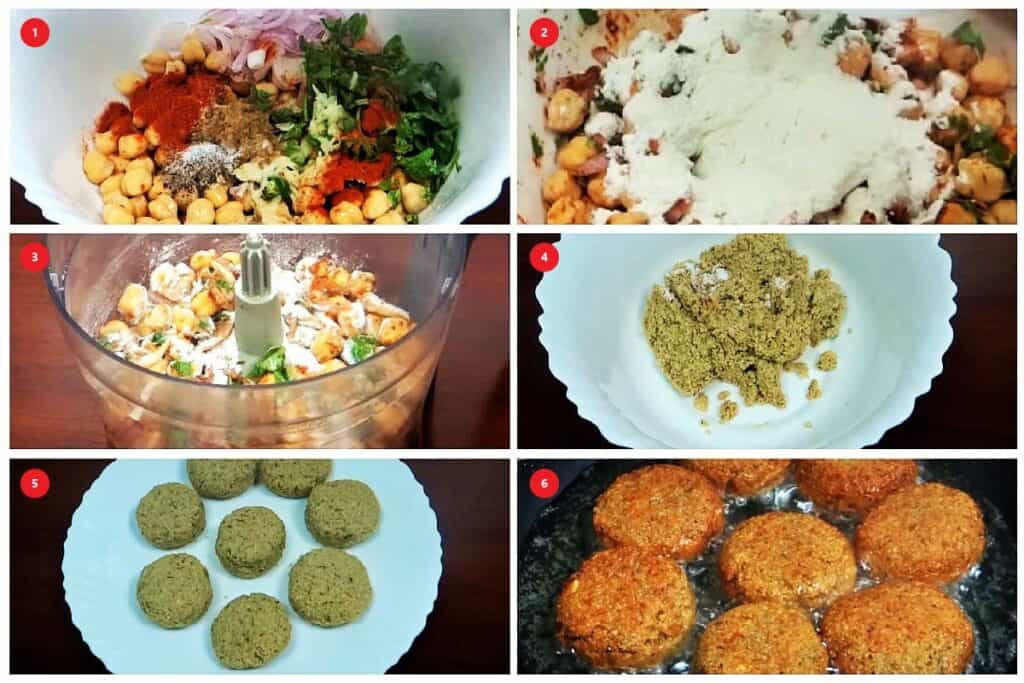
Place 2 cups of dried chickpeas in a large bowl. Cover with cold water — they will absorb a significant amount of water, so use at least 3x the volume. Leave to soak for a minimum of 8 hours, ideally overnight (10–12 hours).
After soaking, drain and rinse under cold running water. The chickpeas should have roughly doubled in size. Test one by pressing firmly between your fingers — it should break easily with some resistance but no crunch. If it's still hard, soak for another 2 hours.
Do not cook the chickpeas. Raw soaked chickpeas only.
Step 2 — Build the falafel mixture
In a food processor, combine the drained soaked chickpeas, fresh parsley, fresh cilantro, red onion, garlic, and green chilies. Pulse in short bursts — 8 to 10 pulses of 1–2 seconds each. Stop frequently to scrape down the sides.
The blend should be coarse — not smooth. You want small, irregular pieces of chickpea still visible, not a smooth paste. The moment the mixture looks like hummus, you have over-blended and the falafel will not fry correctly.
Add cumin, coriander, paprika, salt, black pepper, and lemon juice. Pulse 3–4 more times to incorporate. Add baking soda and 2 tablespoons of flour. Pulse 2–3 more times.
Test the consistency: take a small amount and press it into a ball. If it holds its shape without cracking — ready. If it crumbles, add the remaining tablespoon of flour and pulse once more.
Step 3 — Rest the mixture in the refrigerator
Transfer the mixture to a bowl, cover tightly with plastic wrap, and refrigerate for at least 1 hour — 2 hours is better. This resting step is not optional.
During the rest, three things happen: the flour absorbs any excess moisture, the baking soda begins reacting with the lemon juice, and the spices deepen and integrate into the chickpea. Falafel made without resting tends to crack during shaping and falls apart in the oil.
From experience: when I've skipped the rest step in testing, the falafel breaks at a rate of about 1 in 3 balls in the oil. With a proper 1-hour rest, none break. The rest is not a suggestion — it's part of the recipe.
Step 4 — Shape the falafel
Remove the mixture from the refrigerator. Using damp hands or a falafel mold (a small spring-loaded scoop sold in Arabic kitchenware shops), shape the mixture into balls or flat patties approximately 4cm in diameter.
Balls work best for deep frying and air frying. Patties work best for shallow frying and baking.
As you shape each piece, press it firmly — no gaps, no cracks on the surface. A crack on the surface will open further in the oil and the falafel will split. If a ball cracks when you press it, the mixture needs another tablespoon of flour.
Place shaped falafel on a plate or tray. Do not stack them.
Step 5 — Fry (classic method)
Pour oil into a deep, heavy-bottomed pan to a depth of at least 7–8cm (3 inches). Heat to 175°C / 350°F. If you don't have a thermometer, test with a small piece of mixture — it should rise to the surface and bubble actively within 3–4 seconds of touching the oil.
Lower falafel balls gently into the oil one at a time using a slotted spoon. Do not overcrowd — fry in batches of 4–5 maximum. Overcrowding drops the oil temperature and produces pale, oil-soaked falafel instead of crispy ones.
Fry for 3–4 minutes, turning once halfway through, until deep golden-brown — almost mahogany in color. Light golden falafel will not be crispy. The darker color is correct.
Remove with a slotted spoon and drain on a paper towel. Taste the first batch and adjust salt before frying the remainder.
Oil temperature is the most common falafel failure point. Too cold: the falafel absorbs oil and turns greasy. Too hot: the outside burns before the inside warms through. 175°C / 350°F is the correct temperature — test it before the first batch.
Alternative Cooking Methods
Baked falafel (healthier, slightly less crispy)
Preheat oven to 220°C / 430°F. Line a baking tray with parchment paper and brush generously with olive oil — enough that the paper looks wet. Place shaped falafel patties (not balls — patties bake more evenly) on the tray with space between each. Brush or spray the tops with olive oil.
Bake for 12–15 minutes, then flip each patty carefully and bake for a further 8–10 minutes until both sides are golden-brown and the surface is firm to the touch. Baked falafel will not have the same crust as fried, but the interior flavor is identical.
Tips for crispier baked falafel: use a dark metal baking tray (conducts heat better than light-colored trays), place the tray on the lowest oven rack for the first 12 minutes, and don't open the oven before the flip.
Air fryer falafel (best balance of easy and crispy)
Preheat air fryer to 180°C / 360°F for 3 minutes. Line the basket with perforated parchment (or use without — spray the basket with oil). Arrange falafel balls in a single layer with gaps between each. Spray generously with oil.
Air fry for 8 minutes, then flip each ball and spray again with oil. Air fry for a further 6–8 minutes until deep golden on all sides.
Air fryer falafel is the closest in texture to fried — the circulating hot air creates a real crust. The key difference from the oven: spray the oil twice (before and after flipping) and don't skip preheating.
Shallow fried / pan fried (least oil, good results)
Heat 3–4 tablespoons of oil in a heavy iron skillet over medium heat. Place falafel patties in the pan — not balls, which are hard to turn evenly in shallow oil. Cook for 4–5 minutes without moving until a deep golden crust forms on the bottom. Flip carefully and cook for 3–4 minutes on the second side.
Shallow fried falafel works well for falafel wraps and sandwiches because the flat patty shape fits naturally into pita bread.
Pro Tips From Experience
- Never over-blend. The moment the mixture looks smooth, stop. Coarse and rough is correct. Smooth is hummus. Pull the food processor plug before you think it's ready — you can always pulse again; you can't un-blend.
- Test fry one ball first. Before frying the full batch, fry a single ball. This tells you whether the oil temperature is right, whether the mixture needs more flour, and what the salt level is like. Adjust before committing to the whole batch.
- Cold mixture fries better. Keep the shaped falafel balls in the refrigerator until the moment you lower them into the oil. Cold falafel holds its shape better in hot oil — the surface sets more quickly and creates a crisper crust. If the mixture gets warm and soft during shaping, put it back in the fridge for 15 minutes.
- The color should be dark, not light. Most people pull falafel out of the oil when it's golden-yellow. That is too soon — the inside will be undercooked and the outside will not be crispy. Wait for deep mahogany-brown. It looks almost too dark. It's not.
- Falafel molds are worth buying. A traditional Arabic falafel mold (around £3–5 from any Middle Eastern kitchenware shop) produces perfectly uniform balls with the right density every time. Hand-rolling is fine but the compression from the mold creates a denser, more stable ball that cracks less in the oil.
- If falafel breaks in the oil: the mixture either needs more flour (add 1 tablespoon, mix, refrigerate for 15 more minutes) or the resting time was too short. Remove what's left of the broken ball immediately with a slotted spoon — broken pieces will burn and turn the oil bitter.
How to Store Falafel
Before cooking (uncooked shaped falafel)
Place the shaped falafel balls in a single layer on a tray lined with parchment paper. Freeze until solid — approximately 2 hours. Once frozen, transfer to an airtight freezer bag. They can be stored frozen for up to 1 month.
To cook from frozen: do not microwave first. Add the frozen falafel directly to hot oil (175°C / 350°F) and fry for 5–6 minutes (1–2 minutes longer than fresh). For the air fryer, cook at 180°C for 12 minutes total. The frozen interior will cook through — microwaving first makes the falafel wet and they will not crisp properly.
After cooking (cooked falafel)
Store in an airtight container in the refrigerator for 3–5 days — not longer. Cooked falafel does not keep well beyond 5 days; the texture degrades and the interior dries out.
To reheat: air fryer at 180°C for 4 minutes is the best method — restores the crispiness. Oven at 200°C for 8 minutes also works. Microwave reheating makes falafel soft and steamy — acceptable if you're eating it in a wrap, but avoid it if you want the crust.
The mixture (unbaked, unshaped)
The blended falafel mixture keeps in the refrigerator for up to 24 hours before shaping. Beyond that, it becomes too wet and does not fry correctly.
What to Serve With Falafel
Classic Arabic accompaniments:
- Dakkous — Arabic Tomato Sauce — A fresh tomato and garlic sauce that works as a dipping sauce for falafel in the same way it accompanies Mandi and Kabsa. The tomato acidity cuts through the richness of the fried chickpea perfectly.
- Baba Ganoush — Smoky eggplant dip; a natural pairing for a Middle Eastern mezze spread alongside falafel
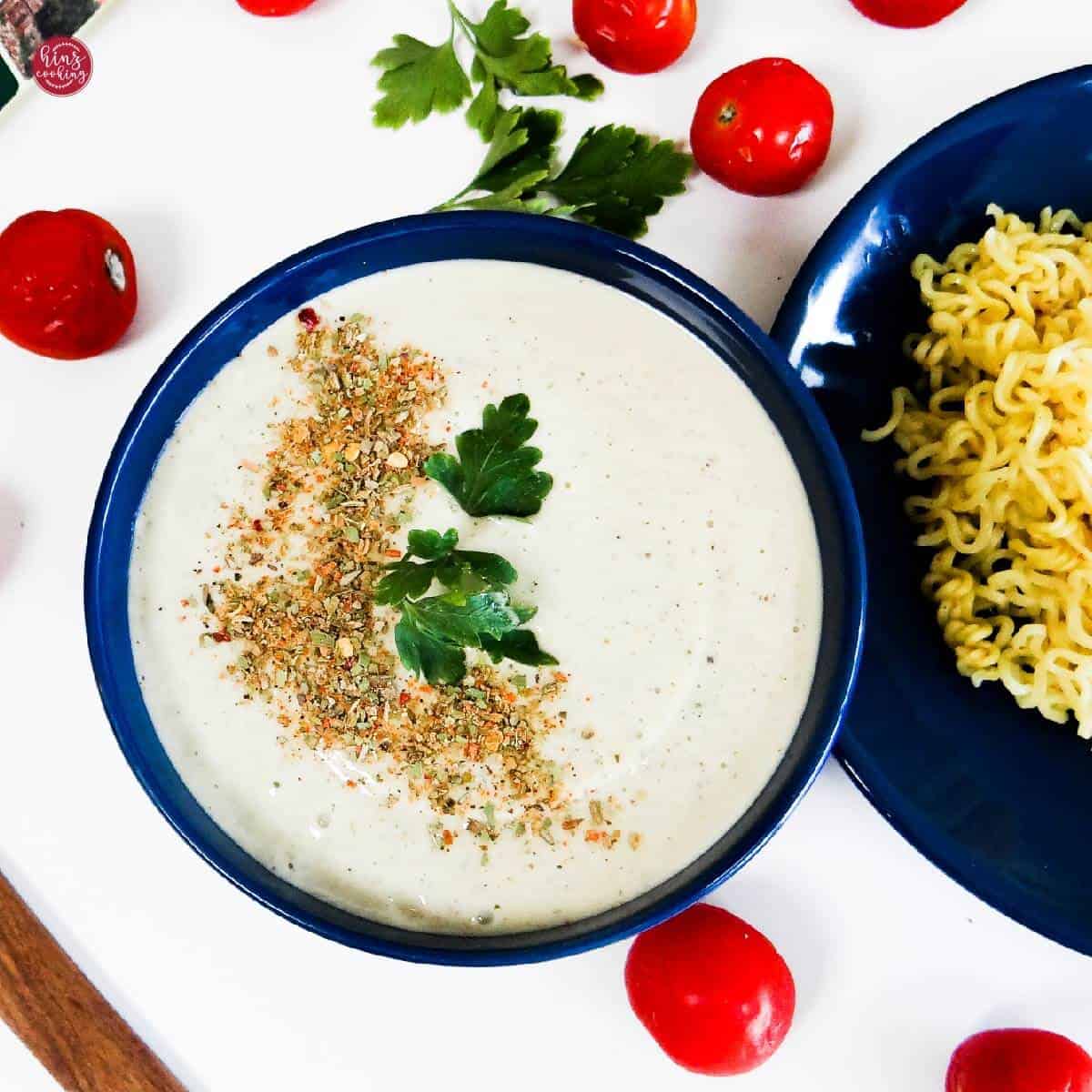
- Tahini sauce — Blended sesame paste, lemon juice, garlic, and water. The most classic falafel dipping sauce across Lebanon, and Jordan.
- Hummus — Falafel and hummus together is a complete, high-protein meal.
For a falafel wrap or sandwich: Use warm pita bread or flatbread. Fill with 3–4 falafel balls (halved), tahini sauce, chopped tomato, cucumber, pickled turnip, and fresh parsley. This is how falafel is served as street food in Beirut, Amman, and Cairo.
For a full Middle Eastern spread:
- Shish Tawook — Grilled chicken skewers alongside falafel as a mixed mezze platter
- Chicken Kabsa or Chicken Mandi — Falafel as a starter before a Kabsa or Mandi main course
- Bazlama flatbread — For scooping and wrapping, if you don't have pita bread.
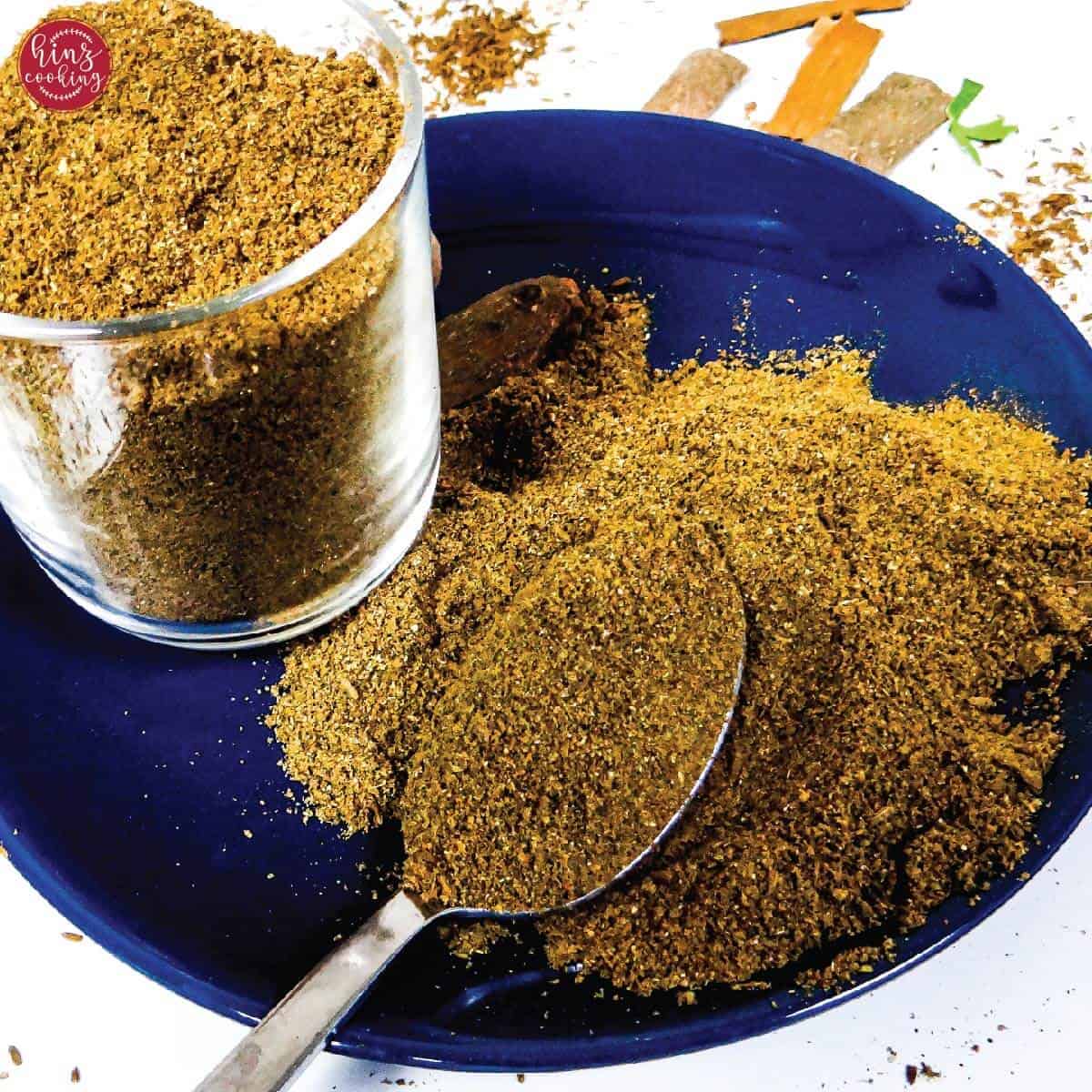
- Baharat spice blend — Sprinkle over the falafel platter before serving
- On the sides, add roasted tomatoes, baked French fries, Lebanese pickles, and Fattoush.
For Ramadan Iftar: Falafel is one of the most popular Ramadan Iftar dishes across the Arab world — high in protein, quick to prepare, and satisfying after a day of fasting. Make the mixture the night before and refrigerate; shape and fry just before Iftar.
Frequently Asked Questions
Three causes: the mixture was not rested long enough in the refrigerator (minimum 1 hour), there is not enough flour to bind the mixture (add 1 tablespoon more), or the oil temperature is too low (below 160°C the falafel absorbs oil and loses its structure). Test with one ball before frying the batch.
Your herbs were either dried rather than fresh, the mixture was over-blended until the herbs broke down completely, or canned chickpeas were used instead of soaked dried chickpeas. All three produce grey, flat-tasting falafel. Use fresh parsley and cilantro, blend coarsely, and always start with dried soaked chickpeas.
Not for authentic crispy falafel. Canned chickpeas are already cooked — they blend into a smooth, wet paste that absorbs too much oil when fried and produces a dense, doughy result. Dried chickpeas soaked overnight give the correct coarse texture and green interior. There is no shortcut here.
A minimum of 8 hours, overnight preferred (10–12 hours). The chickpeas should roughly double in size. Test one by pressing between your fingers — it should break with gentle pressure but still have some resistance. Undersoaked chickpeas produce dense, hard falafel that doesn't cook evenly.pe.
Baking soda (sodium bicarbonate). Baking powder contains additional acidic agents and produces a slightly metallic aftertaste in falafel. Baking soda reacts with the lemon juice in the mixture to create a subtle lift inside the falafel. Use ¾ teaspoon — no more or the falafel will puff and crack.
Yes — use a meat grinder or a manual food mill for the chickpeas. A blender can work but tends to over-process too quickly. In the original Lebanese home kitchen method, dried soaked chickpeas were ground through a hand-cranked meat grinder, which naturally produces the correct coarse texture. If you must use a blender, blend in very small batches (½ cup at a time) with short bursts.
The oil temperature was too low when the falafel was added. Cold oil — or oil that has been cooled by adding too many falafel at once — results in oily, pale falafel. The oil must be 175°C / 350°F before the first batch goes in, and you must wait for it to return to temperature between batches. Fry in small batches of 4–5 maximum.
Yes — the mixture can be made and refrigerated for up to 24 hours before shaping and frying. Or shape into balls and freeze for up to 1 month (fry directly from frozen, no thawing needed). This makes falafel ideal for Ramadan, large gatherings, and meal prep.
Lebanese falafel is made from chickpeas (garbanzo beans). Egyptian ta'ameya is made from dried fava beans (broad beans), which produce a softer, more herbaceous fritter with a slightly different flavor. Egyptian ta'ameya is also typically flatter and coated in sesame seeds before frying. Both are delicious — they are regional variations of the same dish rather than competing versions.
Explore more chickpea ideas:
- Air Fryer Roasted Chickpeas
- Sautéed Chickpeas Recipe
- Chickpea curry
- Chickpea Salad
- How to Cook Chickpeas (Complete guide)
🥣 Do you want to try this Falafel recipe?
⭐ Rate this recipe below
💬 Drop your questions in the comments
📲 Follow along on Instagram for more recipes.
More Ideas With Chickpeas
Falafel Recipe — Crispy Authentic Lebanese Falafel From Scratch
Ingredients
- 2 cups Dried Chickpeas soaked overnight, drained. Never canned.
- ½ cup Coriander / Parsley fresh flat-leaf, roughly chopped, stems removed
- 1 Red Onion (medium size) roughly chopped
- ½ teaspoon Grated Garlic Fresh
- 1 teaspoon Green Chilli Chopped — adjust to heat preference or omit
- ⅓ teaspoon Cumin Powder
- ½ teaspoon Coriander Powder
- ⅓ teaspoon Black Pepper Powder
- ⅓ teaspoon Salt
- ½ teaspoon Paprika Powder smoked
- 1 teaspoon Lemon juice Freshly Squeezed
- 2 tablespoons All Purpose Flour Add 1 tablespoon at a time to bind
- ⅓ teaspoon Baking Soda NOT baking powder
- 3 cups Vegetable Oil Use vegetable, canola, or sunflower oil for deep frying
Instructions
- Soak dried chickpeas overnight: Place 2 cups dried chickpeas — soaked overnight, drained. Never canned. in a large bowl. Cover with at least 3x the volume of cold water — the chickpeas will absorb a large amount. Soak for a minimum of 8 hours, overnight (10–12 hours) preferred. After soaking, drain and rinse under cold water. They should have roughly doubled in size. Test one: press firmly between your fingers — it should break with gentle pressure. If still hard, soak for another 2 hours. Do not cook the chickpeas.
- Blend the falafel mixture Coarsely: In a food processor, combine drained 2 cups dried chickpeas — soaked overnight, drained. Never canned., 1 cups fresh flat-leaf parsley, roughly chopped, stems removed, ½ cups fresh cilantro, roughly chopped, 1 red onion, roughly chopped, 4 garlic cloves, peeled, and 2 green chilies — adjust to heat preference or omit. Pulse in short bursts — 8 to 10 pulses of 1–2 seconds each, stopping to scrape down the sides. The mixture must stay coarse and rough with visible chickpea pieces. The moment it looks smooth like hummus, you have gone too far and the falafel will not fry correctly. Add 1 teaspoons cumin powder, 1 teaspoons coriander powder, 0.5 teaspoons smoked paprika, 1 teaspoons salt, 0.5 teaspoons black pepper, and 1 tablespoons fresh lemon juice. Pulse 3–4 more times. Add 0.8 teaspoons baking soda — NOT baking powder and 2 tablespoons all-purpose flour — add 1 tablespoon at a time to bind. Pulse 2–3 times to incorporate. Test: press a small amount into a ball — it should hold its shape. If it crumbles, add 1 more tablespoon of flour and pulse once.
- Rest in the refrigerator: Transfer the mixture to a bowl, cover tightly, and refrigerate for at least 60 minutes — 2 hours is better. Do not skip this step. During the rest, the flour absorbs excess moisture, the baking soda reacts with the lemon juice, and the spices integrate fully. Falafel shaped without resting breaks in the oil at a much higher rate.
- Shape the falafel balls: Remove the mixture from the refrigerator. With damp hands or a falafel mold, shape into balls approximately 4cm in diameter — about the size of a golf ball. Press firmly as you shape each one: no cracks, no gaps on the surface. A crack on the surface will open further in the hot oil and split the falafel. If cracks appear, add 1 tablespoon of flour to the remaining mixture, mix well, and refrigerate for 15 more minutes. Place shaped falafel on a tray — do not stack. This recipe makes 18–20 balls.
- Heat the oil: Pour 3 cups vegetable, canola, or sunflower oil — for deep frying into a deep heavy-bottomed pan to a depth of at least 7–8cm (3 inches). Heat to 175°C / 350°F. To test without a thermometer: drop a small piece of mixture into the oil — it should rise to the surface and bubble actively within 3–4 seconds. If it sinks and stays down, the oil is too cold. If it browns in under 2 seconds, the oil is too hot. Getting this temperature right is the most important step in the whole recipe.
- Fry in batches: Lower falafel balls gently into the hot oil one at a time using a slotted spoon — never drop them in, as they will splash and may break on impact. Fry a maximum of 4–5 balls at a time. Do not overcrowd — adding too many at once drops the oil temperature and produces pale, greasy falafel instead of crispy ones. Fry for 3–4 minutes, turning once halfway through, until deep mahogany-brown. Light golden is too early — wait for dark brown. Remove with a slotted spoon and drain on a paper towel. Taste the first batch for salt before frying the rest. Return oil to 175°C between each batch.
- Serve immediately: Serve hot alongside Dakkous Arabic tomato sauce, baba ganoush, or tahini sauce for dipping. For a falafel wrap: halve 3–4 balls and place in warm pita bread with tahini sauce, chopped tomato, cucumber, and pickled turnip. Falafel is at its best in the first 10 minutes out of the oil — the crust softens as it cools.
Video
Notes
- BAKED FALAFEL: Preheat oven to 220°C / 430°F. Shape into flat patties (not balls). Place on a generously oiled parchment-lined tray. Brush tops with olive oil. Bake 12–15 min, flip, bake 8–10 min more until deep golden.
- AIR FRYER FALAFEL: Preheat air fryer to 180°C / 360°F. Arrange balls in a single layer, spray generously with oil. Air fry 8 minutes, flip, spray again, air fry 6–8 minutes more until deep golden.
- SHALLOW FRIED: Heat 3–4 tablespoon oil in a heavy skillet over medium heat. Shape as flat patties. Cook 4–5 min per side until deep golden-brown.
- Falafel falling apart? Add 1 tablespoon flour, mix, refrigerate 15 more minutes. Or oil temperature was too low — test before each batch.
- Grey inside, not green? Herbs were dried, mixture was over-blended, or canned chickpeas were used. Always use fresh herbs and soaked dried chickpeas. Too oily? Oil temperature dropped below 160°C. Wait for oil to return to 175°C between every batch. Freezing uncooked: Freeze shaped balls on a tray until solid (2 hours), then transfer to a freezer bag. Store up to 1 month. Fry directly from frozen — do not thaw first. Add 2 extra minutes to fry time. Storage cooked: Airtight container, refrigerator, 3–5 days. Reheat in air fryer at 180°C for 4 minutes to restore the crust. Avoid microwaving if you want the falafel crispy. Serve with: Dakkous Arabic Tomato Sauce · Baba Ganoush (without tahini) · Tahini sauce · Hummus · Bazlama flatbread · Shish Tawook on a mezze platter
Nutrition
*This post was first published on 5th May 2019 and recently updated with more information for the reader's benefit.
Hinz
Falafel Recipe for foodies to make crispy falafel at home kitchen