
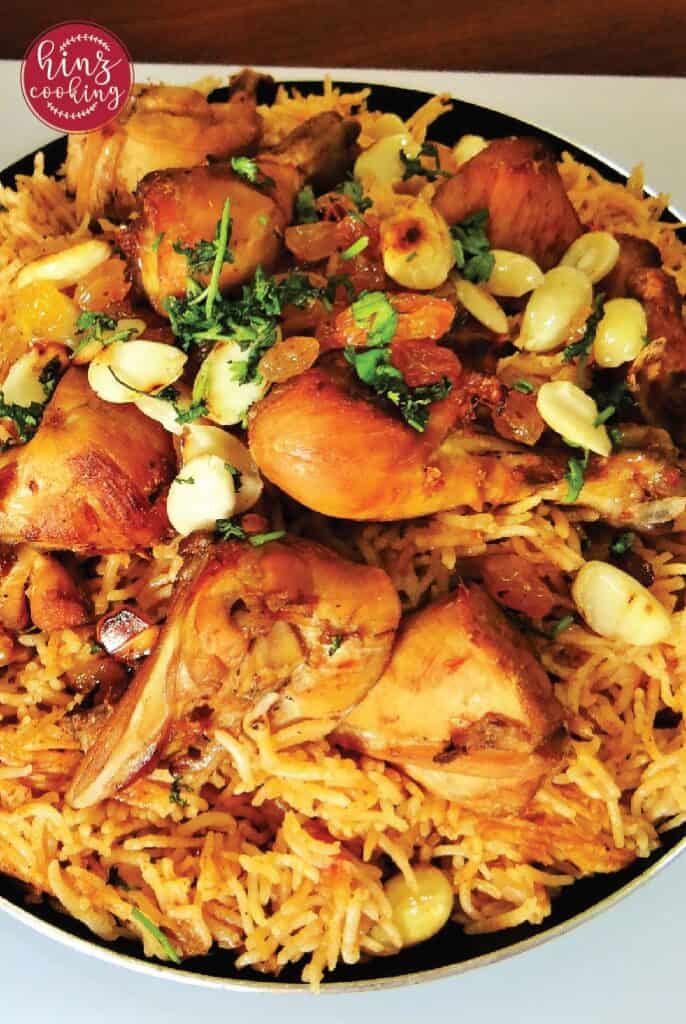
The first time I ate Kabsa was at a Saudi colleague's home in Dubai. It arrived on the table as a whole mountain of rice — deep brown, rich with spice — with a broiled chicken resting on top and a small bowl of bright red Dakkous sauce placed beside it. The table went quiet when the platter landed. That is what Kabsa does to a room.
What surprised me most was the flavor. I expected it to taste like a richer, tomato-based version of Mandi. It doesn't. Kabsa has an entirely different character — the dried lemon (Loomi or Lumi) is the thing that defines it. That single ingredient gives the rice a subtle, tangy, slightly metallic depth that you cannot get from fresh lemon or lime. It is the ingredient that tells you, clearly, that this is Gulf cooking and nothing else.
I have made this recipe dozens of times since, testing the spice ratios, the water balance, the broiling time on the chicken. This version uses a homemade Kabsa spice mix (assembled in 5 minutes), a dried lemon broth that becomes the stock for the rice, and a 10-minute broil that gives the chicken the golden color and slightly charred skin that no stovetop method can replicate.
Watch - How Did I Make Chicken Kabsa
Looking for Arabic recipes? Check out Chicken Mandi, Shish Tawook, Authentic Falafel, Saudi Albaik Chicken, and Chicken Maqluba.
Jump to:
- Watch - How Did I Make Chicken Kabsa
- What is Chicken Kabsa?
- Kabsa Vs Mandi — The Clear Difference
- Kabsa Spice Mix — What Each Spice Does
- Ingredients & Substitution
- How To Make Chicken Kabsa — Step By Step
- Pro Tips From Experience
- What To Serve With Chicken Kabsa
- How To Store & Reheat
- Frequently Asked Questions
- Q & A
- More Middle Eastern Idea
- Chicken Kabsa Recipe (Machboos) — Authentic Saudi Arabian Rice & Chicken
What is Chicken Kabsa?
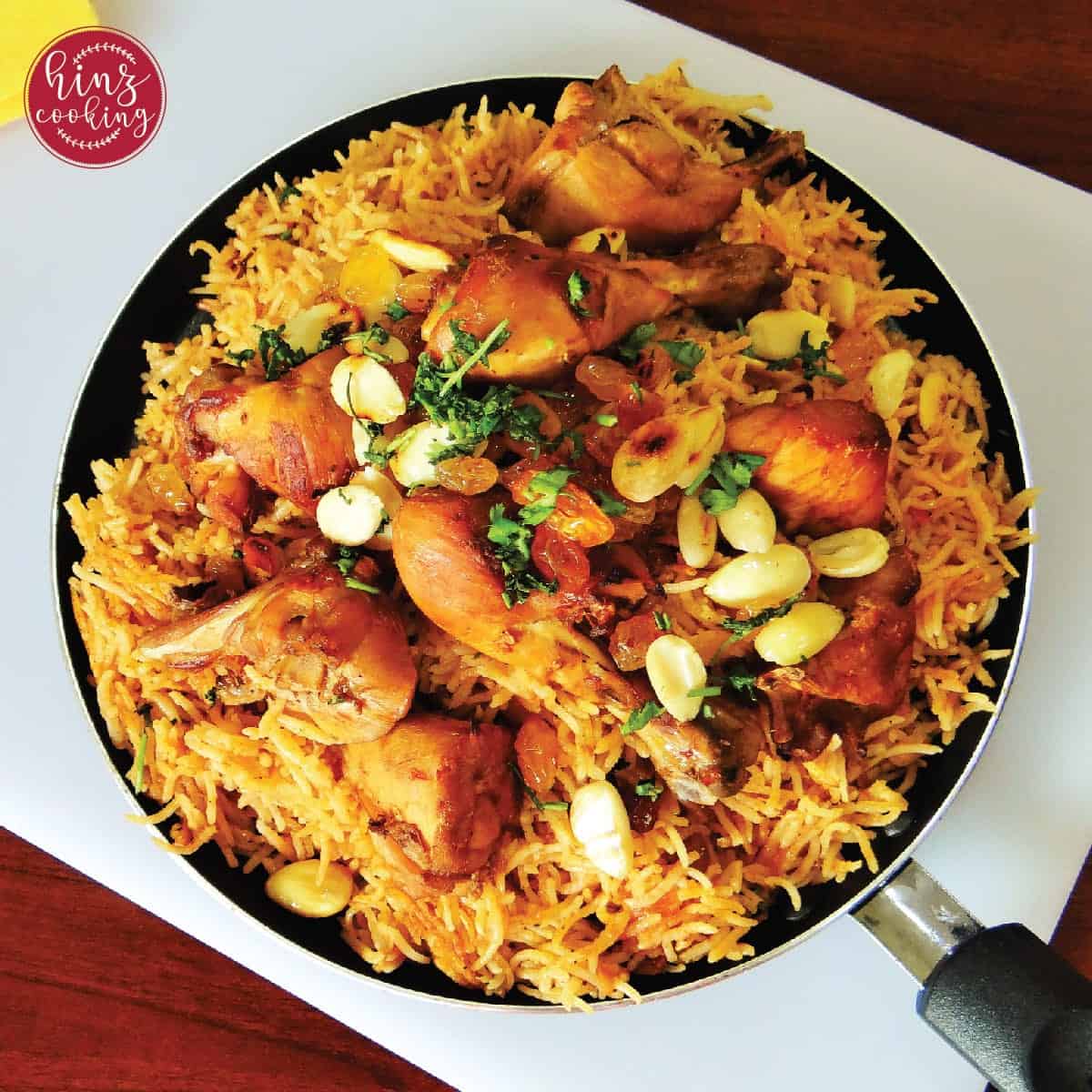
Chicken Kabsa (كبسة الدجاج), also known as Chicken Machboos in Kuwait and Bahrain, is the national dish of Saudi Arabia — a one-pot Arabic rice dish in which chicken is simmered in a spiced broth of tomatoes, dried lemon, and Kabsa spices, then removed and broiled until golden while the fragrant stock cooks the rice. It is served on a large communal platter topped with roasted nuts and accompanied by Dakkous, the Arabic tomato sauce.
What makes Kabsa different from every other Arabic rice dish?
Kabsa belongs to the same Gulf family as Chicken Mandi and Maqluba, but its flavor is entirely its own. Three elements define it:
1. The dried lemon (Loomi). Black dried lemon is the soul of Kabsa. It is made by boiling ripe limes in saltwater and sun-drying them until the interior turns dark and the exterior becomes hard as a stone. When simmered in the broth, it releases a smoky, tangy, slightly fermented depth that no other ingredient replicates. Without it, you have spiced chicken rice. With it, you have Kabsa.
2. The tomato-based stock. Unlike Mandi (where the rice steams in trapped steam from minimal liquid), Kabsa rice cooks in a rich tomato and chicken stock. The tomatoes, tomato paste, and chicken fat combine into a deeply flavorful broth that the rice absorbs completely during cooking. This is why Kabsa rice is deep brown-red, not the golden-yellow of Mandi.
3. The broiled chicken finish. The chicken is cooked through in the stock first, then removed and broiled in the oven for 10–15 minutes. This two-stage cooking — poached then grilled — is what gives Kabsa chicken its combination of juicy interior and lightly charred, spiced exterior.
Kabsa Vs Mandi — The Clear Difference
These are the two most commonly confused Arabic rice dishes. Here is the definitive distinction:
| Kabsa | Mandi | |
|---|---|---|
| Cooking method | Stovetop, 1 pot | Oven-baked, steam-sealed |
| Stock | Rich tomato + chicken broth | Minimal — steam only |
| Flavour profile | Rich, tangy, tomato-forward | Subtle, smoky, spice-forward |
| Rice color | Deep brown-red | Golden yellow |
| Defining ingredient | Dried lemon (Loomi) | Hawaij spice mix + saffron |
| Chicken finish | Broiled after boiling | Broiled above the rice |
| Cook time | ~60 minutes | ~90 minutes |
The simplest way to remember it: Mandi is about technique (steam and smoke). Kabsa is about the stock (the dried lemon broth). For the full Mandi recipe, see Chicken Mandi — Oven-Baked Authentic Yemeni Rice.
Kabsa Spice Mix — What Each Spice Does
| Spice | Amount | Role |
|---|---|---|
| Cardamom powder | ½ tsp | The signature Gulf aroma — lifts the whole dish |
| Cinnamon powder | ½ tsp | Sweetness and warmth; balances the tomato acidity |
| Black pepper | ½ tsp | Background heat without chili sharpness |
| Garlic powder | ½ tsp | Savory depth that complements the fresh garlic |
| Cumin powder | ¼ tsp | Earthy base note — optional but recommended |
| Coriander powder | ¼ tsp | Floral warmth; rounds out the cardamom |
| Nutmeg | a pinch | Traditional in Saudi Kabsa — subtle but distinctive |
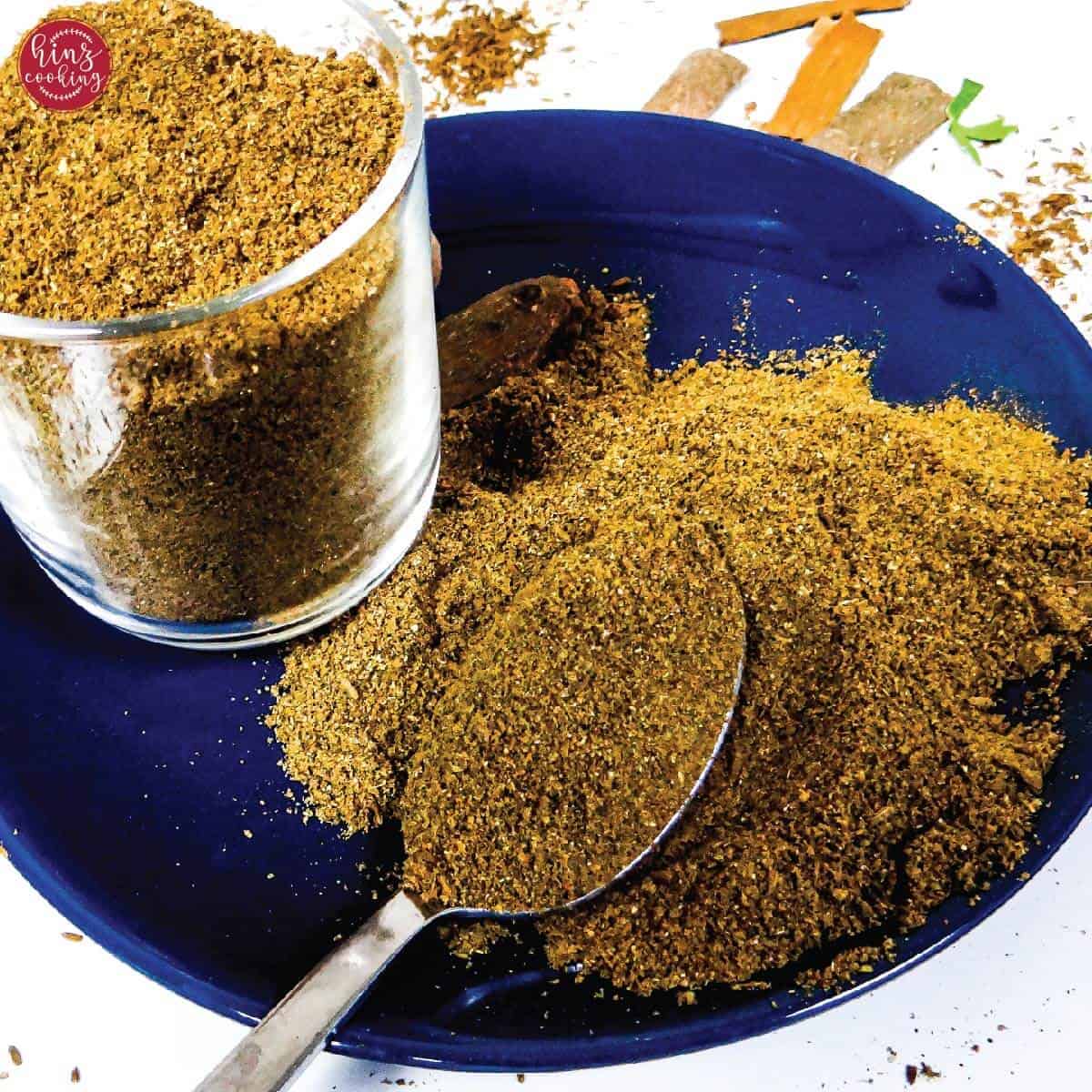
To make: combine all in a small bowl. This yields enough for the recipe below. Store any remaining mix in an airtight jar for up to 2 months.
About dried lemon (Loomi / Black Lime): Dried lemon is a cornerstone of Gulf cooking sold in Middle Eastern grocery stores as "loomi," "black lime," or "noomi basra." The exterior is hard, dark, and shriveled. Pierce it once or twice with a knife before adding to the pot — this allows the flavor to release into the broth as it simmers. If you cannot find dried lemon, substitute ½ teaspoon of dried lime powder (available in Arabic spice shops) or 1 tablespoon of fresh lemon juice added at the end — the flavor is less deep but the dish is still good.
Ingredients & Substitution
Chicken
- 500g bone-in chicken pieces — legs and thighs preferred
- 1 tablespoon cooking oil
- ½ cup onion, finely chopped
- 1 teaspoon fresh ginger, grated
- 1 teaspoon fresh garlic, grated
Kabsa spice seasoning
- 1 teaspoon salt (adjust to taste)
- ½ teaspoon cardamom powder
- ½ teaspoon black pepper
- ½ teaspoon cinnamon powder
- ½ teaspoon garlic powder
- 1 whole dried lemon (loomi) — pierced twice with a knife
- 1.5 teaspoon tomato paste
- 1 cup fresh tomatoes, peeled and diced
- 3 cups hot water
Rice
- 3 cups basmati rice, soaked 30 minutes and drained
- Salt to taste
Garnish
- 2 tablespoons blanched almonds, roasted
- 1 tablespoon golden raisins, roasted
- Fresh cilantro
- Shredded carrots, pan-fried (optional)
How To Make Chicken Kabsa — Step By Step
Prep time: 20 minutes | Cook time: 55 minutes | Total: 75 minutes | Serves: 4
Step 1 — Soak the rice
Wash basmati rice under cold running water until the water runs clear. Soak in cold water for 30 minutes then drain completely. Do not soak longer than 45 minutes — over-soaked basmati breaks down during cooking and turns mushy.
Step 2 — Build the chicken base
Heat 1 tablespoon oil in a large, heavy-bottomed pot over medium heat. Add the chopped onion and sauté for 5–6 minutes until soft and translucent. Add the grated ginger and garlic and cook for 1–2 minutes until fragrant.
Add the chicken pieces and increase heat to high. Cook for 4–5 minutes, turning the chicken to seal all sides, until the chicken changes color from pink to white. Do not cook through at this stage — it will finish in the broth.
Step 3 — Add spices, tomatoes, and dried lemon
Season with salt, cardamom, black pepper, cinnamon, and garlic powder. Stir well and cook for 30 seconds to bloom the spices in the oil — you will smell them sharpen and deepen.
Add the tomato paste and stir to coat the chicken. Add the fresh tomato cubes and the pierced dried lemon. Cook on high heat for 3–4 minutes, stirring, until the tomatoes break down and begin forming a thick gravy.
The dried lemon does something here that no other ingredient can: as the tomato cooks down around it, the lemon's interior begins to release a subtle, smoky, fermented sourness into the base. This is the moment the dish becomes Kabsa.
Step 4 — Simmer the chicken in stock
Add 3 cups of hot water and stir to combine. Cover the pot and cook on medium-low heat for 20 minutes. The chicken will finish cooking in the simmering spiced broth, absorbing the tomato, dried lemon, and spice flavors all the way through the meat.
After 20 minutes, test the chicken — it should be cooked through with juices running clear. Remove the chicken pieces carefully and place in a baking dish. Reserve the stock in the pot.
Step 5 — Broil the chicken
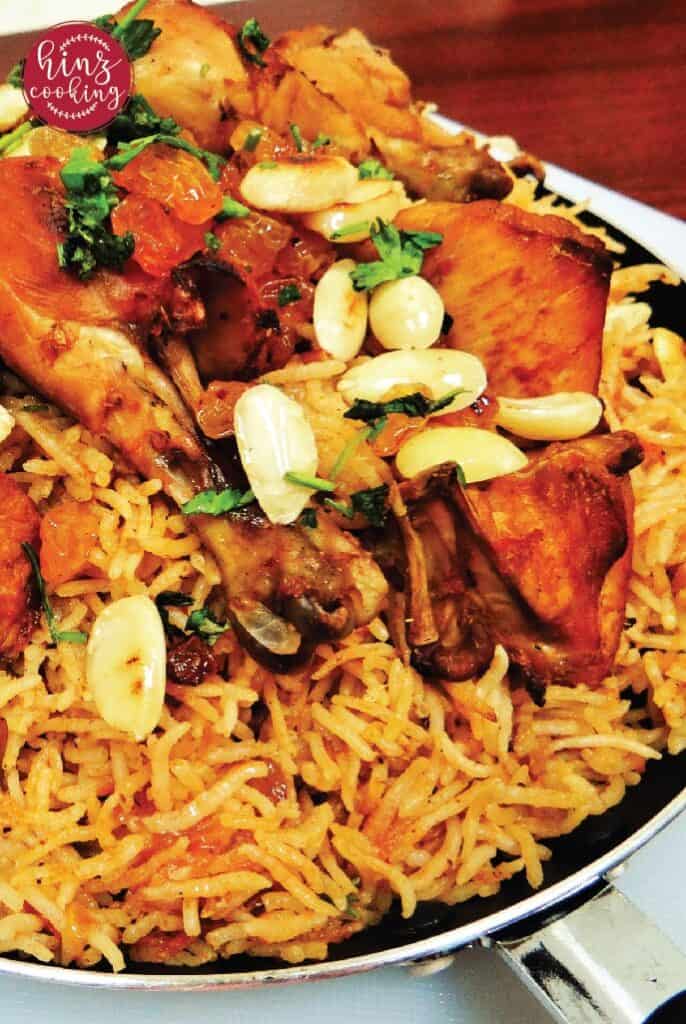
Preheat oven to 220°C / 430°F (broil / top grill setting). Brush the chicken pieces lightly with a teaspoon of oil or the fat skimmed from the top of the stock. Place the baking dish on the top rack and broil for 10–12 minutes until the skin turns deep golden-brown with lightly charred edges.
This step is about color and texture — the chicken is already fully cooked. The broil adds the crispy, slightly charred exterior that stovetop cooking cannot provide. Watch it closely at the 8-minute mark.
Step 6 — Cook the rice in the Kabsa stock
While the chicken broils, check the stock level in the pot. You need approximately 4.5 cups of liquid to cook 3 cups of soaked rice (ratio: 1.5 cups liquid per 1 cup soaked rice). Top up with hot water if needed and taste for salt — the stock will season the rice, so it should taste slightly saltier than you want the final rice to be.
Add the drained soaked rice to the stock. Stir once gently to combine. Bring to a boil over high heat, then immediately reduce to the lowest heat setting. Cover tightly and cook for 18–20 minutes until the rice is fully cooked and all liquid has been absorbed.
Remove from heat and let the rice rest, covered, for 5 minutes. Do not lift the lid during these 5 minutes — the steam finishes the cooking.
Step 7 — Roast the garnish
While the rice cooks, heat ½ teaspoon of oil in a small frying pan over medium heat. Add the blanched almonds and stir for 2–3 minutes until golden. Add the raisins in the last 30 seconds — raisins burn quickly on high heat. Remove from heat immediately once golden.
Step 8 — Plate and serve
Spread the rice on a large serving platter, discarding the dried lemon. Place the broiled chicken pieces on top of the rice. Scatter the roasted almonds, raisins, and fresh cilantro over everything. Add the pan-fried shredded carrots if using.
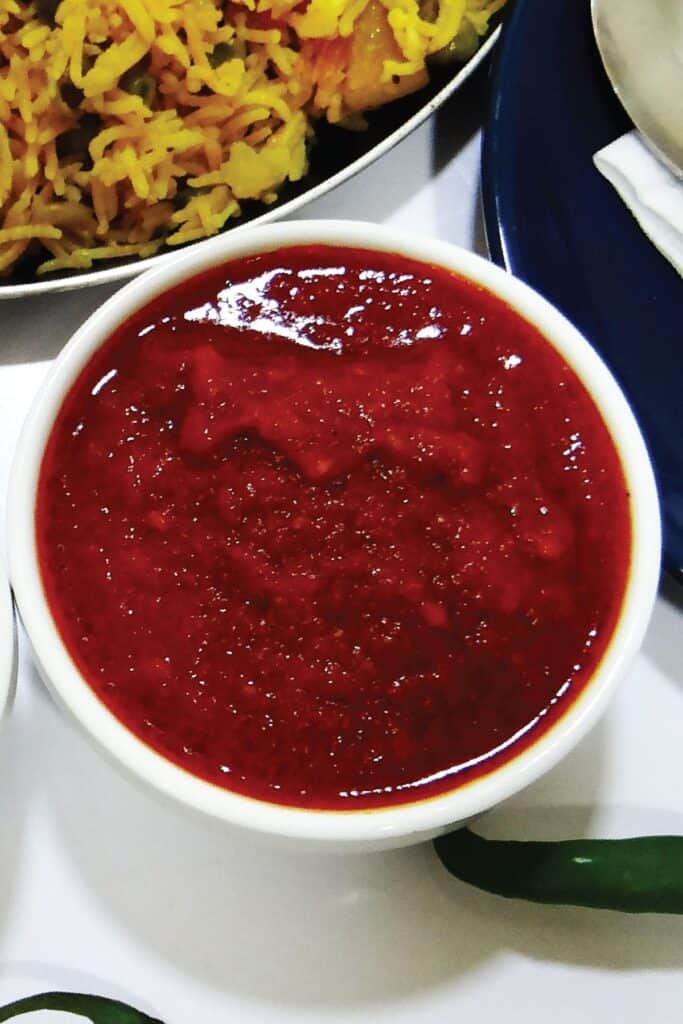
Serve immediately alongside a bowl of Dakkous Arabic tomato sauce — the essential Kabsa condiment. The Dakkous sharpness cuts directly through the richness of the spiced stock rice. It is not a side option; it is part of the dish.
Pro Tips From Experience
- The dried lemon is non-negotiable. The first few times I tested this recipe without dried lemon — using fresh lemon juice instead — the dish was good but generic. The dried lemon adds a smoky, slightly bitter, fermented depth that fresh citrus cannot replicate. Find it in any Middle Eastern grocery store. Buy a bag and keep it in your pantry.
- Pierce the dried lemon before cooking. A whole, unpierced dried lemon releases very little flavor. Two quick stabs with a knife opens it enough for the interior to release into the broth as it simmers. Do not break it open completely — the seeds inside are bitter.
- The water ratio is everything. The stock you cook the rice in is not a fixed amount — it depends on how much water evaporated during the chicken simmering step. Always measure the stock before adding rice and adjust. The correct ratio for soaked basmati is 1.5 cups liquid per 1 cup rice.
- Broil fast and watch it. The chicken only needs 10–12 minutes under the broiler — it is already fully cooked. The purpose is color, not cooking. At 12 minutes the skin should be deep golden with a few dark patches. At 15 minutes it starts to dry out. Set a timer.
- Take the chicken skin off before simmering. Traditional Saudi Kabsa uses skinless chicken — the skin releases too much fat into the broth and makes it greasy. Removing it before the simmer step gives you a cleaner, better-tasting stock.
- For a deeper color on the rice: add ½ teaspoon of tomato paste directly to the rice stock just before adding the rice. Stir to dissolve. This deepens the color from orange-brown to the rich reddish-brown you see in restaurant Kabsa.
What To Serve With Chicken Kabsa
Essential:
- Dakkous — Arabic Tomato Sauce — The non-negotiable Kabsa condiment. Made from fresh tomatoes, garlic, and olive oil, its acidity and freshness balance the richness of the spiced stock rice. No Kabsa table in Saudi Arabia, Kuwait, or the UAE is complete without it.
Complete the Gulf spread:
- Chicken Mandi — If you want to understand what makes Kabsa unique, make Mandi alongside it. The contrast between the two dishes is the best teaching tool in Gulf cooking.
- Maqluba — The Palestinian upside-down rice; third member of the Gulf rice trio.
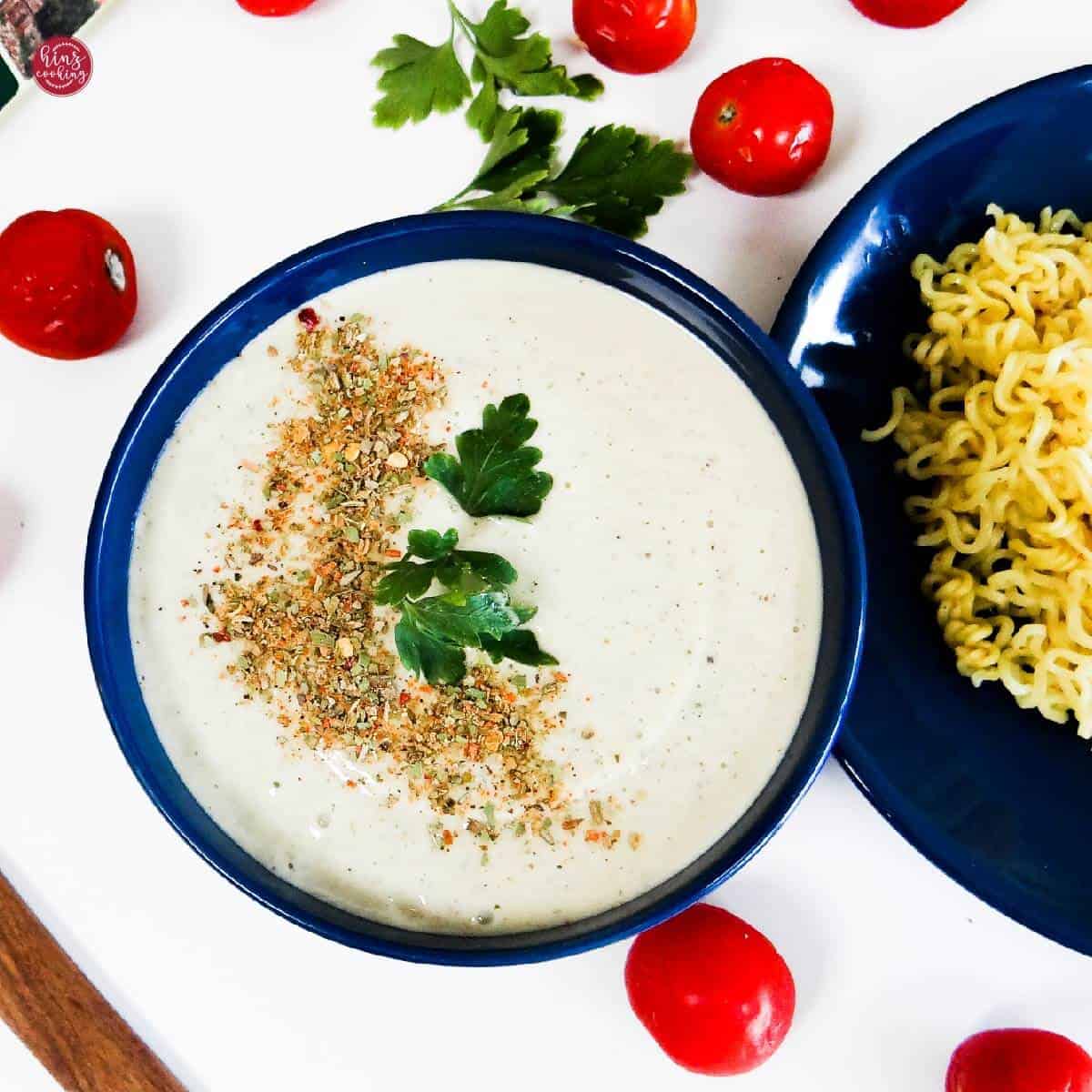
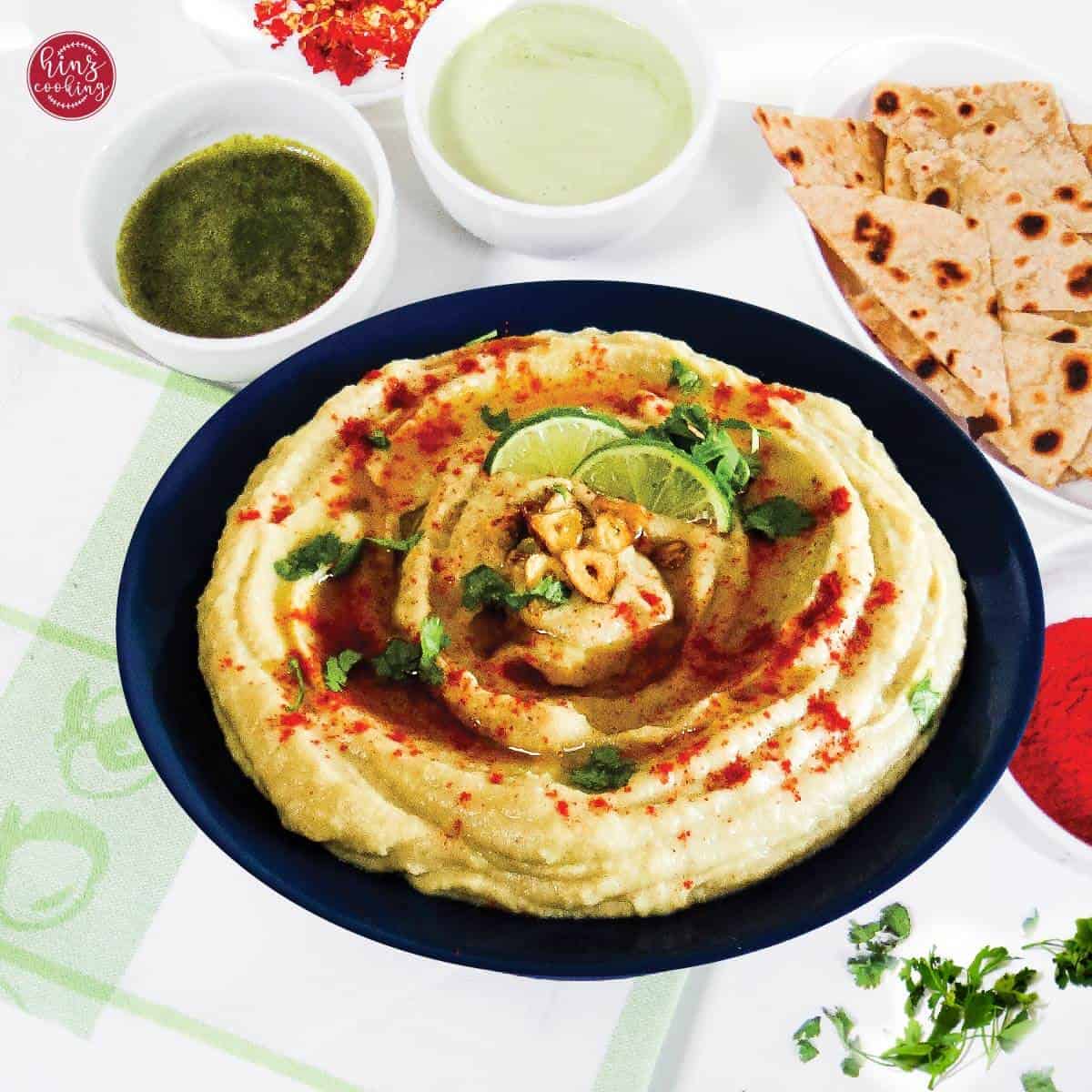
- Baba Ganoush — Smoky eggplant dip as a starter before the Kabsa platter.
- Shish Tawook — Grilled chicken skewers as a side protein on a large gathering spread.
- Baharat spice mix — The Lebanese 7-spice blend from the same Gulf flavor family. Useful context for understanding Kabsa's spice profile.
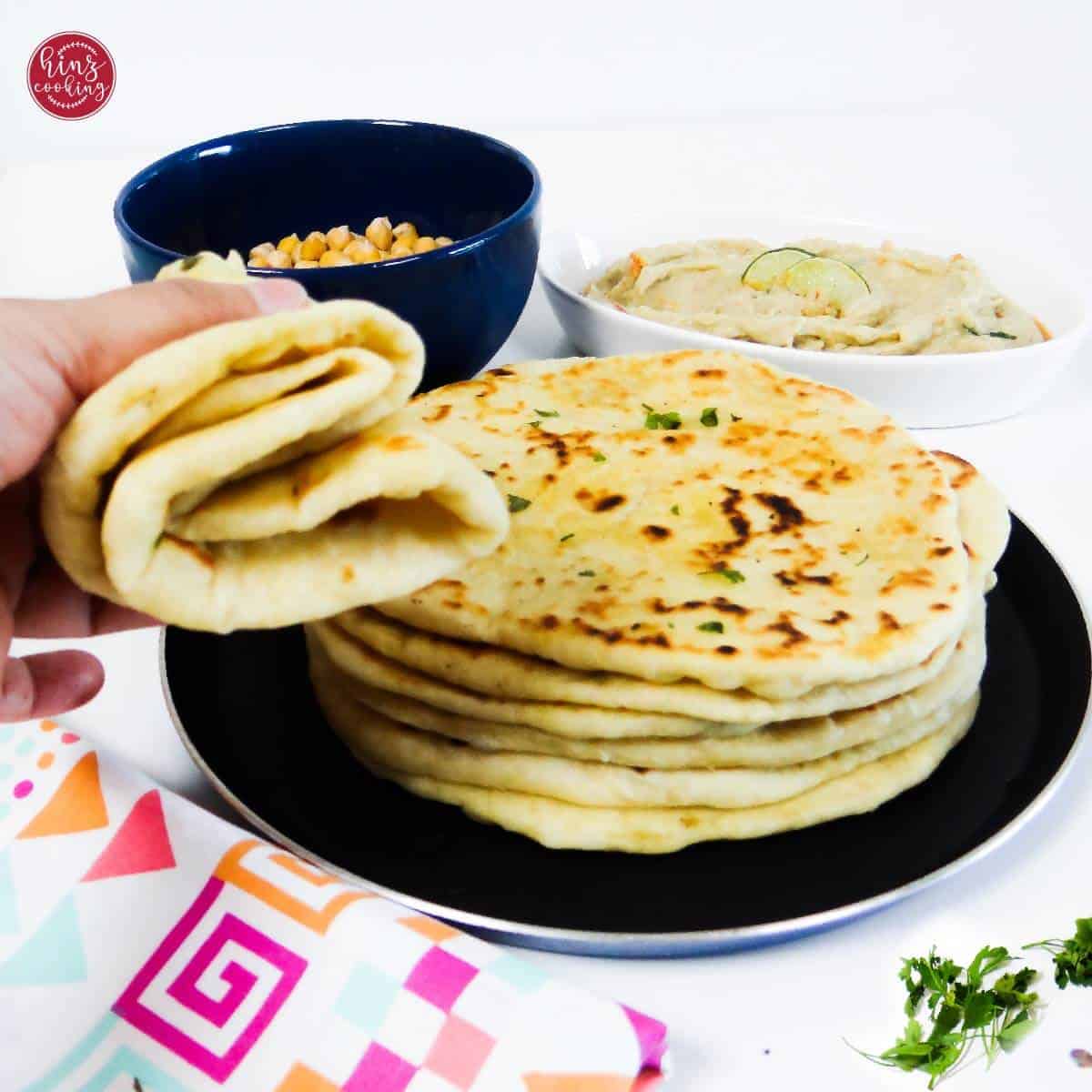
- Bazlama flatbread — For scooping Dakkous and loose rice from the edges of the platter.
To finish:
- Karak Chai — Sweet, spiced Gulf tea. The traditional end to any Saudi or Emirati meal.
How To Store & Reheat
Refrigerator: Store rice and chicken separately in airtight containers for up to 3 days. If stored together, the chicken releases moisture into the rice and makes it soft by day two.
Freezer: Both rice and chicken freeze well. Portion into individual servings in freezer-safe bags — freeze flat for easier stacking. Keeps for up to 2 months. The dried lemon flavor in the rice actually deepens slightly after freezing and reheating.
Reheating rice: Add 2 tablespoons of water per cup of rice, cover tightly, and microwave for 2–3 minutes. Or warm in a covered pan on low heat with a splash of water. Never reheat uncovered — it will dry out completely.
Reheating chicken: Oven at 180°C for 10 minutes covered with foil, or microwave covered for 2 minutes. To restore the crispy skin, uncover for the last 3 minutes in the oven.
Make-ahead: The Kabsa spice mix can be made weeks ahead. The chicken and stock (Steps 1–4) can be fully prepared up to 24 hours ahead and refrigerated. Skim the solidified fat from the top of the cold stock before reheating, then proceed with the rice step fresh.
Frequently Asked Questions
Q & A
Chicken Kabsa (also known as Chicken Machboos) is the national dish of Saudi Arabia — a one-pot Arabic rice dish where chicken is simmered in a tomato-based broth spiced with cardamom, cinnamon, and dried lemon, then broiled golden while the fragrant stock cooks the rice. It is served on a communal platter with roasted nuts and Dakkous Arabic tomato sauce.
Kabsa is cooked on the stovetop in a rich tomato and dried lemon chicken broth — the rice cooks in that stock. Mandi is oven-baked in a steam-sealed environment with minimal liquid. Kabsa rice is deep brown-red; Mandi rice is golden yellow. Kabsa flavor is rich and tomato-forward; Mandi flavor is subtle and smoke-forward. Both are served with Dakkous.
Dried lemon (called loomi, black lime, or noomi basra) is a Gulf cooking staple made by boiling ripe limes in saltwater then sun-drying them until hard and dark. It adds a smoky, tangy, fermented depth to the Kabsa broth that no other ingredient replicates. Find it in any Middle Eastern, Arabic, or Persian grocery store. If unavailable, use ½ teaspoon of dried lime powder as a substitute.
Yes — Arabic grocery stores sell Kabsa spice mixes that work well. However, homemade takes 5 minutes and the freshness of the individual spices is noticeably better, especially the cardamom. If using store-bought, use 1.5 teaspoons per 500g chicken.
Three likely causes: the rice was soaked too long (more than 45 minutes), there was too much liquid in the stock, or the heat was too high during the rice cooking stage. For the next attempt: soak for exactly 30 minutes, measure the stock carefully (1.5 cups per 1 cup soaked rice), and cook on the lowest possible heat setting.
Not enough liquid in the stock, or the lid was lifted during cooking. Always measure the stock before adding rice and top up if needed. Keep the lid on for the full 18–20 minutes and the 5-minute rest — lifting it releases the steam that finishes the cooking.
Yes — lamb Kabsa is very common in Saudi Arabia, often considered more traditional than chicken. Use bone-in lamb shoulder pieces and increase the simmering time to 45–50 minutes before removing and broiling. The dried lemon pairs exceptionally well with lamb.
Machboos is the Kuwaiti and Bahraini name for the same dish. The recipe is nearly identical — the main regional variation is that Kuwaiti Machboos sometimes uses dried limes more aggressively (2–3 per pot) and the spice blend can include rose water in the finishing step.
This recipe (500g chicken, 3 cups rice) serves 4 as a main course. For 6 people: increase to 750g chicken, 4.5 cups rice, and 4.5 cups liquid. For a large gathering of 8–10: double the full recipe and use a wide, large pot to ensure even heat distribution during the rice cooking step.
Yes. Instead of broiling, pan-fry the cooked chicken pieces in 1 tablespoon of oil over high heat for 3–4 minutes per side until the exterior is golden and slightly charred. It won't have the same even browning as the oven, but the flavor is similar.
🥣 Do you try this Chicken Kabsa recipe?
⭐ Rate this recipe below
💬 Drop your questions in the comments
📲 Follow along on Instagram for more recipes.
More Middle Eastern Idea

Chicken Kabsa Recipe (Machboos) — Authentic Saudi Arabian Rice & Chicken
Ingredients
- 250 gms Chicken
- 1.5 cups Soaked Basmati Rice
- 1 tablespoon Oil
- ½ cup Onion chopped
- 1 teaspoon Ginger Grated
- 1 teaspoon Garlic Grated
- 1.5 teaspoon Salt
- ½ teaspoon Cardamom Powder
- ½ teaspoon Black Pepper Powder
- ½ teaspoon Cinnamon Powder
- ½ teaspoon Garlic Powder
- 1 Dried Lemon
- 1.5 teaspoon Tomato Paste
- 1 cup Fresh Tomato Cubes
- 2 glasses Water
- Kabsa Topping
- 1 tablespoon Almonds boiled, peeled & roasted
- ½ tablespoon Raisins roasted
Instructions
- Soak the rice: Wash 3 cups basmati rice, soaked 30 minutes and drained under cold running water until the water runs completely clear. Soak in cold water for exactly 30 minutes 30:00 — no longer, or the rice will turn mushy during cooking. Drain fully and set aside.
- Sauté onion, ginger & garlic: Heat 1 tablespoons cooking oil in a large heavy-bottomed pot over medium heat. Add 0.5 cups onion, finely chopped and sauté for 5–8 minutes 08:00 until soft and translucent. Add 1 teaspoons fresh ginger, grated and 1 teaspoons fresh garlic, grated and cook for 1–2 minutes until fragrant.
- Seal the chicken: Add 500 grams bone-in chicken pieces — legs and thighs, skin removed to the pot and increase heat to high. Cook for 4–5 minutes 05:00, turning to seal all sides, until the chicken changes color from pink to white. The chicken does not need to cook through here — it will finish in the broth.
- Add spices, tomatoes & dried lemon: Season with 1.5 teaspoons salt, 0.5 teaspoons cardamom powder, 0.5 teaspoons black pepper powder, 0.5 teaspoons cinnamon powder, and 0.5 teaspoons garlic powder. Stir and cook for 4 minutes 04:00 to bloom the spices. Add 1.5 teaspoons tomato paste and stir to coat the chicken. Add 1 cups fresh tomatoes, peeled and diced and 1 dried lemon (loomi / black lime) — pierced twice with a knife. Cook on high heat for 3–4 minutes, stirring, until the tomatoes break down into a thick gravy. The dried lemon will begin releasing its smoky, tangy depth into the base.
- Simmer chicken in stock: Add 3 cups hot water (for stock) and stir to combine. Cover the pot and cook on medium-low heat for 20 minutes 20:00. The chicken will finish cooking and absorb the tomato, dried lemon, and spice flavors all the way through. After 20 minutes, carefully remove the chicken pieces and place in a baking dish. Reserve the stock in the pot.
- Broil the chicken: Preheat oven to 220°C / 430°F (broil / top grill setting). Brush the chicken lightly with a teaspoon of oil or fat skimmed from the top of the stock. Place on the top rack and broil for 10–11 minutes 11:00 until the skin is deep golden-brown with lightly charred edges. Watch closely from the 8-minute mark — the chicken is already cooked through and only needs color.
- Cook rice in the Kabsa stock: Check the stock level — you need approximately 4.5 cups of liquid for 3 cups basmati rice, soaked 30 minutes and drained. Top up with hot water if needed. Taste for salt — it should be slightly saltier than you want the final rice, as the rice will absorb it. Remove and discard the dried lemon. Add the drained rice, stir once gently. Bring to a boil on high heat, then immediately reduce to the lowest setting. Cover tightly and cook for 18–20 minutes 20:00.
- Rest the rice: Remove from heat and let the rice rest, covered and undisturbed, for 5 minutes 05:00. Do not lift the lid — the trapped steam finishes the cooking and separates the grains.
- Roast the garnish: While the rice rests, heat ½ teaspoon of oil in a small pan over medium heat. Add 2 tablespoons blanched almonds, roasted and stir for 2–3 minutes 03:00 until golden. Add 1 tablespoons golden raisins, roasted in the last 30 seconds only — raisins burn quickly. Remove from heat immediately.
- Plate and serve: Spread the rice across a large serving platter. Place the broiled chicken pieces on top. Scatter 2 tablespoons blanched almonds, roasted, 1 tablespoons golden raisins, roasted, 0.3 cups fresh cilantro, for garnish, and 0.3 cups shredded carrots, pan-fried — optional garnish over everything. Serve immediately alongside a bowl of Dakkous Arabic tomato sauce — the essential Kabsa condiment. The sauce's acidity cuts directly through the richness of the spiced stock rice.
Video
Notes
- Dried lemon (Loomi): Non-negotiable for authentic Kabsa flavor. Find it in Middle Eastern or Arabic grocery stores labelled "loomi," "black lime," or "noomi basra." Pierce twice with a knife before adding. Substitute: ½ teaspoon dried lime powder, or 1 tablespoon fresh lemon juice added at the end.
- Skinless chicken: Remove skin before cooking — skin releases too much fat into the broth and makes it greasy. The broil step later gives the chicken its color without the skin.
- Water ratio for rice: 1.5 cups liquid per 1 cup soaked basmati. Always measure your stock before adding rice and top up with hot water if needed. This is the most common failure point.
- Mushy rice fix: Reduce soaking time to 30 minutes exactly, measure liquid carefully, and cook on the lowest possible heat.
- Undercooked rice fix: Not enough liquid, or lid was lifted during cooking. Keep the lid on for the full cook time and the 5-minute rest.
- Make-ahead: Steps 1–5 (chicken + stock) can be made 24 hours ahead and refrigerated. Skim solidified fat from cold stock before reheating. Complete the rice step fresh before serving.
- Storage: Refrigerator — rice and chicken separately, airtight containers, 3 days. Freezer — individual portions, 2 months. Reheat rice with 2 tablespoon water, covered, 2–3 minutes microwave.
- Serve with: Dakkous Arabic tomato sauce · Baba Ganoush (without Tahini) · Bazlama flatbread · Shish Tawook · Karak Chai to finish.

Hinz
Arabian Chicken Kabsa one of the best rice recipe to serve in dinner or lunch. Recommended for all taste buds..
alina
Love this recipe of chicken kabsa.. seems like restaurant