
Bazlama is the easiest bread I have ever taught anyone to make — and that includes my own family the first time I served it. It is a soft, leavened Turkish flatbread enriched with yogurt, and the genuinely good news for anyone intimidated by bread baking is that it requires no kneading at all. You crumble the ingredients together, let the dough rise, divide it, roll it out, and cook it on a hot skillet. That is the entire process.
Living in Dubai, Turkish food culture is everywhere — Turkish bakeries, Turkish restaurants, and Turkish bread on nearly every corner. Bazlama was one of the first Turkish breads I tried to recreate at home, mostly because it reminded me so much of the naan dough I already knew from my own Pakistani kitchen. Both are leavened, both are enriched, both are cooked at high heat on a hot surface — but bazlama's yogurt content makes it noticeably softer and slightly tangier than a typical naan.
If you've made any of my naan recipes before, you'll find this dough immediately familiar. If you haven't, bazlama is actually the perfect place to start — it really is that forgiving.
Jump to:
- What is Turkish Flat Bread? (Bazlama)
- Bazlama vs Naan — What's the Difference?
- Why This No-Knead Bazlama Works
- Ingredients
- How to Make Turkish Flat Bread (Bazlama) — Step by Step
- What Bazlama Should Look and Taste Like
- Tips To Make Soft Bazlama Everytime
- What To Serve With Bazlama
- Frequently Asked Questions
- You Might Like This
- No-Knead Bazlama ― Soft Turkish Yogurt Flatbread
What is Turkish Flat Bread? (Bazlama)
Bazlama is a circular, leavened Turkish flatbread made from a yogurt-enriched dough and traditionally cooked on a flat metal griddle called a sac — the same principle as a Pakistani tawa. Unlike most flatbreads around the world, which are unleavened (no rising agent), bazlama uses yeast, which gives it a soft, pillowy, almost cloud-like interior unlike thinner, denser flatbreads.
In rural Turkey, bazlama is traditionally known as köy ekmeği — literally "village bread" — because it has historically been made fresh daily in village households rather than bought from a bakery. The dough is simple enough that no specialist equipment or technique is required, which is exactly why it earned that everyday, household name.
What makes bazlama different from other flatbreads:
- Leavened with yeast — unlike pita or lavash variations made unleavened, bazlama always rises
- Yogurt-enriched — the defining ingredient. Yogurt's acidity tenderises the gluten and adds a faint tang
- No-knead method — the dough is brought together by crumbling and folding rather than extended kneading
- Cooked on a dry skillet or griddle — no oven required, though it can be baked as an alternative
Bazlama vs Naan — What's the Difference?
I get asked this often, and as someone who makes both regularly, here's the honest comparison.
Both bazlama and naan are leavened, enriched flatbreads cooked at high heat on a hot surface — which is exactly why they feel so similar to make. The differences are subtle but real:
| Bazlama | Naan | |
|---|---|---|
| Origin | Turkey | South Asia / Persia |
| Enrichment | Yogurt only | Yogurt + oil/ghee |
| Texture | Extremely soft, pillowy, slightly tangy | Soft, slightly chewy |
| Thickness | Thicker, more bread-like | Thinner, more flatbread-like |
| Traditional cooking | Flat metal griddle (sac) | Clay tandoor or tawa |
| Best with | Dips (hummus, baba ganoush), kebabs, soups | Curries, kebabs |
If you've made my tawa naan and loved the soft, pillowy result, you will find bazlama immediately familiar — just slightly thicker and with a more pronounced tang from the yogurt.
Bazlama vs gozleme — these are often confused. Gozleme is a different Turkish flatbread entirely — it's unleavened, rolled very thin, and stuffed with a filling (cheese, spinach, or minced meat) before being folded and grilled. Bazlama is plain, leavened, and eaten alongside food rather than stuffed with it.
Why This No-Knead Bazlama Works
- The yogurt does the work that kneading normally does. Yogurt's acidity gently breaks down some of the gluten structure, which is why this dough needs minimal handling to turn out soft. Traditional bread kneading develops gluten through repeated folding — yogurt achieves a similar tenderising effect through chemistry instead.
- Genuinely beginner-friendly. If you've been intimidated by yeast bread because of kneading technique, this recipe removes that barrier entirely. Crumble, rest, rise, shape, cook.
- Multi-purpose beyond serving as bread. Leftover bazlama makes an excellent base for skillet pizza, wraps, or even a quick flatbread nachos with a diagonal cut and cheese sauce.
- Stores well for meal prep. Properly wrapped, cooked bazlama keeps in the fridge for up to a week and freezes for up to 2 months — make a batch once and have soft Turkish bread on hand for days.
Ingredients
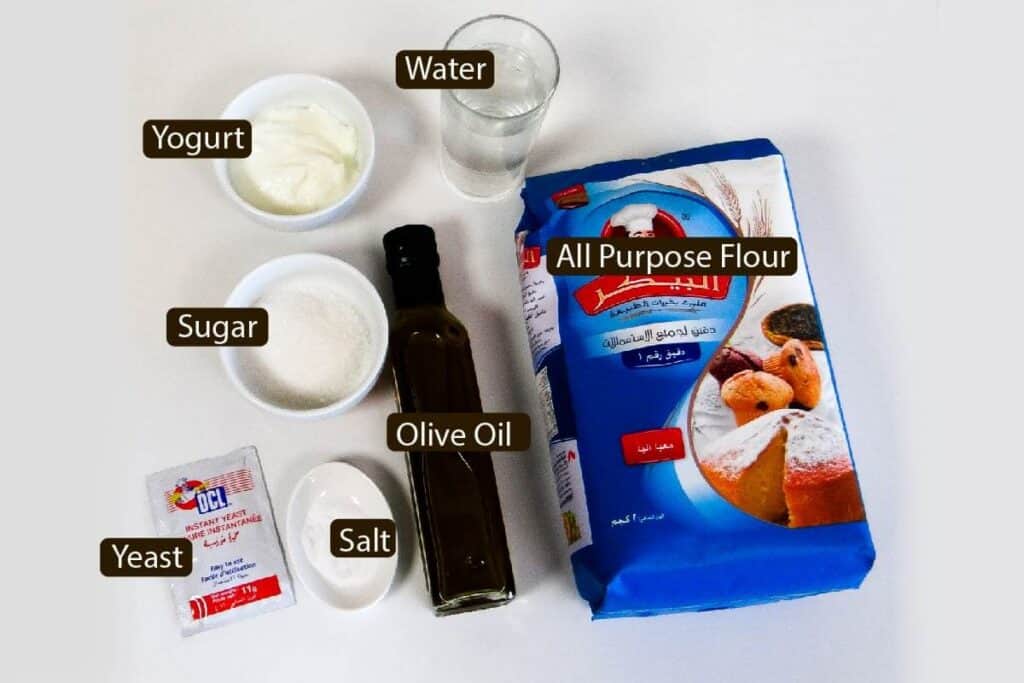
Instant Yeast (11g) — Always proof in warm water with sugar before mixing into the dough. It should turn foamy within 5–10 minutes. If it doesn't foam, the yeast is inactive — start again with fresh yeast.
Lukewarm Water (½ cup, for yeast) — Warm to the touch, not hot. Water above 50°C kills yeast on contact.
Sugar (1 tablespoon) — Feeds the yeast during activation, helping it work faster and more reliably.
All-Purpose Flour (3 cups) — Standard medium-gluten flour. No need for bread flour or specialist flour — bazlama's softness comes from the yogurt, not high-protein flour.
Salt (1 teaspoon) — Always add to the flour, not directly into the activating yeast mixture.
Greek Yogurt (½ cup) — The defining ingredient. Greek yogurt is thicker and more concentrated than regular yogurt, which means it adds more tenderising acidity and richness without adding excess liquid to the dough. This is what makes bazlama distinctly softer than a plain yeast bread.
Olive Oil (1 tablespoon) — Use a good extra virgin olive oil if you have one — its flavour comes through subtly in the finished bread. Don't substitute with a neutral oil if you want the authentic flavour.
Butter and Fresh Parsley (for topping) — Brushed on immediately after cooking. The butter melts into the warm bread and the parsley adds freshness and colour.
How to Make Turkish Flat Bread (Bazlama) — Step by Step
Step 1 — Activate the yeast In a deep bowl, combine instant yeast, sugar, and lukewarm water. Mix and cover. Rest for 5–10 minutes until the surface turns foamy. If no foam forms, the yeast is dead — discard and start again with fresh yeast.
Step 2 — Bring the dough together (no kneading required) To the activated yeast, add flour, salt, Greek yogurt, and olive oil. Use your hands to crumble and bring everything together — you're not kneading here, just combining until a rough dough forms. Add a little extra water gradually if needed until the dough is soft but holds together.
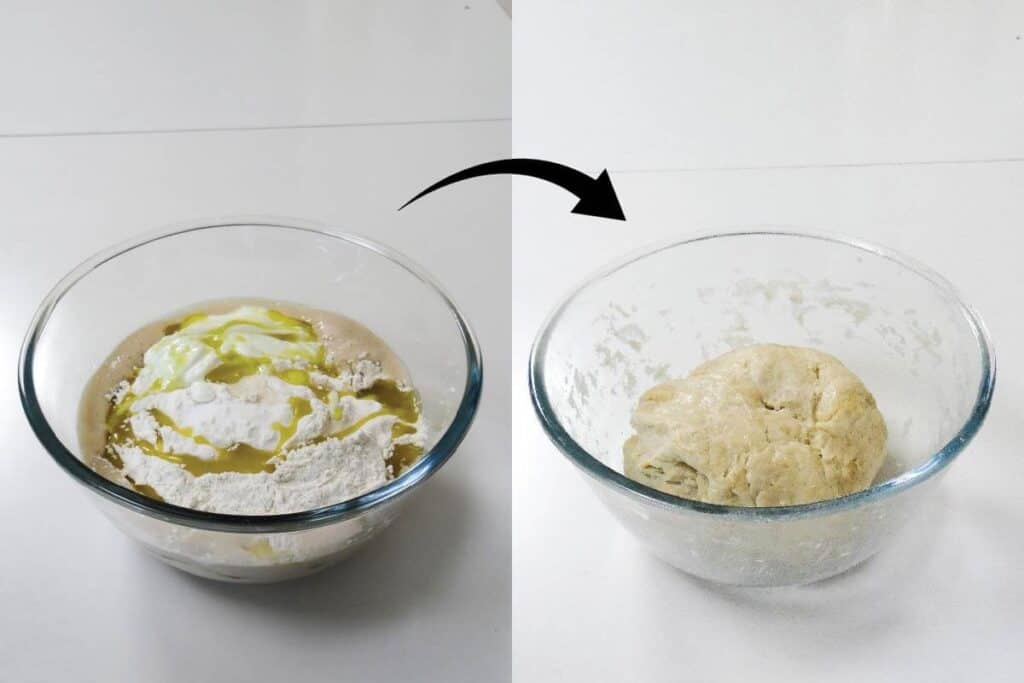
Step 3 — Rise for 2 hours Cover the bowl tightly and place in a warm spot for 2 hours, until visibly puffed and risen. After resting, briefly knead for 2–3 minutes just to bring the dough back together — oil your hands or dust with flour if it feels sticky.
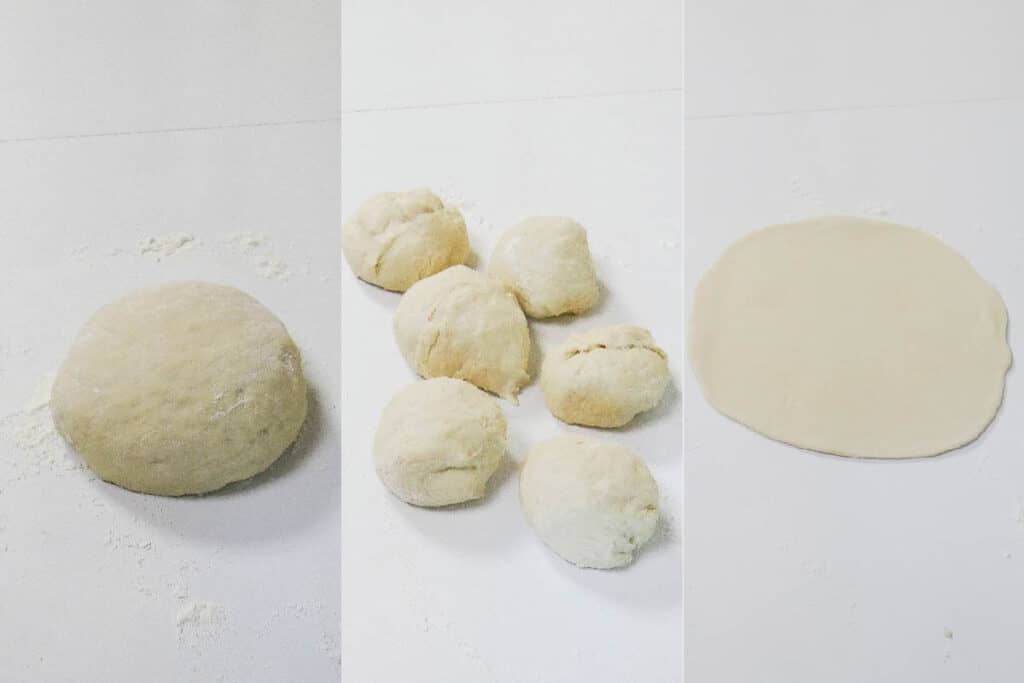
Step 4 — Divide and shape Divide the dough into equal portions. Roll each into a smooth ball, flatten by hand, then use a rolling pin to shape into a circle — as thin or thick as you prefer, keeping in mind thicker rounds will puff up more during cooking.
Step 5 — Cook on a hot skillet Preheat a heavy skillet or griddle over medium heat. Place the rolled bread on the dry, hot surface. Let it cook undisturbed until bubbles form across the top and the underside turns golden — then flip with tongs and cook the second side the same way.
💡 Hina's Note: Use a heavy metal pan, not a lightweight one. A heavy skillet holds consistent heat and gives even, golden colour. A lightweight pan loses heat quickly and tends to burn the bottom before the inside cooks through.
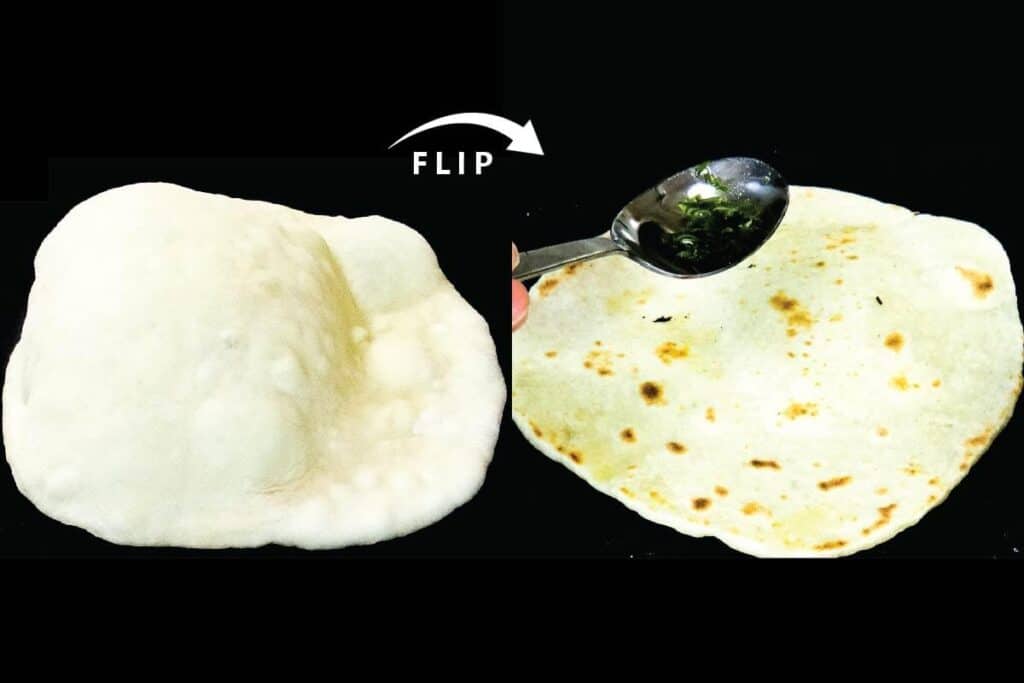
Step 6 — Butter and serve While still hot, brush generously with melted butter and freshly chopped parsley. Rest briefly on a paper towel to absorb excess steam, then serve immediately.
What Bazlama Should Look and Taste Like
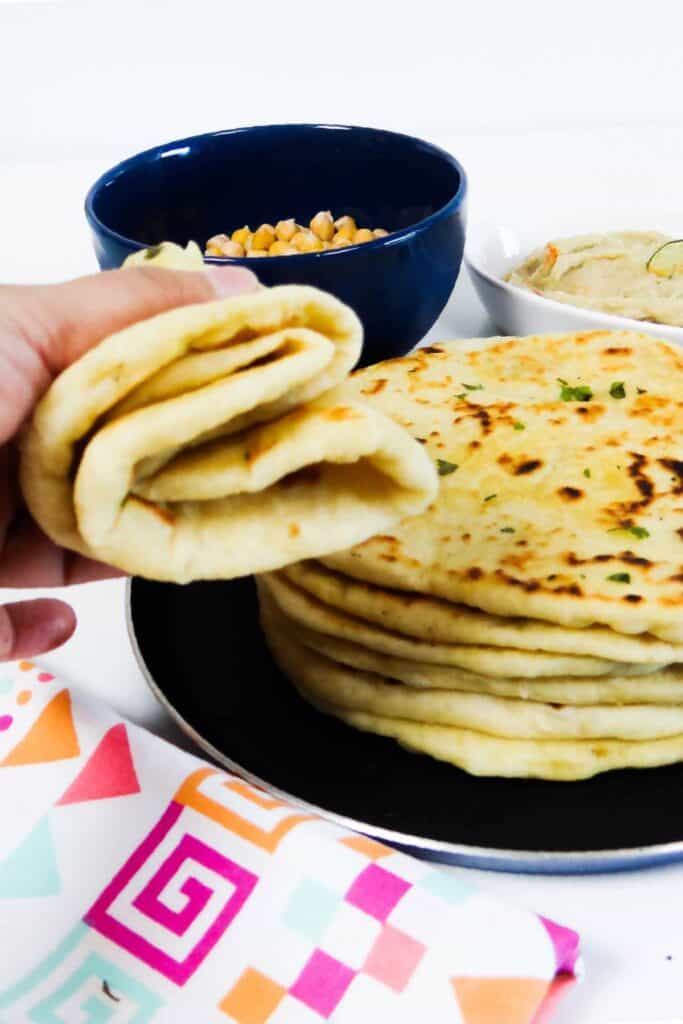
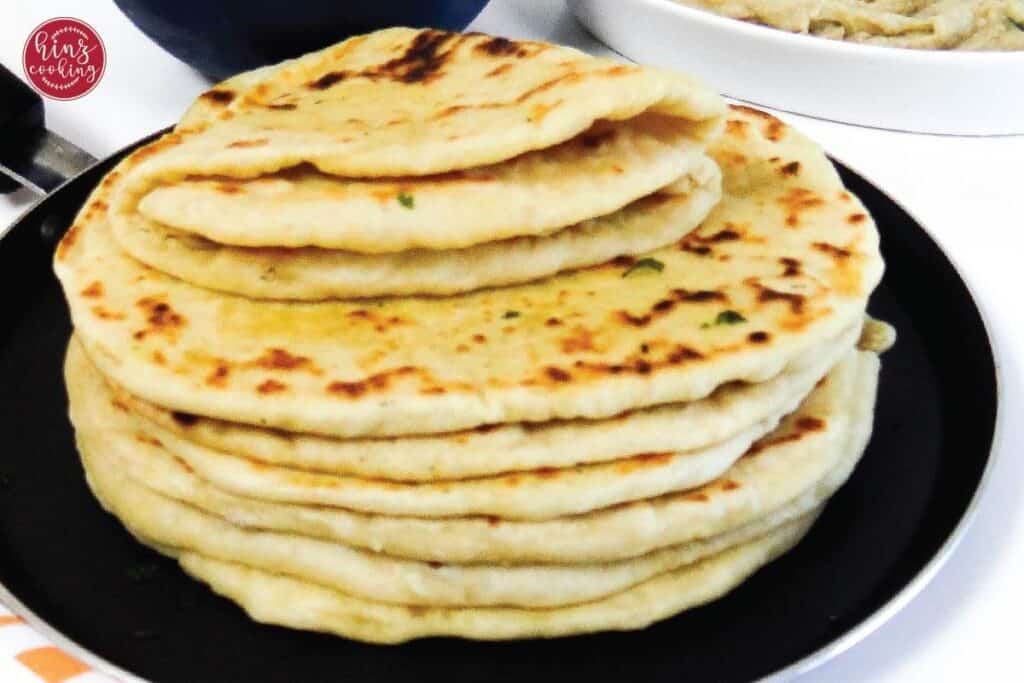
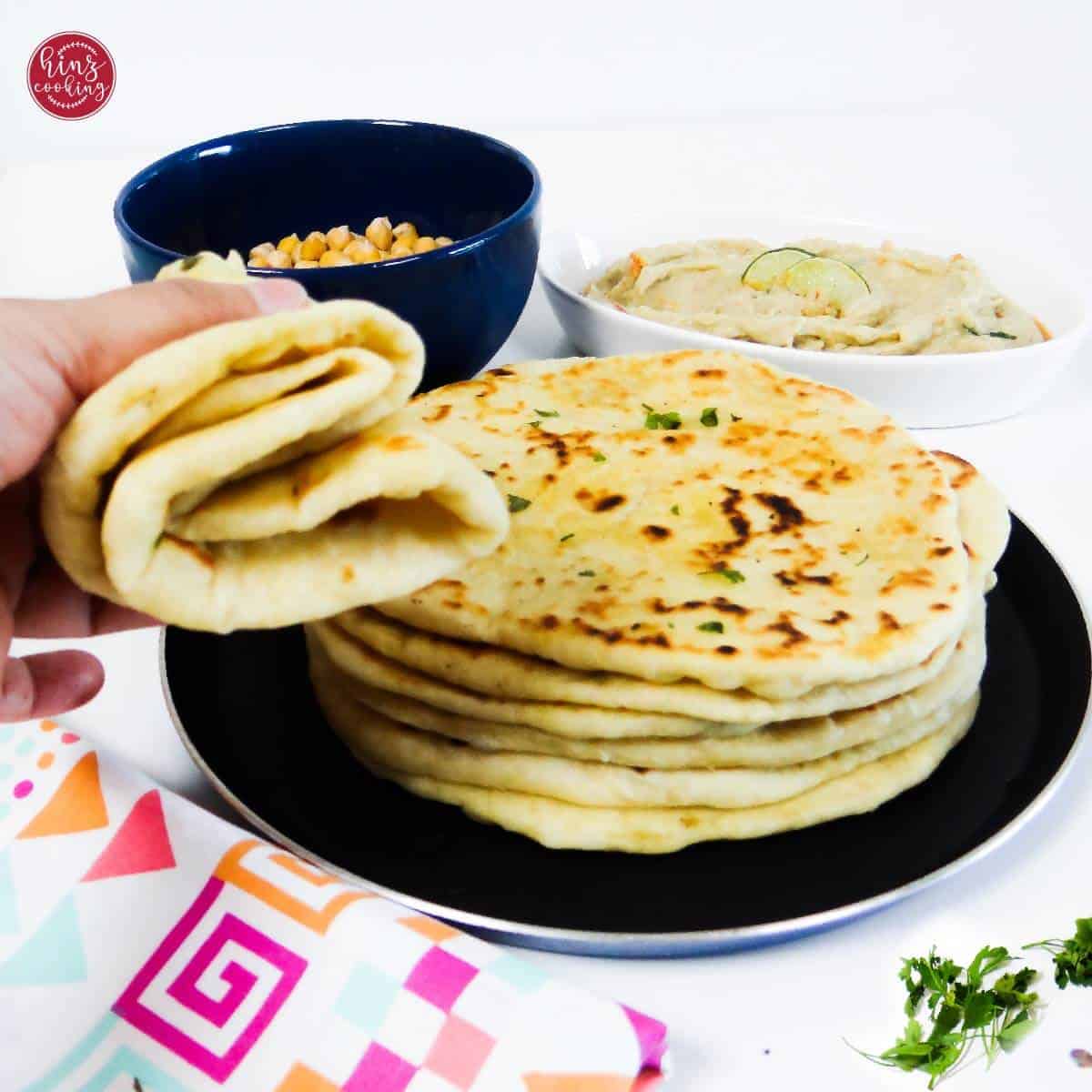
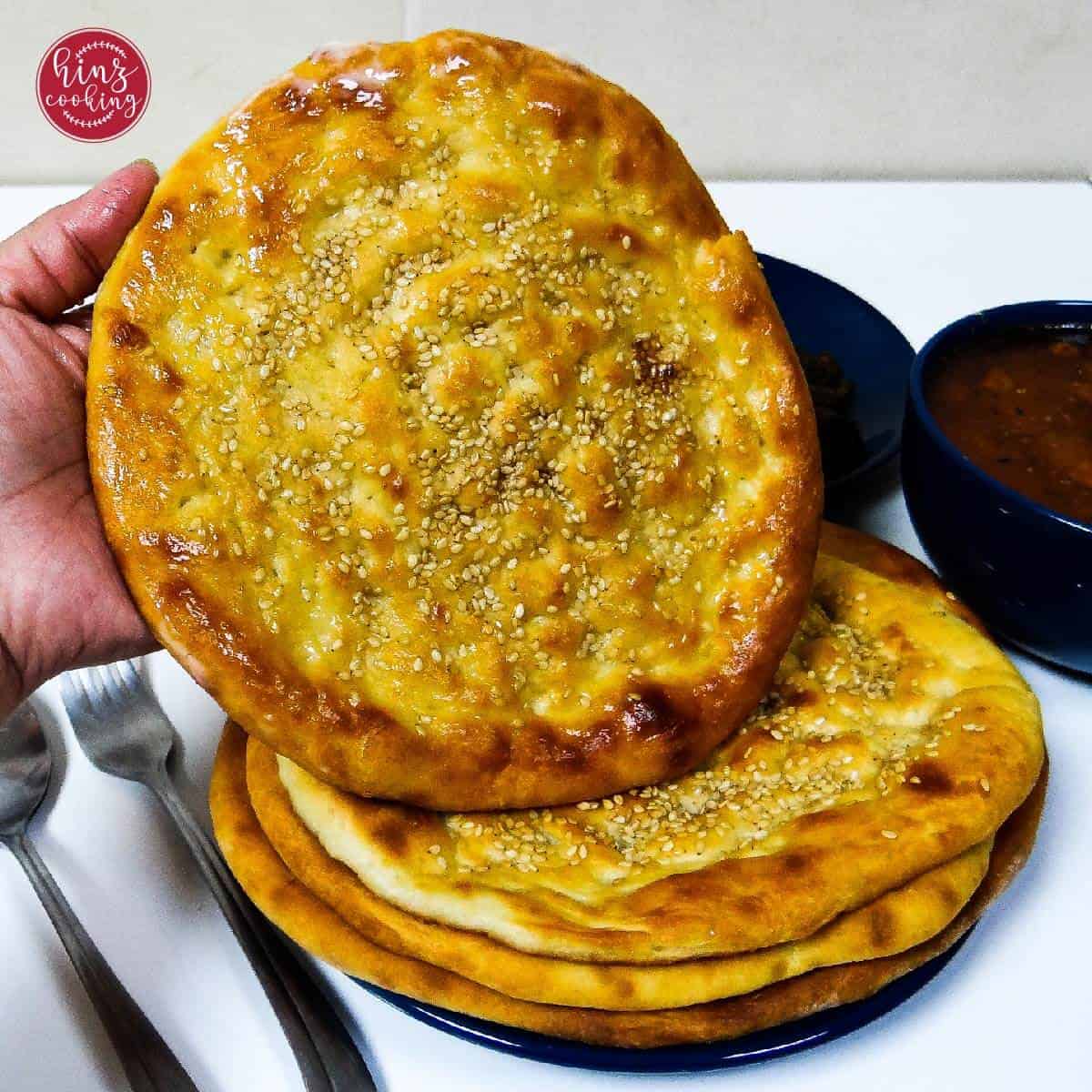
Fresh off the skillet, properly made bazlama has a golden-brown surface dotted with darker blistered spots where the dough bubbled during cooking. It should feel light in your hand despite its size — almost cloud-like. Tear it open and the inside is soft, slightly stretchy, and faintly tangy from the yogurt — closer to a soft dinner roll than a typical flatbread.
The butter and parsley finish adds a glossy sheen and a fresh, herby aroma that hits you before you even take a bite. If your bazlama comes out dense or tough rather than pillowy, the most likely cause is a dough that was handled too roughly, or a yeast that didn't properly activate.Tips to Make Soft Bazlama Every Time
Tips To Make Soft Bazlama Everytime
- The dough should feel soft, not stiff. If it feels tight while bringing it together, add water a tablespoon at a time. Stiff dough produces dense, tough bread.
- Don't disturb the dough during its 2-hour rise. Find a warm, draught-free spot and leave it completely alone. Moving or uncovering the bowl during fermentation slows the rise.
- Use a heavy metal skillet, not a thin one. Heavy pans hold heat evenly, giving consistent golden colour without scorching the base.
- Roll evenly, and don't go too thin. Bazlama puffs significantly during cooking — rolling too thin risks tearing, especially given how elastic this dough is.
- Test your skillet's heat with one bread first. Every stovetop runs slightly differently. Cook your first piece as a test to judge timing before doing the rest of the batch.
- Brush with butter immediately, while it's still hot. This is what gives bazlama its glossy, fragrant finish — butter brushed on cooled bread just sits on the surface rather than melting in.
What To Serve With Bazlama
Bazlama's soft, mild flavour makes it incredibly versatile — it works as a side, a wrap, or even reinvented as a quick skillet pizza.
As a dip companion: baba ganoush, hummus, or any thick savoury dip. Tear and scoop.
As a wrap: fill with shish tawook, pickles, and a dip like dakous for a quick shawarma-style lunch.
As a side with mains: pairs beautifully with baked chicken, fire roasted tomatoes, honey garlic carrots, or garlic mushrooms.
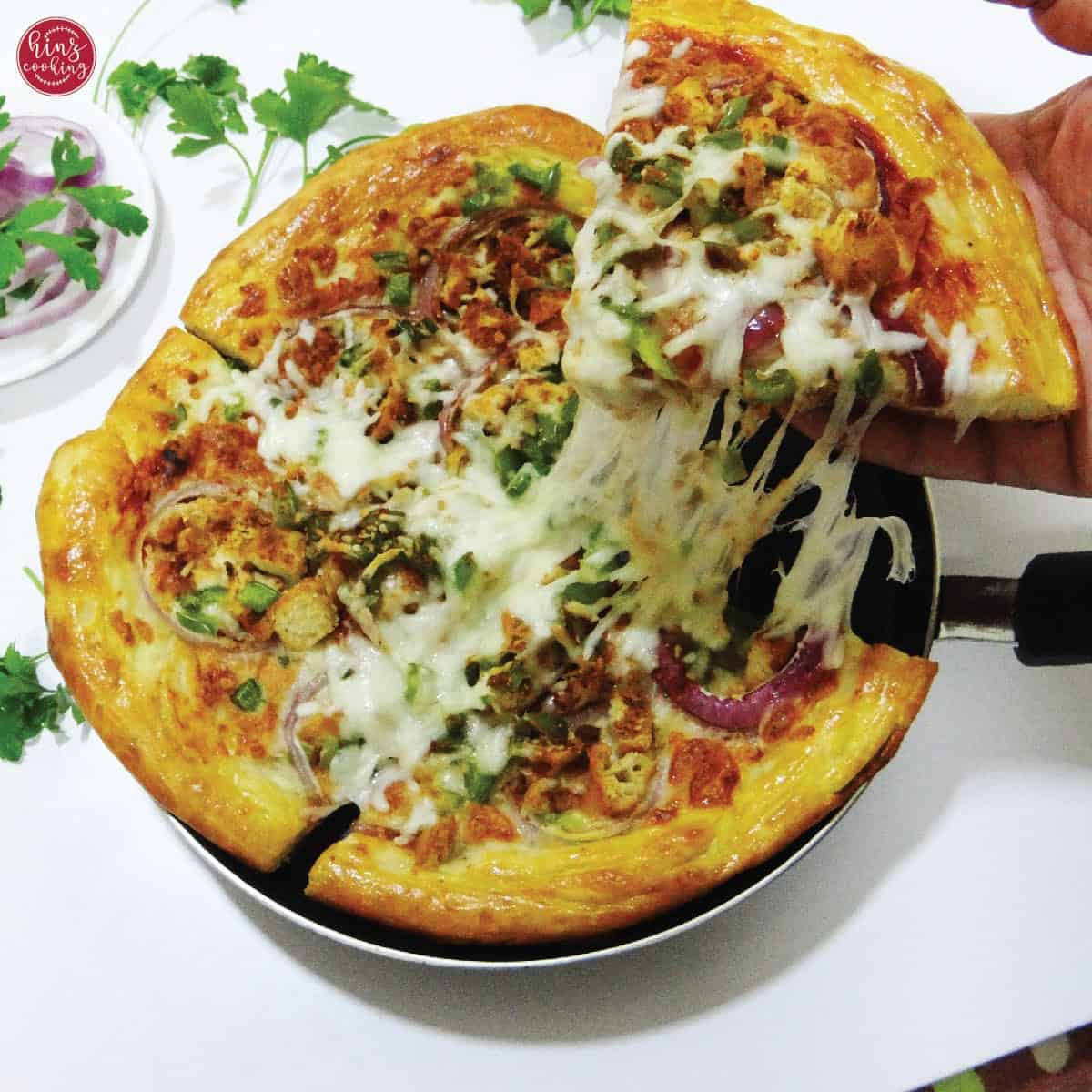
Reinvented as skillet pizza: top leftover bazlama with sauce and cheese for a quick skillet pizza — a great way to use up extra bread and a guaranteed hit with kids.
As crispy "nachos": cook a little longer until slightly crisp, cut diagonally, and serve with nacho cheese sauce for a fun twist.
Frequently Asked Questions
Both are leavened, enriched flatbreads cooked at high heat, but bazlama is enriched only with yogurt while naan typically uses yogurt plus oil or ghee. Bazlama is generally thicker and softer with a more pronounced tang; naan is thinner with a slightly chewier texture. Bazlama originates from Turkey; naan from the South Asian and Persian tradition.continent.
Bazlama is a plain, leavened flatbread eaten alongside food. Gozleme is unleavened, rolled thin, stuffed with a filling like cheese or spinach, folded, and grilled — closer to a savory stuffed pastry than a bread.
Baba ganoush, hummus, shish tawook, baked chicken, soups, and dips like dakous all pair beautifully. It also works as a wrap bread or reinvented as a quick skillet pizza.
Microwave for 2–3 minutes, though this can make it slightly soggy. For the best texture, reheat on a preheated dry skillet for a couple of minutes per side, or in a 220°C oven for 5–10 minutes. The skillet method best restores the fresh-cooked texture.
Yes. Without yeast, substitute baking powder and a little baking soda to leaven the dough instead. Without yogurt, you can simply omit it, though the bread will be slightly less soft and tangy — yogurt is what gives bazlama its signature texture.
🥣 What is your favorite serving with Bazlama?
⭐ Rate this recipe below
💬 Drop your questions in the comments
📲 Follow along on Instagram for more recipes.
No-Knead Bazlama ― Soft Turkish Yogurt Flatbread
Ingredients
- 11 g Instant yeast
- ½ cup Lukewarm Water for activating yeast
- 1 tablespoon Sugar
- 3 cups All purpose flour
- 1 teaspoon Salt
- ½ cup Greek yogurt full-fat
- 1 tablespoon Olive Oil extra virgin olive oil
- ⅓ cup Warm water [optional] added gradually while bringing dough together
- 2 tablespoon Butter (melted) for brushing
- 2 tablespoon Fresh Parsley finely chopped — for topping
Instructions
- Activate the yeast: In a deep bowl, combine 11 grams instant yeast, 1 tablespoons sugar, and 0.5 cups lukewarm water — for activating yeast. Mix well and cover. Rest for 5–10 minutes until the surface turns foamy and bubbly. If no foam forms, the yeast is inactive — discard and start again with fresh yeast before proceeding.
- Bring the dough together (no kneading): To the activated yeast, add 3 cups all-purpose flour, 1 teaspoons salt, 0.5 cups Greek yogurt, full-fat, and 1 tablespoons extra virgin olive oil. Use your hands to crumble and bring everything together — this is not kneading, just combining until a rough dough forms. Gradually add 0.3 cups warm water — added gradually while bringing dough together as needed until the dough is soft, holds together, and is no longer dry or crumbly.
- Rise for 2 hours: Cover the bowl tightly with a damp cloth or plastic wrap. Place in a warm, draft-free spot for 120 minutes (2 hours), until visibly puffed and risen. Do not disturb the dough during this time.
- Knead briefly and divide: Uncover the risen dough and briefly knead for 2–3 minutes just to bring it back together — oil your hands or dust lightly with flour if it feels sticky. Divide into 5 equal portions and roll each into a smooth ball.
- Shape each bread: Take one dough ball, flatten by hand, then use a rolling pin to shape into a circle — roll evenly and avoid going too thin, as the dough is elastic and can tear. Make it as thick or thin as you prefer, keeping in mind thicker rounds puff up more during cooking.
- Preheat skillet and cook first side: Preheat a heavy skillet or griddle over medium heat — a heavy pan gives even, consistent heat. Place the rolled bread on the dry, hot surface. Cook undisturbed until bubbles form across the top and the underside turns golden, about 2–3 minutes
- Flip and cook second side: Flip the bread with tongs and cook the second side the same way until golden with puffed bubbles, about 2–3 minutes more.
- Butter, garnish, and serve: While still hot, brush generously with 2 tablespoons butter, melted — for brushing and sprinkle with 2 tablespoons fresh parsley, finely chopped — for topping. Rest briefly on a paper towel to absorb excess steam, then serve immediately. Repeat cooking and buttering for the remaining dough portions.

Leave a Reply