
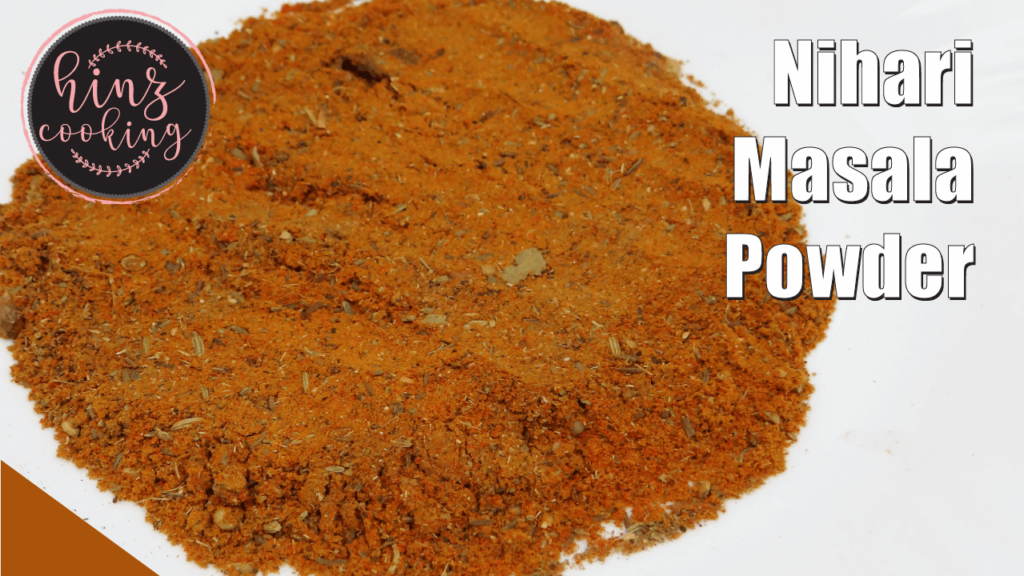
Nihari is Pakistan's most iconic slow-cooked dish — bone-in beef shank or lamb, simmered overnight in a deeply spiced, dark gravy until the meat falls apart and the sauce thickens into something rich, unctuous, and unmistakably Pakistani. The masala blend that creates that distinctive flavour takes exactly 5 minutes to make and lasts three months in your pantry. This is mine.
I grew up with a deep love for Karachi-style nihari specifically — the version famous for its thick, dark brown gravy with a generous richness that you don't find in the Delhi or Lahori versions. The spice balance is different in each tradition, but the foundation is always the same: dry ginger (saunth), fennel seeds (saunf), and whole garam masala ground together into a blend that smells like no other masala in Pakistani cooking.
I tested this recipe many times before getting the balance right. My early versions used too much star anise — the masala tasted medicinal and overpowering rather than warmly spiced. The final version here is the one I've been using for years and sharing with everyone who asks for it.
If you want to cook the full dish, jump to my Chicken Nihari Recipe after making this masala — it uses exactly this blend.
Jump to:
- What is Nihari? (And Why the Masala Matters)
- The Two Ingredients That Make Nihari Masala What It Is
- Ingredients
- How To Make Nihari Masala Powder at Home
- How to Store Nihari Masala?
- How Much Nihari Masala to Use
- How Does Nihari Taste? (So You Know You've Made It Right)
- Pro Tips for the Best Nihari Masala
- Ready to Cook Nihari?
- Frequently Asked Questions
- Nihari Masala Powder — Homemade Pakistani Spice Blend (5 Minutes)
What is Nihari? (And Why the Masala Matters)
Nihari (نہاری) is a slow-cooked Pakistani and North Indian stew of bone-in meat — traditionally beef shank or mutton — simmered for 6–8 hours (or overnight) in a spiced gravy until the collagen from the bones melts into the sauce and the meat becomes fall-apart tender. The word nihari comes from the Arabic nahar (نهار) meaning morning — because this dish was traditionally cooked through the night and eaten at sunrise, originally in the royal Mughal kitchens of Delhi.
Today nihari is Pakistan's most beloved breakfast-to-dinner dish — eaten at dawn after overnight cooking in the old tradition, at Friday family lunches, and as the centrepiece of special occasion meals across Karachi, Lahore, and Peshawar. Every family has a slightly different recipe. Every city has a slightly different style. But the spice blend — the nihari masala — is the thread that connects all of them.
What makes nihari masala different from other Pakistani masalas:
Most Pakistani spice blends are built on a warm, assertive base of cumin, coriander, and chili. Nihari masala is built differently. Dry ginger (saunth) and fennel seeds (saunf) are the dominant notes — they give nihari its characteristic warming depth and slightly sweet, anise-like background. Star anise, nutmeg, and a higher proportion of whole spices relative to ground chili make nihari masala more aromatic and complex than a standard garam masala. This is what gives nihari its unmistakable identity.
Why Make Your Own Nihari Masala?
Shan and National both make nihari masala packets. They work reasonably well. But homemade is better for three specific reasons:
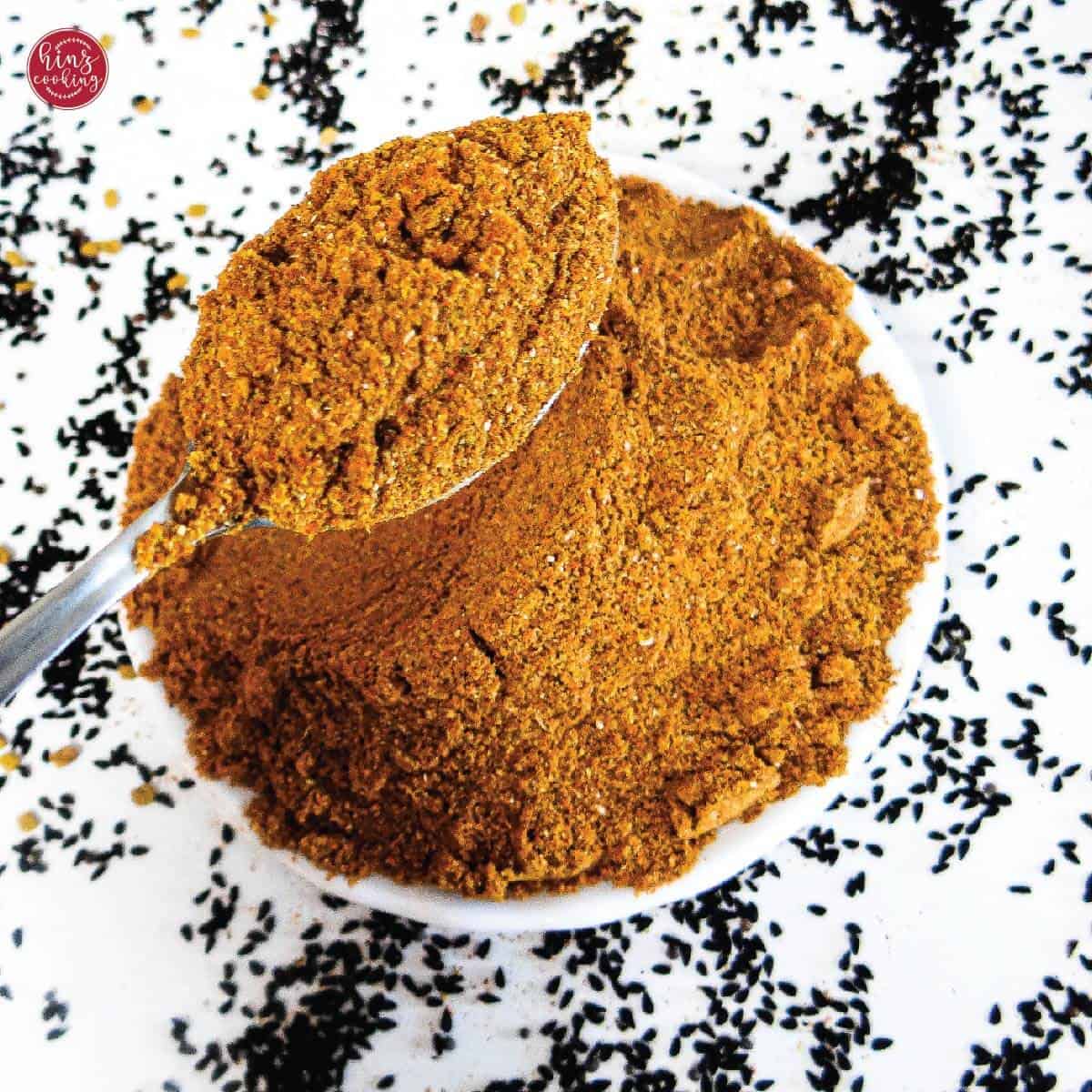
The freshness of roasted whole spices. Pre-roasting cumin, fennel, and coriander seeds before grinding releases their essential oils and creates a depth of flavour that dried pre-packaged powder simply cannot replicate. The aroma of a freshly ground batch of nihari masala is extraordinary — it smells like a Karachi nihari house at 6am.
No preservatives, no additives. Commercial packets contain anti-caking agents and preservatives that slightly flatten the flavour and alter the colour of the finished gravy. Homemade masala gives you a darker, richer colour in your nihari because the spices are undiluted.
You control the heat level. Adjust the red chili powder up or down for your household's preference. Commercial packets are fixed — homemade masala is fully customizable.
The Two Ingredients That Make Nihari Masala What It Is
Dry Ginger (Saunth / Sonth) This is the single most important ingredient in nihari masala — and the one most home cooks underestimate. Dry ginger is not just dehydrated fresh ginger. The drying and curing process transforms the flavour profile completely, producing a deeper, more resinous warmth with a slightly citrusy edge that fresh ginger cannot replicate. In nihari, saunth provides the characteristic warming, slightly medicinal depth that sits underneath all the other spices and gives the gravy its identity. Nihari made without saunth tastes like a spiced stew. Nihari made with it tastes like nihari.
Fennel Seeds (Saunf) Fennel seeds give nihari masala its subtle sweet, slightly anise-like background note — the flavour that makes the first spoonful of nihari smell and taste distinctly different from karahi or biryani masala. They also aid digestion, which is why nihari — a rich, heavy dish — was traditionally served at large gatherings without causing discomfort. Always use fresh fennel seeds — old fennel loses its volatile oils and the anise note disappears entirely.
Ingredients
Whole Spices: Bay leaves, Cinnamon, Nutmeg, Star Anise, Green Cardamom, Black pepper, and Cloves.
Dry Ginger (Saunth): One of the most important ingredient to make authentic nihari.
Fennel Seeds (Saunf): It an essential ingredients to use in nihari masala as it will help to get signature taste of nihari.
Coriander Seeds: It will add a earthy, tart and little sweet flavor in masala.
Black Cumin + Regular Cumin: Both used as they compliment each other in terms of taste.
Powdered Spices: Use red chili powder, coriander powder, turmeric powder along with salt.
How To Make Nihari Masala Powder at Home
Spice Roasting:
In a heated skillet pan, slightly roast the cumin seeds, black cumin, fennel seeds, and coriander seeds.
Grind The Spices:
In a grinder, add all the whole spices (Bay leaves, cinnamon, nutmeg, star anise, geen cardamom, Black pepper , cloves, dry Ginger (Saunth), fennel seeds, coriander seed, black cumin, cumin seeds) and roasted spices.
Blend it to make a fine powder.
Powdered Spices:
In a separate bowl, add red chili powder, coriander powder, turmeric powder and salt.
Assemble Spices:
Now combine ground spices and powdered spices and give it a good mix. Sieve the spices to get the best result.
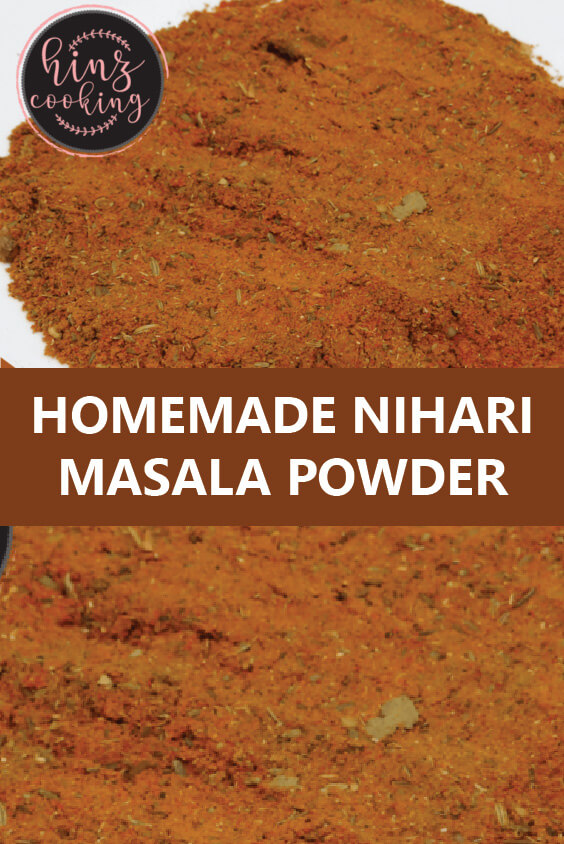
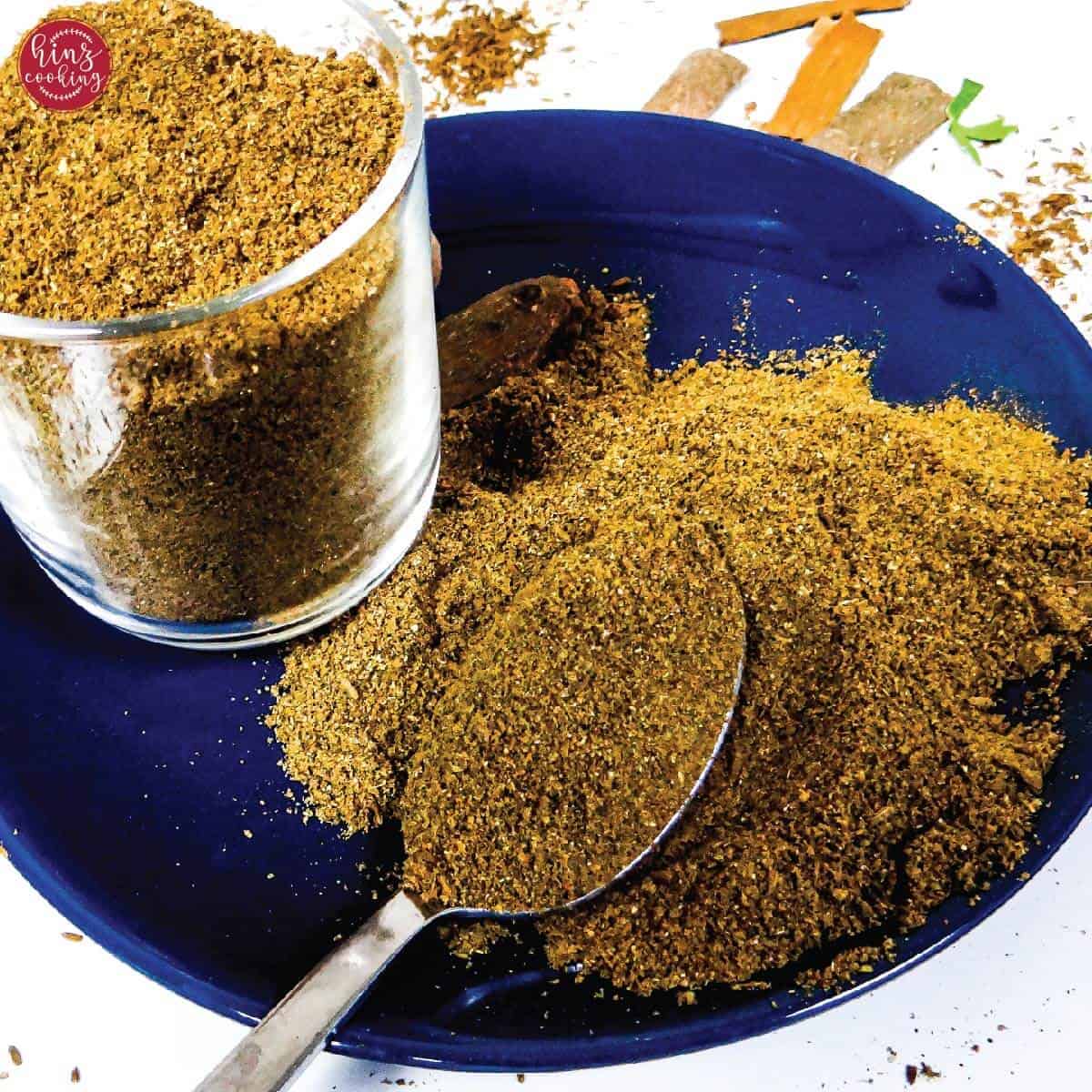
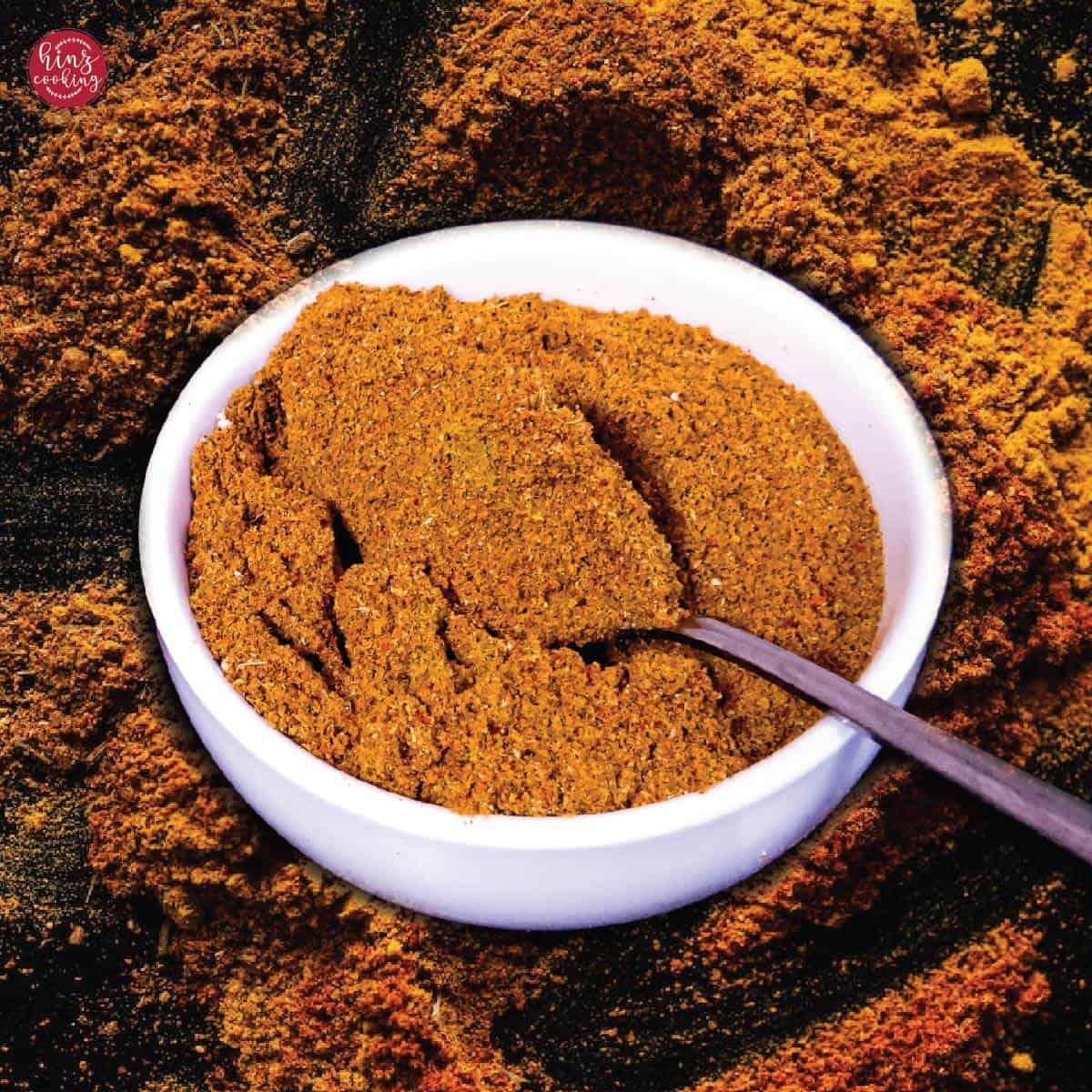
Nihari Masala Powder is ready to make a delicious Nihari at home without thinking about individual spices.
How to Store Nihari Masala?
Transfer the cooled masala to an airtight glass jar — not a plastic container, which absorbs and retains spice odours and slightly alters flavour over time. Glass is the correct container for any homemade spice blend.
Shelf life:
Room temperature (in a cool, dark pantry): up to 3 months
Refrigerator (in a sealed glass jar): up to 6 months
If you live in a hot climate (as I do in Dubai), refrigeration is recommended from the start because heat accelerates the degradation of the volatile oils in whole spices.
Always use a completely dry spoon to scoop from the jar. Any moisture introduced to the jar will cause clumping and accelerate spoilage.
How Much Nihari Masala to Use
Standard measure: 3 tablespoons per 1 kg of meat
This applies to beef, lamb, mutton, or chicken nihari. Add all at once when the recipe instructs — adding in increments at different cooking stages changes the flavour balance because the spices cook for different lengths of time.
For a milder, more fragrant nihari with less heat: reduce to 2 tablespoons per kg. For a richer, deeper gravy with more spice intensity: use the full 3 tablespoons.
This entire recipe makes approximately 8 tablespoons — enough for 2–3 kg of meat.
How Does Nihari Taste? (So You Know You've Made It Right)
Authentic nihari has a deeply savoury, warmly spiced gravy — dark brown, thick, and slightly glossy from the rendered bone collagen. The dominant flavours are the warm, resinous depth of saunth (dry ginger), the subtle sweetness of fennel, and the background warmth of whole garam masala. It is not a sharp, bright curry like karahi — it is slow, deep, and comforting. The meat, after 6+ hours of cooking, should fall away from the bone at the slightest touch. The gravy should coat the back of a spoon.
A properly spiced nihari smells extraordinary while cooking — filling the kitchen with a warm, slightly sweet, deeply aromatic fragrance that is completely distinctive. If your nihari smells flat or sharp, the masala proportions need adjusting. If it smells overpoweringly of star anise, reduce slightly next time.
Nihari is traditionally garnished with julienned fresh ginger, fresh coriander, a squeeze of lemon, sliced green chilies, and fried onion (crispy beresta). These garnishes are not optional decoration — the sharp freshness of raw ginger and the acidity of lemon cut through the richness of the gravy and make each bite complete.
Pro Tips for the Best Nihari Masala
- Use freshly purchased whole spices. Old spices sitting in a jar for over a year have lost most of their volatile oils — the essential aromatic compounds that give the masala its depth. Smell your whole spices before using. If they smell faint or musty, replace them.
- Roast on low heat, not medium. The seeds should take 2–3 minutes to roast — if they're done in 60 seconds the heat is too high and the outer layer is burning while the inside remains raw. Low heat, patience, and your nose (remove the moment you smell fragrance) are the correct tools.
- Sieve after grinding — always. Even a good spice grinder leaves some coarser pieces. Sieve and re-grind the coarse remainder. A smooth, fine powder dissolves evenly into the gravy without any gritty texture.
- Balance is everything — don't over-spice. More masala does not mean more flavor. Too much star anise makes nihari taste medicinal. Too much dry ginger makes it medicinal in a different way. The quantities in this recipe are balanced for the authentic Karachi style — stick to them the first time and adjust from there.
Ready to Cook Nihari?
This masala makes one dish beautifully — authentic Pakistani nihari. If you haven't made nihari before, my Chicken Nihari recipe uses exactly this masala blend with step-by-step instructions.
More homemade masala blends from my kitchen:
- Chaat Masala — the tangy, sour blend for street food and snacks
- Biryani Masala — the spice blend for authentic Pakistani biryani
- Tikka Masala Spice Mix — for chicken tikka and tikka-based curries
- Garam Masala Powder — the everyday base spice blend
Frequently Asked Questions
Nihari masala is a blend of whole and ground spices — bay leaves, cinnamon, nutmeg, star anise, green cardamom, black pepper, cloves, dry ginger (saunth), fennel seeds (saunf), coriander seeds, black cumin, and regular cumin, ground together and combined with red chili powder, coriander powder, turmeric, and salt. The defining ingredients that make nihari masala distinct from other Pakistani masalas are dry ginger (saunth) and fennel seeds — both give nihari its characteristic warm, slightly sweet, deeply aromatic flavor profile.
Yes — nihari masala works well in any slow-cooked meat dish where deep, warm spicing is appropriate. Lamb or mutton shorba, bone broth curries, and slow-cooked beef curries all benefit from nihari masala. Use 1–2 tablespoons per kg rather than the full 3 tablespoons used in nihari itself, as other dishes don't require the same spice intensity.
Both are Pakistani spice blends but they are built for completely different dishes. Biryani masala is more assertive with a stronger whole spice presence — designed to flavour layered rice and meat during a short dum cook. Nihari masala is built for a 6–8 hour slow cook — the dry ginger and fennel give it a warmth and sweetness that emerges over long cooking and would be overwhelming in a quick-cook dish. See my Biryani Masala for comparison.
Dry ginger and fresh ginger taste completely different. The drying process converts some of the gingerol compounds in fresh ginger into shogaols — a different chemical that produces a deeper, more resinous warmth rather than fresh ginger's sharp brightness. Nihari needs this slow, deep warmth that builds gradually during the long cooking process. Fresh ginger would lose its volatile flavor compounds during the extended cooking time and produce a flat result. Dry ginger's more stable flavor compounds hold through the long cook.
🥣 Do you use store bought nihari masala or homemade?
⭐ Rate this recipe below
💬 Drop your questions in the comments
📲 Follow along on Instagram for more recipes.
Nihari Masala Powder — Homemade Pakistani Spice Blend (5 Minutes)
Equipment
- Grinder
Ingredients
Whole Spices (to roast and grind)
- 8 Bay leaves
- 3 inches Cinnamon sticks 6 pieces
- ½ piece Nutmeg
- 2 Star anise
- 20 pods Green cardamom
- 25 Cloves
- 40 Black pepper
- 6" piece Dry ginger Saunth or Sonth
- 1.5 tablespoon Fennel seeds
- 1 teaspoon Black cumin
- 2 teaspoon Cumin seeds
- 3 teaspoon Coriander seed
Powdered Spices (to add after grinding)
- 1 teaspoon Red chili powder Adjust up to 1.5 teaspoon for a hotter blend
- 1 teaspoon Coriander powder Adds earthy base note to the ground spices
- ½ teaspoon Turmeric Powder Gives the gravy its deep color
- 1 teaspoon Salt Seasons the whole blend — adjust to preference
Instructions
Dry roast the seeds
- Heat a heavy skillet or tawa over medium-low heat — no oil. Add the cumin seeds, black cumin, fennel seeds, and coriander seeds. Dry roast for 2–3 minutes, stirring or shaking constantly, until they darken very slightly and release a deeply nutty, fragrant aroma. Do not roast on high heat — the seeds burn on the outside before the inside is roasted. Remove immediately from the pan the moment they smell fragrant — residual heat in the pan will continue roasting them.
Grind all whole spices together
- In a spice grinder or high-powered blender, combine the roasted seeds with all remaining whole spices — bay leaves, cinnamon, nutmeg, star anise, green cardamom, black pepper, cloves, and dry ginger (saunth). Grind to a fine, uniform powder. This takes 60–90 seconds in a good spice grinder. If some pieces remain coarse, sieve the powder and re-grind the coarse pieces separately.
- Blend it to make a fine powder.
Add powdered spices
- In a bowl, combine the ground whole spice powder with red chili powder, coriander powder, turmeric powder, and salt. Mix thoroughly until completely uniform in color — no streaks of orange (turmeric) or red (chili) visible.
Sieve
- Pass the entire masala through a fine mesh sieve. This removes any remaining coarse pieces and gives you a smooth, fine powder that dissolves evenly into nihari gravy without any gritty texture. Press any coarser pieces through the sieve with the back of a spoon.
Cool completely before storing
- Allow the masala to cool to room temperature before transferring to a jar. Storing warm masala creates condensation inside the jar, introducing moisture that shortens shelf life and can cause clumping.
Video
Notes
- Always use fresh, high-quality whole spices for the most aromatic and flavorful nihari masala. Older spices lose their potency and can result in a flat-tasting curry.
- Dry roast the whole spices over low heat until fragrant. Gentle roasting releases the natural oils in the spices, deepening their flavor without burning them. Avoid high heat, which can make the masala bitter.
- Saunth (dry ginger powder) and fennel seeds (saunf) are two key ingredients that give traditional nihari its distinctive aroma and authentic flavor. For the best results, don't skip either of them.
- Measure the spices carefully and maintain the correct balance. Nihari masala should be rich and aromatic, not overwhelmingly spicy. Too much of any single spice can overpower the blend.
- After grinding, sift the masala through a fine sieve to achieve a smooth and consistent texture. Regrind any larger pieces left behind and mix them back into the powder.
- Allow the roasted spices to cool completely before grinding. Grinding warm spices can create moisture inside the masala and reduce its shelf life.
- Store the prepared masala in an airtight glass jar away from heat, sunlight, and moisture. Properly stored, homemade nihari masala stays fresh and flavorful for several months.
- For the most authentic restaurant-style nihari, use homemade masala within 2 to 3 months when the spices are at their peak aroma and flavor.
- If making a large batch, label the jar with the preparation date so you can enjoy the masala while it's freshest.
- A small amount of freshly grated nutmeg and mace can enhance the depth of flavor, but use them sparingly as they can easily dominate the spice blend.
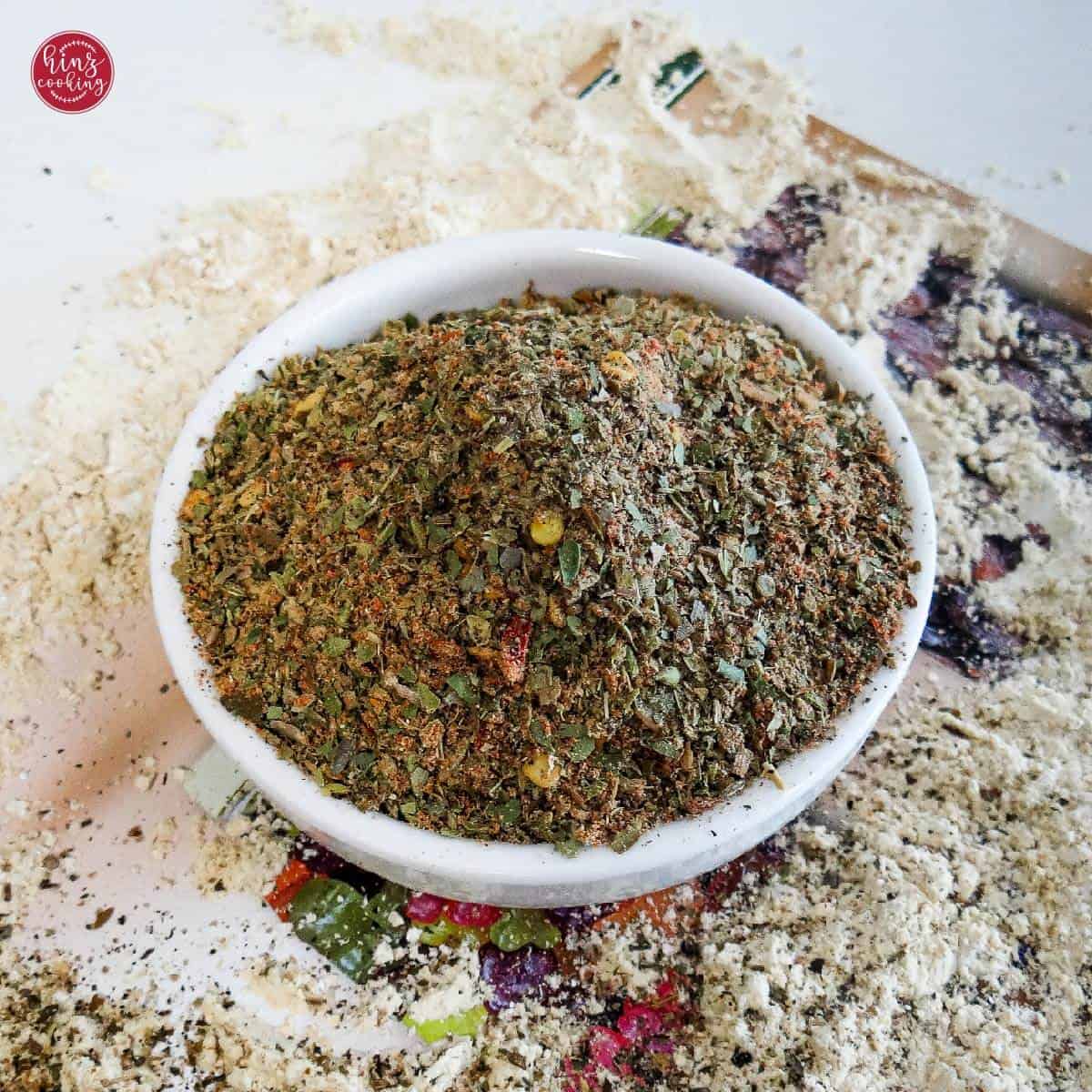
Naila
AOA,well ihave made nihari masala powder n in process of making nihari,though I do find a thing amiss in it,u didn't mention how much powder to b used for how much quantity of meat,well waiting for end result,😉 regards
Hinz
Naila, thanks for noting down. I have added it in the description.
Just to update you, use 3 tbsp in 1 KG meat.
Stay connected! have a good day..
Mina
I landed here because I just wanted to give my nihari a more personal touch, not entirely Packet masala taste. So will await outcome, since it's still cooking. Thank you
Russ Barker
Hi! New Zealand here. I'm a bit confused here. Do I add all of the ground spices to the powdered spices as well as 2 TBS of garam masala?
Hinz
Welcome here!
Simply add 2 tbsp ground spices in powdered spices that I mentioned in the post and mix well. You can store the masala as per your requirements.
If the meat is 1KG then 3 Tbsp is enough to add.