
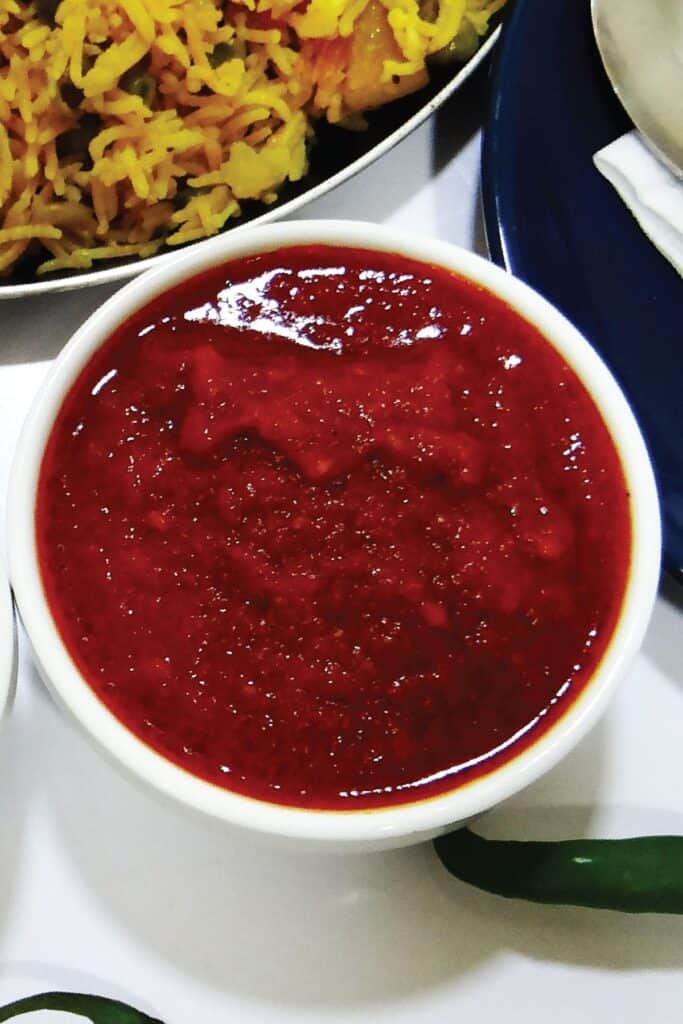
Dakkous — also written as Daqoos or Daqqus — is the traditional Arabic tomato sauce served alongside Gulf rice dishes like Mandi, & Kabsa (Machboos). Made from fresh tomatoes, garlic, olive oil, and warming spices, it takes just 10 minutes to prepare and transforms any Arabic rice meal from good to unforgettable.
I first tasted Dakkous at a family gathering in Saudi Arabia, where it arrived in a small clay bowl alongside a whole tray of Mandi. The host's mother had made it from scratch that morning — just tomatoes, garlic, a little heat, and a pour of good olive oil. That single bowl completely changed how I understood Arabic food. The sharpness of the sauce cuts right through the richness of the spiced rice and slow-cooked meat. It doesn't just accompany the dish — it balances it.
I've been making this recipe ever since, testing it across different Gulf styles, and this version captures that same balance: bright, garlicky, slightly spicy, and done in the time it takes to set the table.
Jump to:
What is Dakkous (Daqoos)?
Dakkous (also spelled Daqoos or Daqqus) is a cooked Arabic tomato sauce from the Gulf region, made by blending fresh tomatoes with garlic, olive oil, and spices, then briefly simmering until the flavors concentrate. It is the essential condiment for Mandi and Kabsa — Saudi Arabia's most beloved rice dishes — and is served across Kuwait, Qatar, Bahrain, the UAE, and Yemen.
Why Dakkous Exists — and Why It Matters
Gulf rice dishes like Mandi and Kabsa are rich, deeply spiced, and built around slow-cooked meat and fragrant rice cooked in meat broth. Dakkous is their counterpoint: acidic, fresh, and sharp. The tomato's natural acidity cuts through the fat of the lamb or chicken, while the garlic adds an aromatic lift that the rice alone cannot provide.
This is why you will never see a proper Mandi plate served without a small bowl of Dakkous on the side. It is not optional — it is structural to the meal.
Why You'll Love This Recipe
✔ Ready in just 5 minutes
✔ Uses simple pantry ingredients
✔ Pairs perfectly with all Arabic rice dishes
✔ Fresh, healthy, and naturally vegan
✔ Tastes just like restaurant-style Dakous
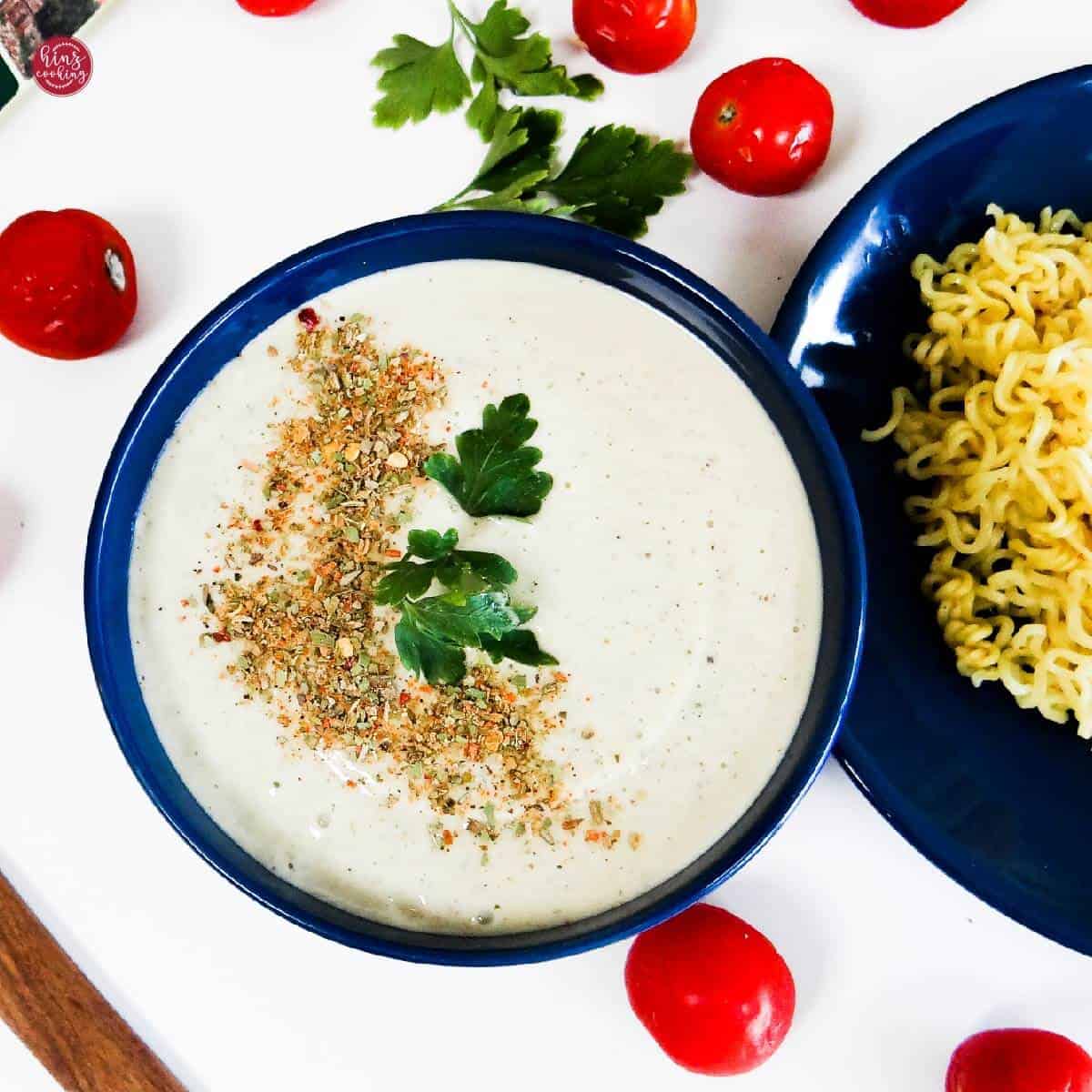
Here I made the traditional dakous recipe, which is simple and quick, taking no more than 10 minutes to prepare fully. If you're cooking Arabic rice, you can make it in advance and keep it in the fridge for up to 3 days.
The pouring of dakous sauce over the rice creates a wonderful flavor. If you haven't tried it yet, I encourage you to do so; you'll enjoy the taste. Occasionally, I serve it alongside biryani, as I believe they complement each other perfectly.
Ingredients & Substitutions
Use the freshest tomatoes you can find. The quality of your tomatoes is the single biggest factor in how this sauce tastes.
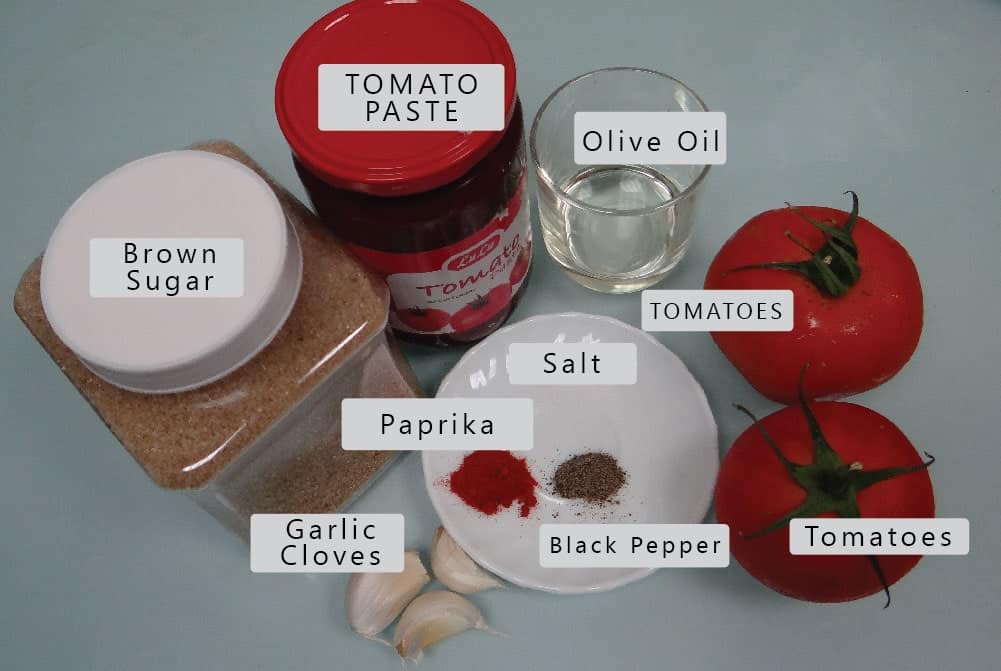
Fresh tomatoes (2 large, Roma or plum variety)
Roma and plum tomatoes have a meaty, low-moisture flesh that blends into a thick, rich sauce without becoming watery. Avoid salad tomatoes — they are too watery and will thin out the sauce.
Tomato paste (2 teaspoons)
Adds depth of color and a concentrated tomato flavor that fresh tomatoes alone cannot deliver. It also helps thicken the sauce to the right consistency.
Garlic (3 cloves, fresh)
The backbone of Dakkous. Use fresh cloves only — garlic paste or pre-minced garlic loses the sharp, pungent edge that defines this sauce. Three cloves is the baseline; add a fourth if you love garlic.
Olive oil (1 tablespoon)
Use a good-quality olive oil. It carries the garlic's flavor into the sauce and gives Dakkous its characteristic richness. Do not substitute with vegetable oil — you will lose the authentic taste.
Smoked paprika (½ teaspoon)
Adds a subtle smoky warmth without heat. You can substitute regular sweet paprika for a milder version.
Salt (½ teaspoon)
Start with this and adjust at the end.
Black pepper (¼ teaspoon)
Brown sugar (1 teaspoon)
Balances the acidity of the tomatoes. This is the small detail that makes the sauce taste rounded rather than sharp. Don't skip it.
Lemon juice (1 teaspoon, fresh)
Adds brightness and lifts the whole sauce. Add at the end — never cook lemon juice for long.
Water (2–4 tablespoons)
To adjust consistency. Dakkous should pour like a thick salsa, not sit like a paste.
Optional additions:
- 1 small green chili or ½ teaspoon red chili flakes — for heat
- ½ teaspoon cumin — common in the Yemeni and Saudi versions
- ½ teaspoon coriander powder — adds earthiness
💚 Daqoos isn’t just a salsa — it’s the ❤️ heart of every arabic rice meal!
How to Make Dakkous — Step by Step
Wash the tomatoes and score a small X at the base. If you prefer a very smooth sauce, blanch them in boiling water for 30 seconds and peel the skins off. For a rustic, slightly textured sauce (the traditional Gulf style), skip peeling.
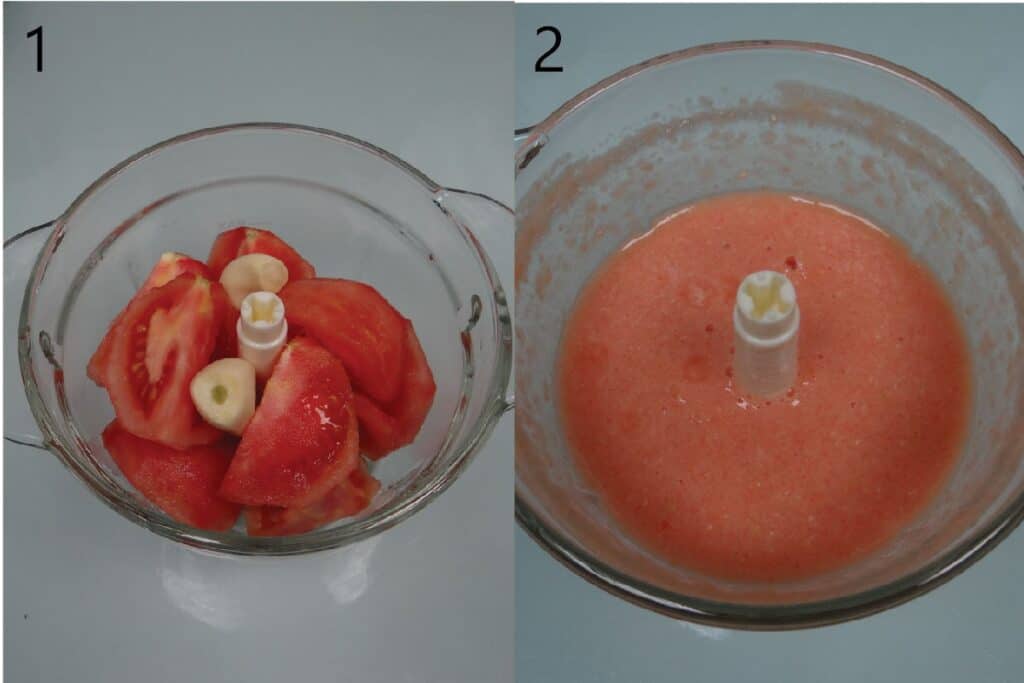
Step 1 & 2 — Prepare and blend the tomatoes
1. Cut the tomatoes into rough chunks.
2. Add to a blender with 2 of the 3 garlic cloves. Blend until smooth — or pulse 4–5 times for a chunkier texture. Set aside.
The reason for blending garlic with the tomatoes at this stage: it gets broken down into the sauce evenly. The third clove goes into the oil separately for a front-forward garlic hit.
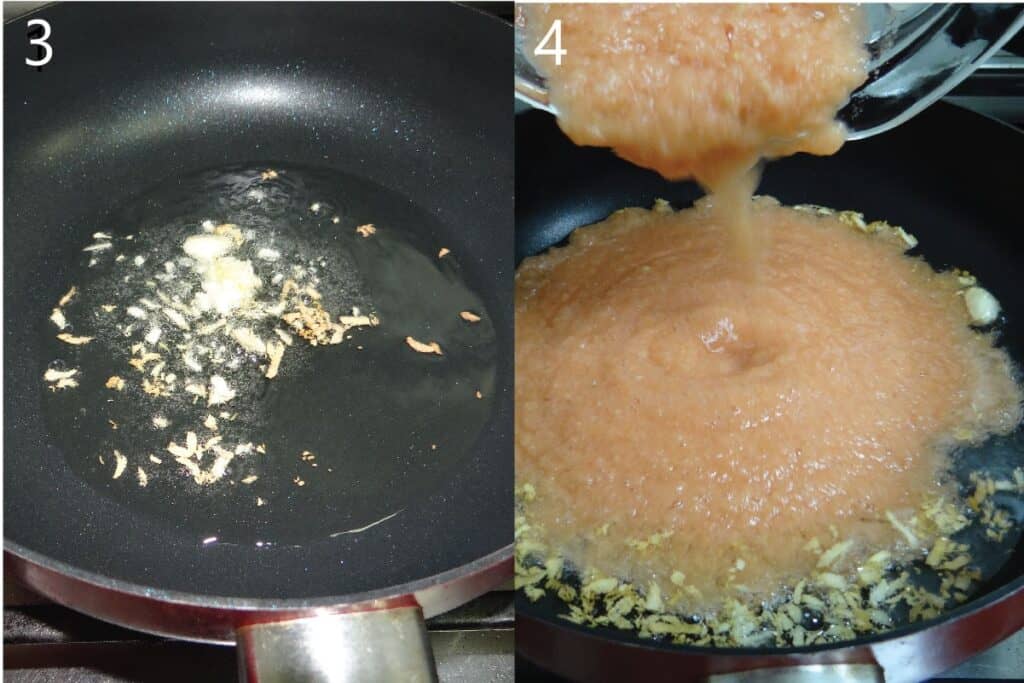
3. Sauté the garlic: Warm the olive oil in a small saucepan or skillet over medium heat. Finely mince or grate the remaining garlic clove and add it to the oil. Sauté for 60–90 seconds, stirring constantly, until it turns fragrant and just barely golden. Do not let it brown — burnt garlic will make the whole sauce bitter.
4. Add the blended tomatoes: Pour the blended tomato mixture directly into the pan with the garlic oil. Stir well and increase heat to medium-high. Let it bubble for 2 minutes — you will see the color deepen and the raw tomato smell cook off.
5. Add tomato paste: Stir in the tomato paste and mix thoroughly until fully incorporated. The sauce will turn a deeper, richer red.
6. Sprinkle Seasoning: Now add the smoked paprika, salt, and black pepper. Stir well.
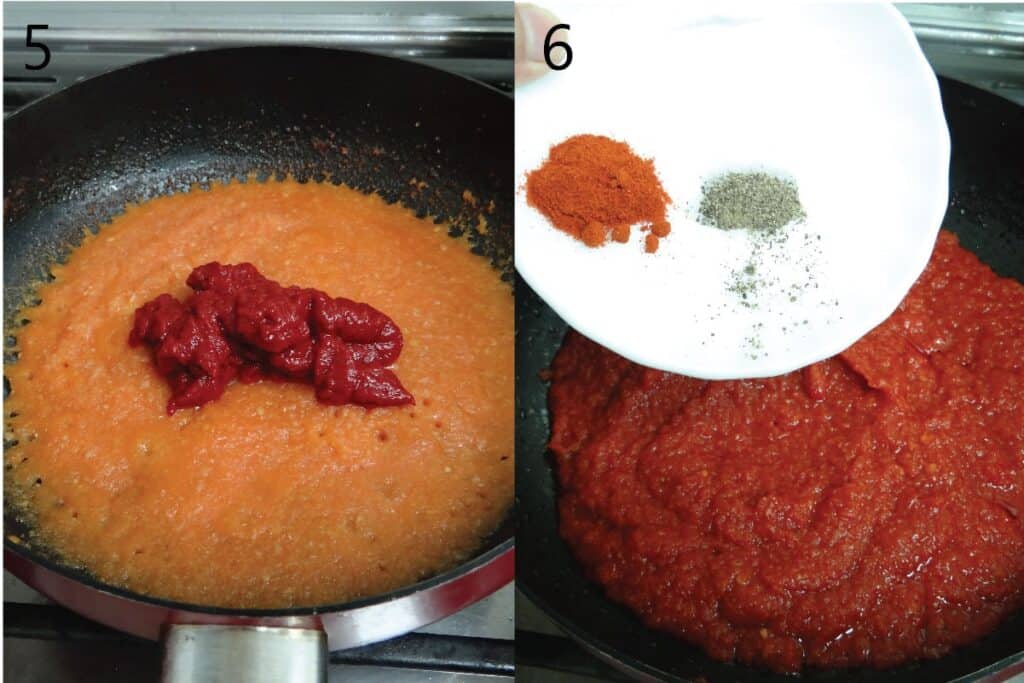
7. Incorporate sweetness: add brown sugar. It will incredibly enhance the taste. Give it a good mix.
This is your moment to adjust: more salt if it tastes flat, more sugar if it tastes too sharp, a pinch of chili if you want heat.
8. Adjust consistency: Add water 1 tablespoon at a time until the sauce reaches the consistency of a pourable salsa. It should coat the back of a spoon but not be so thick that it plops. Simmer for 1–2 more minutes.
9. Finish with lemon juice: Remove from heat. Add the lemon juice and stir through. Taste once more and adjust seasoning if needed.
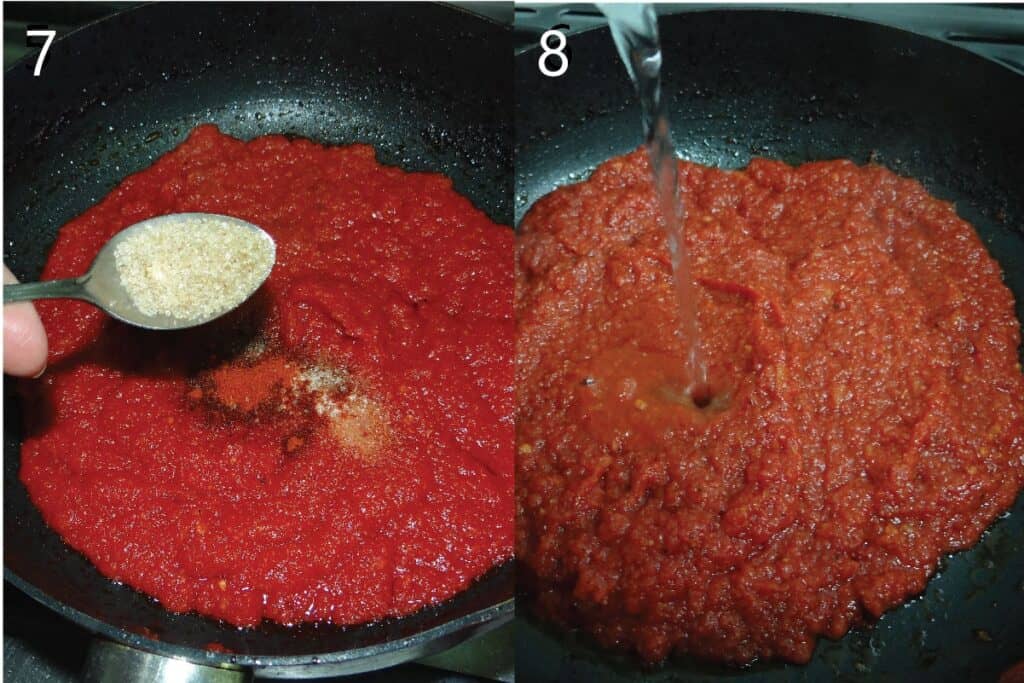
Serve immediately alongside Mandi or Kabsa, or transfer to a bowl and refrigerate. Dakkous tastes equally good hot, at room temperature, or cold.
Tip for a Spicy Kick: include red chili flakes or cayenne peppers.
Pro Tips From Experience
Use Roma or plum tomatoes, never salad tomatoes. The lower water content gives you a thicker, more concentrated sauce without long simmering. I've tested both — the difference is noticeable from the first taste.
Don't rush the garlic step. The 60–90 seconds in oil is where Dakkous gets its character. Pull it at golden, not brown. If you see it going too dark, take the pan off the heat immediately and add the tomatoes — the cold liquid will stop the cooking.
Make it the day before. Dakkous develops significantly overnight. If you're serving it for a gathering, make it the night before and refrigerate. The garlic mellows, the acidity settles, and the sauce comes together in a way that fresh-made cannot match.
For a spicier version, add 1 small green chili (blended with the tomatoes) or ½ teaspoon red chili flakes at the seasoning stage. The Saudi style tends to be spicier; the Kuwaiti version is milder and thinner.
For a thicker sauce, skip the water and simmer on medium heat for an extra 3–4 minutes after adding the tomato paste. The sauce will reduce and intensify.
For a completely raw (uncooked) Dakkous, simply blend all ingredients together and serve without cooking. Many Gulf families serve it this way, especially in summer. It is brighter, sharper, and more salsa-like. This style is particularly popular in Yemen.
Regional Variations
Dakkous has no single "correct" version — every Gulf country, and every family within it, has their own.
Saudi Daqoos
Spicier than other versions, often with added cumin and red chili. Sometimes a small dried chili is blended with the tomatoes. The texture is thick and the color is deep red.
Kuwaiti Dakous
Thinner consistency, tangier, and usually fully blended smooth. Often served cold alongside Machboos (their version of Kabsa).
Yemeni Style
The most garlic-forward version. Some Yemeni recipes add a spoonful of hulba (a fermented fenugreek paste) which gives it an earthy, fermented depth unlike any other version.
Chunky Arabic Salsa Style
Popular in home kitchens across the Gulf. Blend the tomatoes only briefly — leaving small chunks — and skip the cooking step entirely. Fresh, bright, and rustic.
Bahraini & Qatari
Very similar to the Saudi version but often made with a small amount of tomato paste added directly to the blender, giving it a denser, almost ketchup-like base before simmering.
What To Serve With Dakkous
Dakkous was made for one purpose: to sit alongside Gulf rice dishes. These are the pairings it was designed for, and the ones where it performs best.
Primary pairings — these dishes need Dakkous:
- Chicken Mandi — The most iconic pairing. Mandi's slow-smoked, gently spiced chicken and fragrant rice are almost incomplete without a bowl of Dakkous. The sauce's acidity balances the smokiness of the meat perfectly.
- Chicken Kabsa (Machboos) — Kabsa's rich tomato-based rice already has depth; Dakkous adds a fresh, sharp counterpoint that lifts the whole dish.
- Maqluba — The Palestinian "upside-down" rice. Richer and more heavily spiced than Mandi — Dakkous works as a cooling, acidic contrast.
Great secondary pairings:
- Albaik Chicken — Saudi fried chicken and Dakkous as a dipping sauce is a combination you'll want to make every week.
- Shish Tawook — Grilled chicken skewers served with a side of Dakkous instead of the usual garlic sauce makes for a lighter, more interesting plate.
- Falafel — Dakkous as a tomato dipping sauce alongside falafel is common in Levantine-style spreads.
- Baharat-spiced dishes — Any dish seasoned with Baharat spice mix pairs naturally with Dakkous; they share the same flavor world.
For a complete Gulf meal:
Serve Chicken Mandi + Dakkous + a side of Baba Ganoush + Bazlama flatbread for scooping, and finish with Karak Chai. That is a full Gulf spread.
How to Store, Freeze & Reheat
Refrigerator: Transfer to an airtight glass jar while still warm. Once cooled, it will keep for 3–4 days. The flavor actually improves on day two as the garlic mellows.
Freezer: Pour into an ice cube tray and freeze. Once frozen, transfer the cubes to a zip-lock bag. Each cube is roughly 1–2 tablespoons — enough for one serving. Keeps for up to 2 months.
Reheating: Warm gently in a small saucepan over low heat, adding a teaspoon of water if the sauce has thickened in the fridge. Or serve cold — many Gulf families prefer Dakkous chilled alongside hot rice.
Make-ahead tip: Dakkous is an ideal make-ahead sauce. Prepare it up to 3 days in advance and store refrigerated. The garlic and spices develop overnight, and the sauce tastes noticeably better on day two.
Faqs
They are similar in concept — both are tomato-based condiments — but Dakkous is distinct. It uses olive oil and garlic as primary flavor agents, is sometimes cooked rather than raw, and is seasoned with Gulf spices rather than lime and cilantro. The taste is warmer and more aromatic than a Mexican salsa.
Yes. An uncooked (raw) Dakkous is traditional in many Gulf households, particularly in Yemen and during summer. Simply blend all ingredients and serve immediately. It will be brighter, sharper, and more salsa-like. Cooked Dakkous has a deeper, more rounded flavor.
You can, though fresh tomatoes give a noticeably better result. If using canned, use whole peeled tomatoes (San Marzano if available) and drain most of the liquid before blending. The flavor will be slightly deeper and less bright than fresh.
Your tomatoes might be too juicy. Simmer longer or add 1 teaspoon tomato paste.
Two likely causes: your tomatoes had high water content (common with regular salad tomatoes), or you did not cook it long enough.
To fix: simmer on medium heat for an extra 3–4 minutes uncovered, or add 1 teaspoon tomato paste to thicken and deepen the color.
Your tomatoes might be too juicy. Simmer longer or add 1 teaspoon tomato paste.
The garlic was likely overcooked in the oil stage. Browned or burnt garlic turns bitter and that bitterness carries through the whole sauce. If this happens, the sauce cannot be saved — start the garlic step again with fresh oil and garlic, cook to golden (not brown), then add your existing tomato mixture.
Both are correct — and both are common across the Gulf.
Served hot, it is more aromatic and the garlic is more pronounced.
Served cold or at room temperature, the tomato flavor is more prominent and the sauce is refreshing alongside hot rice.
Personal preference applies here.
For a meal like Mandi or Kabsa, plan 2–3 tablespoons per person as a condiment. This recipe makes approximately 6 servings.
Not traditionally — Dakkous should be bright red, which requires ripe red tomatoes. Green tomatoes will produce a sharper, more acidic sauce with a very different character. Use the ripest, reddest tomatoes you can find.
Harissa is a North African red chili paste — it is primarily about heat and contains roasted peppers and chilies as the base.
Dakkous is a Gulf tomato sauce where tomatoes are the primary ingredient and garlic is the key flavor.
They are completely different condiments from different regional traditions, though both are red.
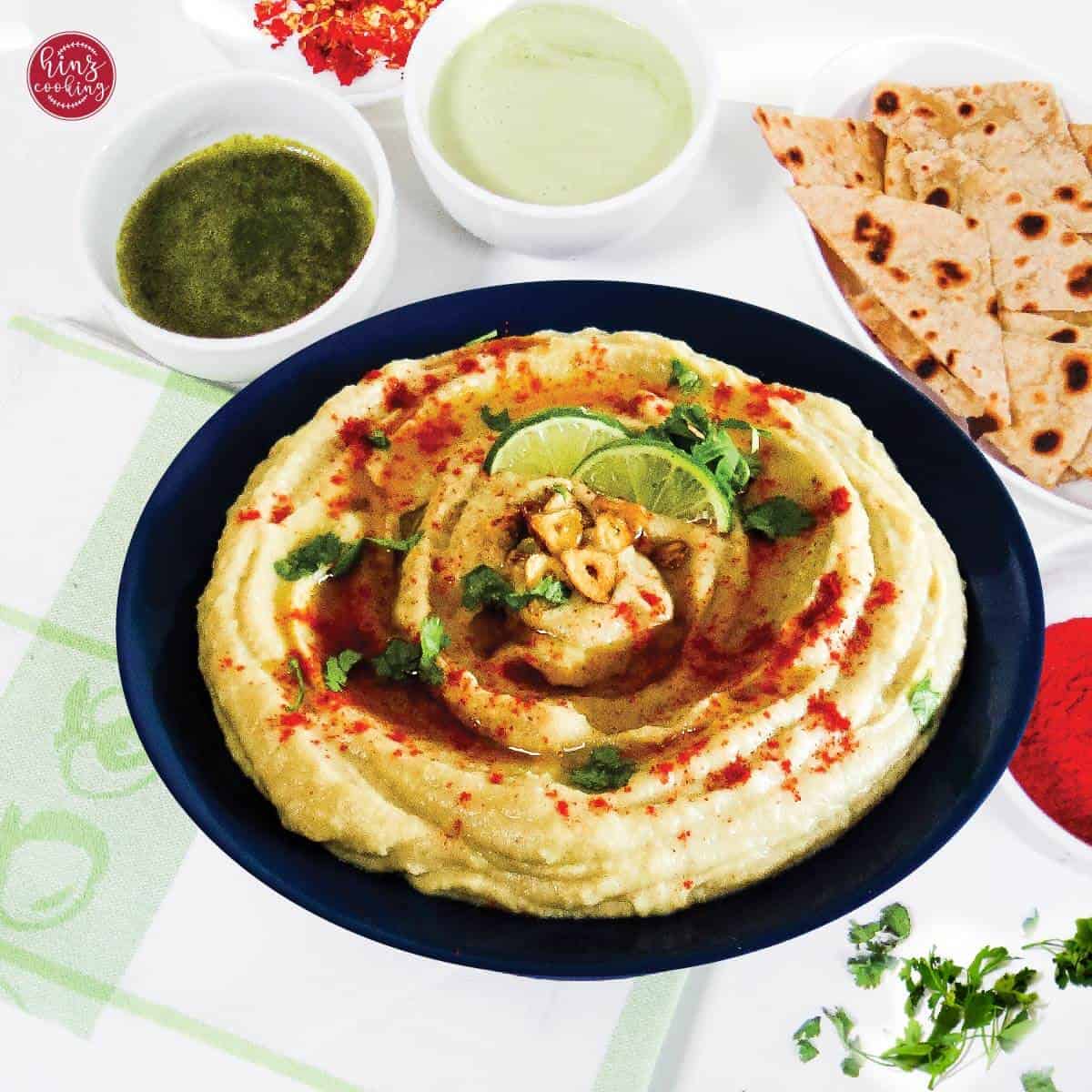
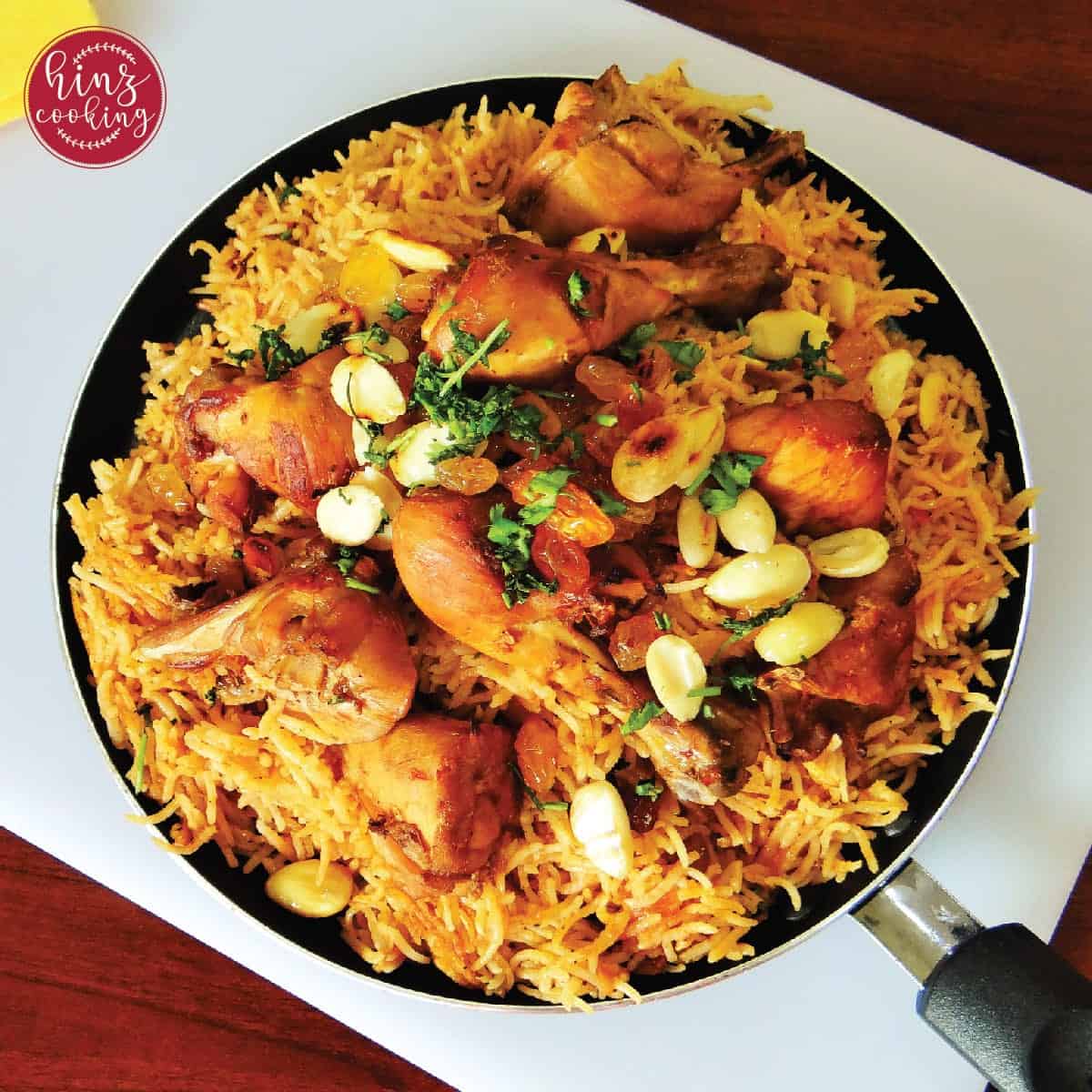
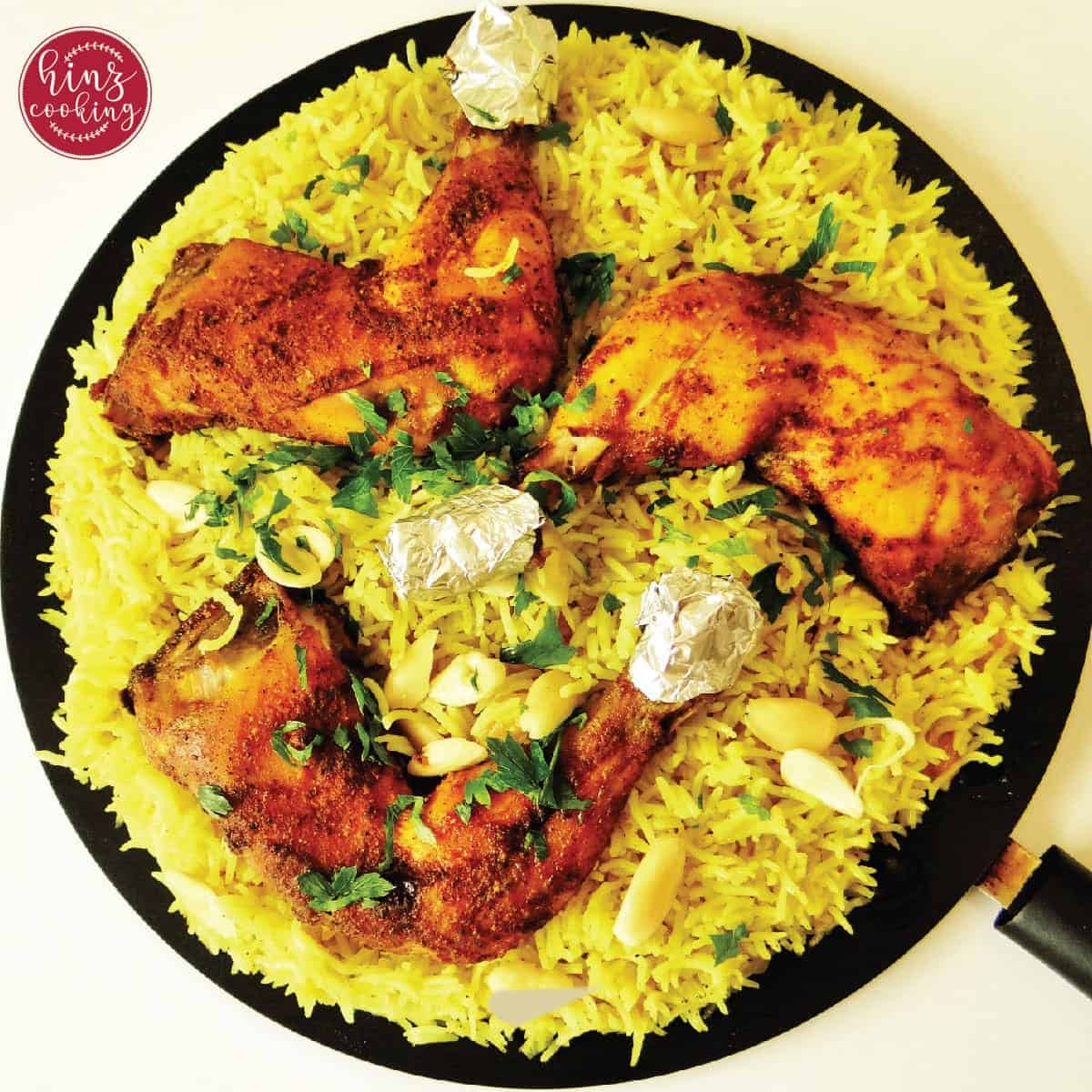
🥣 Do you like Dakkous sauce with Kabsa or Mandi?
⭐ Rate this recipe below
💬 Drop your questions in the comments
📲 Follow along on Instagram for more recipes.
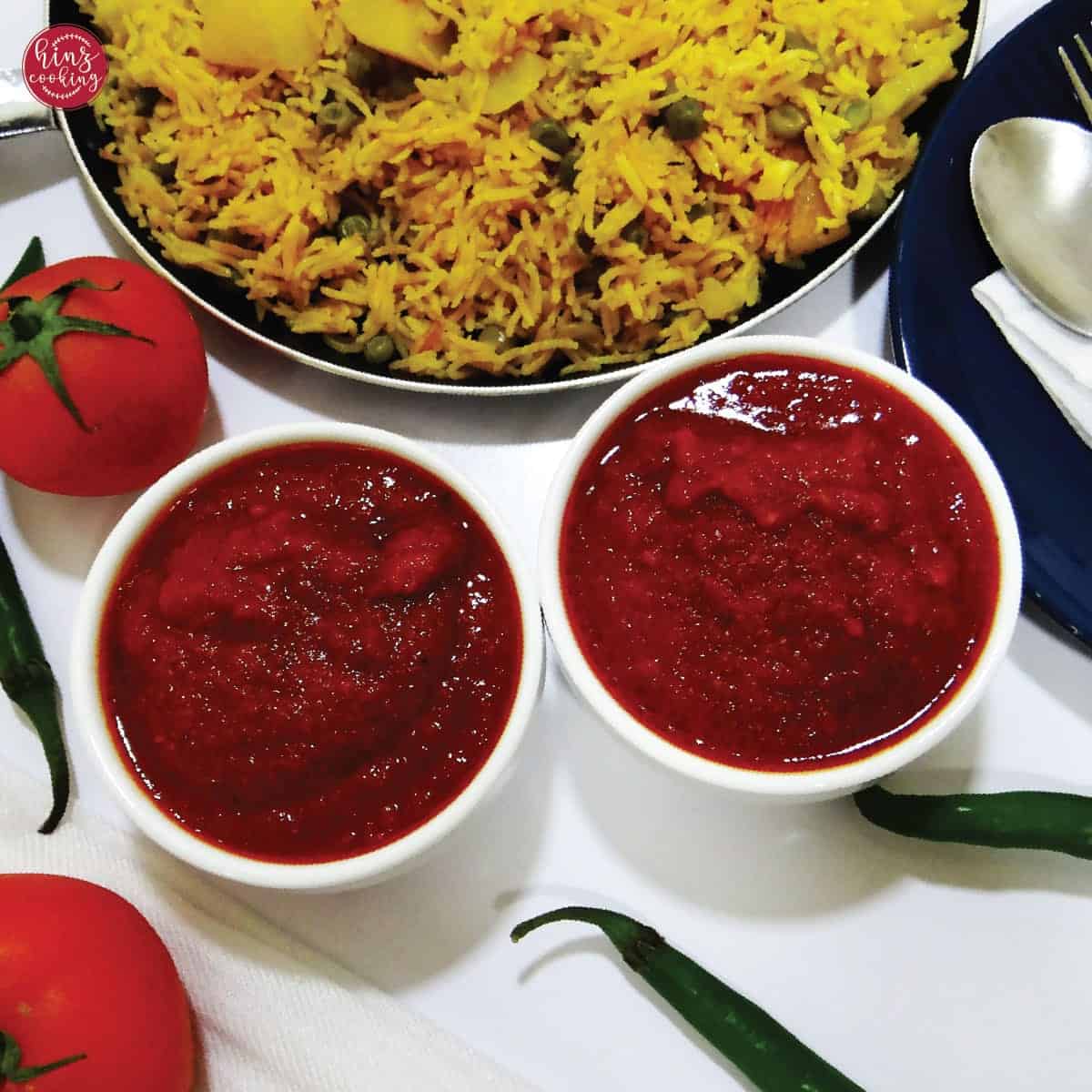
Dakkous Recipe (Daqoos) — Authentic Arabic Tomato Sauce
Ingredients
- 2 tomatoes large pulpy roma or plum tomatoes
- 2 teaspoon tomato paste For rich texture
- 3 garlic cloves Fresh
- 1 tablespoon olive oil add signature flavor of sauce
- ½ teaspoon Salt
- ⅓ teaspoon Smoked Paprika
- ⅓ teaspoon Black Pepper
- 1 teaspoon Brown Sugar
- 1 teaspoon Lemon Juice Freshly squeezed
- 2 tablespoon Water To adjust consistency
- ½ teaspoon Chili Flakes (optional) or 1 small green chili (optional, for heat)
- ¼ teaspoon Cumin Powder (optional, for Saudi/Yemeni style)
Instructions
- Blend the tomatoes: Wash and roughly chop 2 large Roma or plum tomatoes. Add to a blender with 2 of the 3 garlic cloves, fresh (reserve 1 clove for the oil). Blend smooth for a silky sauce, or pulse 4–5 times for a chunky Gulf-style texture. Set aside.
- Sauté garlic in olive oil: Warm 1 tablespoons olive oil in a small saucepan over medium heat. Finely mince or grate the reserved garlic clove and add it to the oil. Sauté for 60–90 seconds, stirring constantly, until fragrant and just barely golden. Do not let it brown — burnt garlic turns bitter and cannot be fixed.
- Add blended tomatoes: Pour the blended tomato mixture into the pan. Stir well and increase heat to medium-high. Cook for 2 minutes, stirring occasionally, until the raw tomato smell cooks off and the color deepens.
- Add tomato paste and seasonings: Stir in 2 teaspoons tomato paste until fully incorporated — the sauce will turn a richer, deeper red. Add 0.5 teaspoons smoked paprika, 0.5 teaspoons salt, 0.3 teaspoons black pepper, and 1 teaspoons brown sugar. If using, add 0.5 teaspoons red chili flakes or 1 small green chili (optional, for heat) or 0.3 teaspoons cumin powder (optional, for Saudi/Yemeni style) now. Stir well and taste. Adjust salt, sugar, or spice to your preference.
- Adjust consistency: Add 3 tablespoons water, to adjust consistency one tablespoon at a time until the sauce pours like a thick salsa — it should coat the back of a spoon but not sit like a paste. Too thick: add water and simmer 2 minutes 02:00. Too thin: cook uncovered on medium heat for 3–4 more minutes.
- Finish with lemon juice and serve: Remove from heat. Stir in 1 teaspoons fresh lemon juice. Taste one final time and adjust seasoning. Serve immediately alongside Chicken Mandi, Kabsa, or Maqluba — or transfer to a glass jar and refrigerate. Dakkous is equally good hot, at room temperature, or cold.
- Adjust the sauce consistency or modify its thickness by adding water. If the sauce is overly thick, incorporate a small amount of water and let it simmer for a few minutes to achieve the desired texture. Conversely, if the sauce is too thin, allow the water to evaporate and cook it on high heat.
Notes
- Best tomatoes: Roma and plum tomatoes have low moisture and a meaty flesh — they make a thicker sauce without long simmering. Avoid regular salad tomatoes.
- Make it ahead: Dakkous tastes noticeably better on day two. The garlic mellows and the flavors come together overnight. Ideal for gatherings — make it the day before.
- Raw (uncooked) version: Skip the cooking entirely. Blend all ingredients together and serve fresh. This is the traditional Yemeni style — brighter, sharper, more salsa-like.
- Storage: Refrigerator: airtight glass jar, 3–4 days. Freezer: pour into an ice cube tray, freeze, then transfer to a zip-lock bag — keeps 2 months. Each cube = 1–2 tablespoons (one serving).
- Regional heat levels: Saudi style → add ½ teaspoon red chili powder. Kuwaiti style → omit chili, serve cold. Yemeni style → extra garlic + a pinch of cumin.
- Serving pairings: Chicken Mandi · Chicken Kabsa · Maqluba · Albaik Chicken · Shish Tawook · Falafel

Pvfei
Its so nice but i add chili paste fresh, chopped green capsicum and tamarind sauce to be much more tastier. I love it!
Hinz
Yes, it could be the great addition.. There are variety of addons that can add according to taste.. It's an standard recipe that can be diversify as per the taste...
Hinz
Authentic Dakous recipe prepared with fresh tomatoes. Must try with Kabsa rice!
Ayesha
Is it important to add brown sugar?? Will it be sweet??
Hinz
You can skip if you want! Sugar is basically used as taste enhancing agent.