
In Dubai, cheese samosa exists in two completely different versions and I have eaten both my whole life here.
The first version is what I grew up making — the Pakistani spiced version where paneer or cottage cheese is sautéed with cumin, green chili, and a pinch of roasted gram flour, then folded into thin patti and deep fried until the pastry is golden and the cheese inside is soft and warm.
The second version is what I discovered in Dubai's Arabic cafés and at Gulf family iftars — the Sambousek. Simpler, purer. Just white cheese (usually Akkawi or mozzarella), sometimes a scatter of fresh herbs, inside the same thin patti. No spice complexity. The focus is entirely on the cheese melting against the crispy pastry. In Arabic coffee shops across the UAE, Saudi Arabia, and Bahrain, a plate of hot Sambousek alongside karak chai is what you eat while catching up with family.
This cheese samosa recipe covers both. The same base technique — thin patti, flour paste seal, correct oil temperature — produces either version depending on the filling you choose. I make both in my Dubai kitchen regularly. By the end of this post you will know how to make the Pakistani spiced version, the Gulf Arabic Sambousek version, and the mozzarella and jalapeño variation that has become the most popular version with my Western friends and readers.
Jump to:
- What is Cheese Samosa? — And What is Sambousek?
- Which Cheese To Use — The Full Guide
- Ingredients & Substitutions
- How to Make Cheese Samosa
- Step 4 — Fold the samosa
- Alternative Methods
- Mozzarella And Jalapeño Variation
- Pro Tips For Crispy Cheese Samosa
- What To Serve With Cheese Samosa
- How To Store & Freeze Cheese Samosa
- Frequently Asked Questions
- More Snack Ideas
- Cheese Samosa (Sambousek)
What is Cheese Samosa? — And What is Sambousek?
Cheese samosa is a deep-fried South Asian pastry snack in which thin samosa patti sheets are filled with a spiced cheese mixture — typically paneer (Indian cottage cheese) or fresh white cheese — folded into a triangular shape, sealed with flour paste, and fried until crispy golden-brown.
Sambousek (also spelled Samboosa, Sambusa, or Sambousak) is the Arabic and Gulf version of the same dish — the word comes from the Persian word samsa and refers to the same fried or baked triangular pastry. In Gulf Arab countries, Sambousek is most commonly filled with white cheese (Akkawi cheese, feta, or mozzarella) and served as a Ramadan iftar snack, a party appetiser, or alongside Arabic coffee at gatherings.
The technique is identical across both traditions. The filling — and the spice level — is what changes.
Cheese samosa around the world — the same idea in four traditions
| Name | Region | Common cheese | Spice level |
|---|---|---|---|
| Keema samosa | Pakistan, India | No cheese — meat | Hot |
| Paneer samosa | India, Pakistan | Paneer / cottage | Medium |
| Sambousek | Gulf Arab countries | Akkawi, feta, mozzarella | Mild |
| Börek | Turkey, Balkans | White cheese, feta | Mild |
| Fatayer | Levant (Lebanon, Syria) | White cheese, spinach | Mild |
All are built on the same principle — seasoned filling inside thin pastry, fried or baked until crispy.
Which Cheese To Use — The Full Guide
This is the most important decision in the recipe. The cheese determines the texture, the melt, the flavor, and how far the filling goes.
Paneer / Indian cottage cheese — the traditional Pakistani version. Firm, mild, holds its shape when fried without going rubbery. Does not melt into strings. Best for a clean, structured bite. Used in this recipe as the primary filling.
Mozzarella — the best Western substitute and the most crowd-pleasing version. Melts completely inside the hot patti and creates a gooey, stretchy pull when you bite into a freshly fried samosa. The mozzarella version is what Western readers and non-South-Asian guests consistently prefer. Use low-moisture mozzarella (the block type, not fresh buffalo mozzarella) — fresh mozzarella releases too much water and makes the filling wet.
Akkawi cheese — the traditional Gulf Sambousek cheese. Firm white cheese from the Levant, mild and slightly salty. Soak in cold water for 30 minutes before using to reduce the saltiness. Available in Middle Eastern supermarkets across the UAE, UK, and US.
Feta — salty and crumbly. Does not melt but flavors the filling beautifully when mixed with fresh mint and jalapeño. The closest to Lebanese Sambousek style.
Cheddar — stronger flavor, good melt, familiar to Western audiences. Sharp cheddar gives a bolder result. Works well combined with jalapeño.
Cream cheese — very modern, popular in Pakistani café culture. Stays soft rather than melting into strings. Mix with jalapeño and a pinch of chili flakes.
Halloumi — grills beautifully inside the patti without melting or going stringy. Different texture entirely — firm and slightly squeaky. A good option for those who prefer structure over gooeyness.
Ingredients & Substitutions
For the cheese filling (Pakistani spiced version)
- 200g paneer (Indian cottage cheese) — shredded or crumbled. Or substitute mozzarella, cheddar, feta, or Akkawi cheese.
- 1 tablespoon oil
- ½ teaspoon cumin seeds — the base aromatic of the filling
- 1–2 green chilies, sliced — adjust to heat preference
- 1 small onion, finely chopped
- ½ teaspoon salt — or to taste. Reduce if using salty cheese like feta or Akkawi.
- ½ teaspoon red chili powder
- ¼ teaspoon black pepper
- 1 tablespoon roasted gram flour (besan) — this is what binds the filling and gives it a slightly nutty depth. Toast it in a dry pan for 1–2 minutes until light golden before adding. Do not skip — it prevents the filling from becoming watery when the cheese heats.
- 1 tablespoon fresh coriander (cilantro), chopped — added at the end for freshness
For the Gulf Sambousek version (cheese only)
- 200g mozzarella or Akkawi cheese, shredded
- 2 tablespoons fresh parsley or fresh mint, chopped
- ¼ teaspoon black pepper
- Pinch of chili flakes (optional) No sautéing required — mix the ingredients together cold and use as filling directly.
For wrapping and sealing
- 20 ready-made samosa patti sheets — thinnest available, thawed if frozen
- 1 tablespoon wheat flour (all-purpose flour)
- 2 tablespoons water Mix together to form a thick paste — the samosa seal. Consistency should be like thick glue.
For frying
- Oil for deep frying — sunflower, canola, or vegetable
How to Make Cheese Samosa
Prep time: 15 minutes | Cook time: 20 minutes | Total: 35–40 minutes | Makes: 18–20 samosas | Serves: 5–6
Step 1 — Make the cheese filling (Pakistani spiced version)
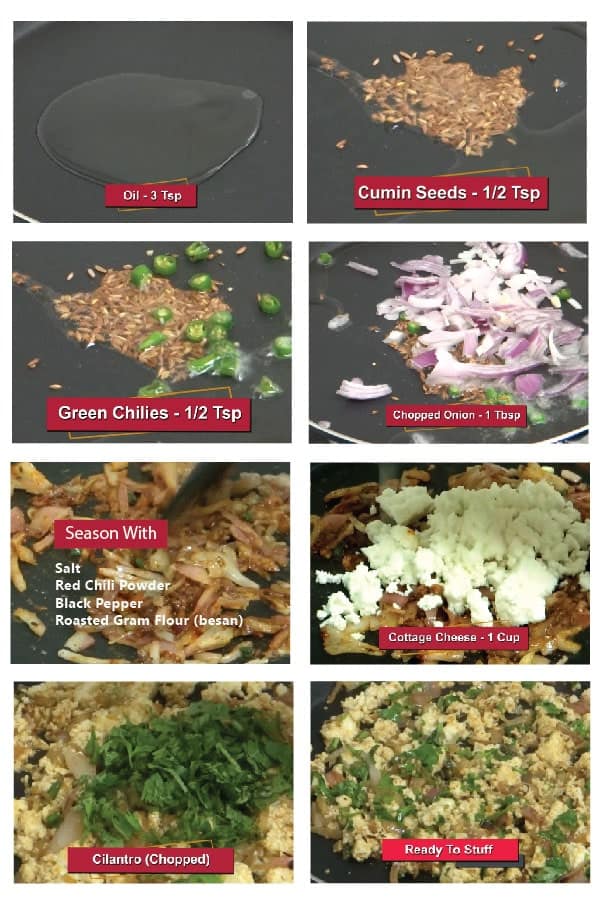
Heat 1 tablespoon of oil in a pan over medium heat. Add the cumin seeds and sliced green chilies — they should sizzle immediately. Cook for 30 seconds until the cumin seeds turn slightly golden and fragrant.
Add the finely chopped onion and sauté for 3–4 minutes until soft and lightly golden.
Add salt, red chili powder, and black pepper. Stir for 30 seconds. Add the roasted gram flour (besan) and stir well for 1 minute — it will absorb the oil and cook off its raw smell. This step is important: uncooked besan has a strong, slightly bitter taste that ruins the filling.
Add the shredded paneer (or your chosen cheese) and stir gently for 2–3 minutes until warmed through and combined with the spices. Do not overcook — you want the cheese to soften slightly, not dry out.
Remove from heat. Add fresh coriander and mix. Spread on a plate to cool completely before filling the patti.
For the Gulf Sambousek version: skip all cooking. Simply mix shredded mozzarella or Akkawi cheese with fresh parsley, black pepper, and optional chili flakes in a bowl. Use cold. No sautéing needed — the cheese melts fully inside the hot patti during frying.
Step 2 — Make the flour paste
Mix 1 tablespoon of wheat flour with 2 tablespoons of water until completely smooth with no lumps. The consistency should be thick — similar to glue. A thin paste will not seal the edges properly and the samosa will open in the oil, spilling the filling.
Step 3 — Prepare the patti
Thaw patti sheets completely at room temperature if frozen — never fold cold sheets, they crack. Keep unused sheets covered under a slightly damp cloth while working. If a sheet is torn, brittle, or has dry papery patches, discard it. A compromised sheet breaks in the oil.
Step 4 — Fold the samosa
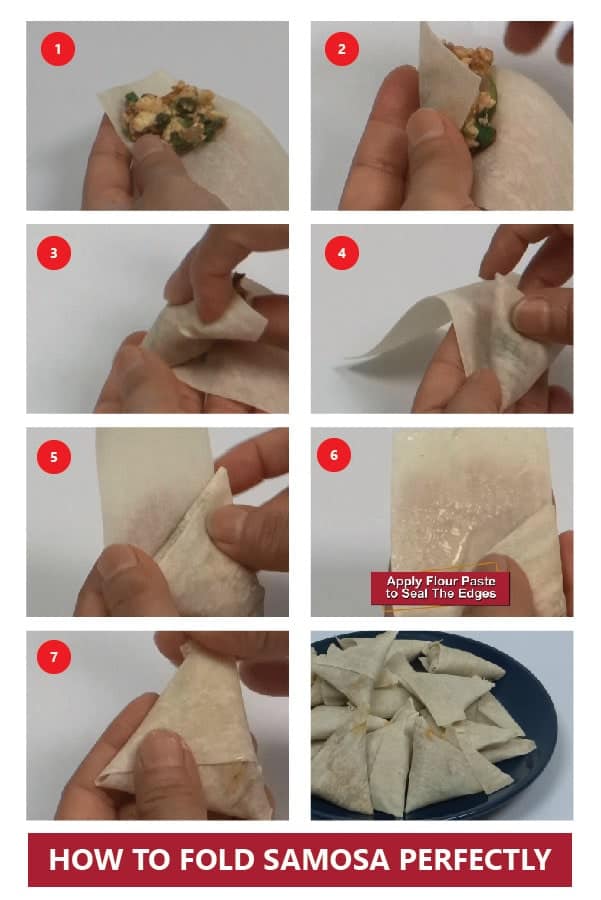
Take one patti sheet and hold it lengthways (long side horizontal).
Fold the right third over toward the centre, forming a triangular pocket at the top corner. Apply a thin line of flour paste along the folded edge. Press firmly and hold for 3 seconds.
Fold the triangular pocket down and over to create a cone shape. Place 1–1.5 teaspoons of cooled filling inside the cone. Do not overfill — the filling expands slightly as the cheese heats.
Fold the remaining flap over the cone, applying flour paste along all exposed edges. Press each sealed edge firmly for 5 seconds. Check all edges are fully closed — any gap will let hot oil enter the samosa.
Place finished samosas on a tray without stacking.
Step 5 — Deep fry
Heat oil in a deep pan to 175°C / 350°F (3 inches deep). Test: drop a small piece of patti into the oil — it should rise to the surface and bubble actively within 2–3 seconds.
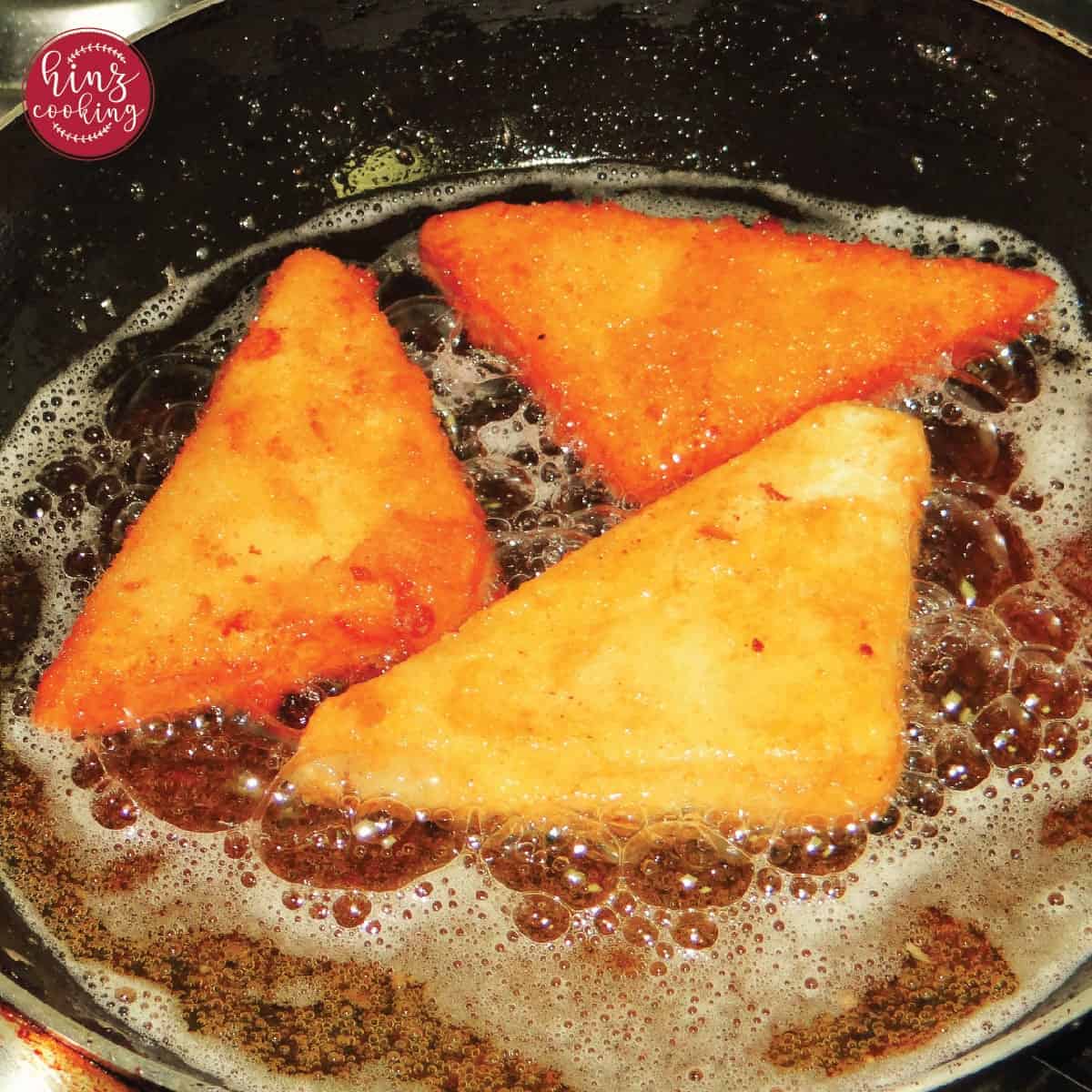
Lower samosas gently into the oil — never drop them in. Fry 4–5 at a time maximum. Fry on medium-high heat for the first 2 minutes then reduce to medium for 3–4 more minutes. Total: 5–6 minutes, turning once or twice, until deep golden-brown. Remove with a slotted spoon and drain on paper towels. Do not cover immediately — trapped steam makes the patti soft.
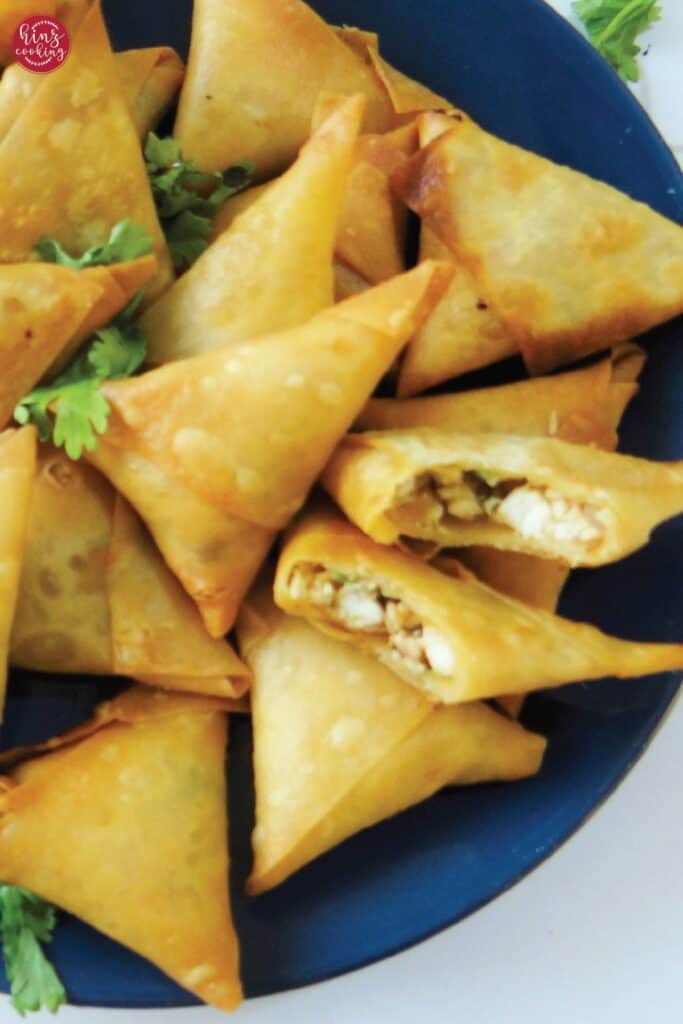
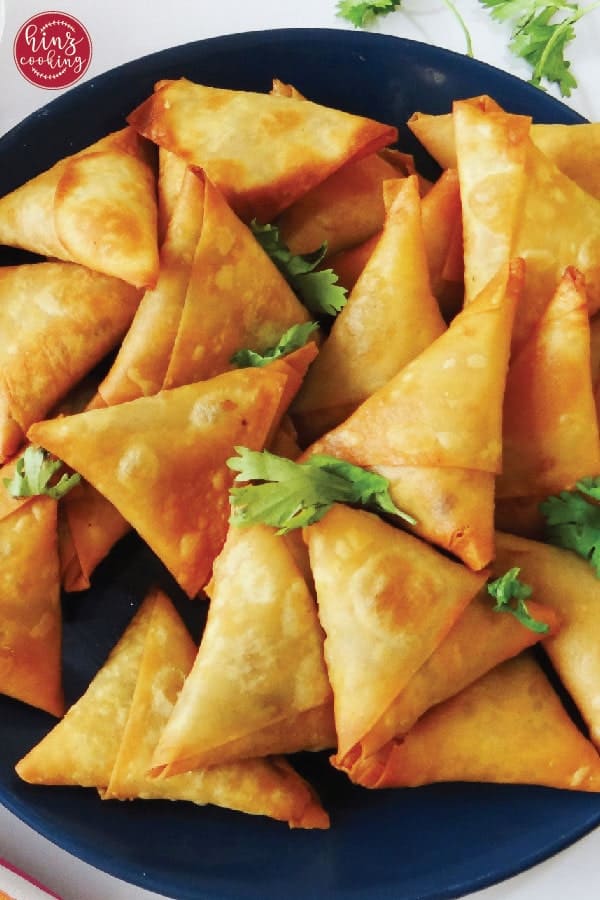
The cheese samosa is ready when deep golden-brown, not pale golden. Pale patti means undercooked and the pastry will be soft rather than crispy.
Alternative Methods
Air fryer cheese samosa
Preheat air fryer to 200°C / 390°F for 3–4 minutes. Spray samosas generously with oil on all sides — use enough that the patti surface looks lightly coated, not just a mist. Place in a single layer with gaps between each — do not overlap.
Air fry for 10 minutes, then open and flip each samosa carefully. Spray with oil again on the newly-exposed side. Air fry for a further 8–10 minutes until deep golden on all sides.
The air fryer result is very close to deep fried — the circulating hot air crisps the patti genuinely well. The cheese inside melts fully. This is the best option if you want to reduce oil usage without sacrificing texture.
For frozen uncooked cheese samosas: Air fry from frozen at 190°C for 14–16 minutes total, flipping and spraying at the halfway mark.
Baked cheese samosa
Preheat oven to 220°C / 430°F. Line a baking tray with parchment paper.
Brush each samosa generously with oil on all sides — do not skimp. Place on the tray with space between each. Bake for 15 minutes, then flip each samosa carefully and brush the newly-exposed side with more oil. Bake for a further 10–12 minutes until golden-brown.
Baked samosas are less crispy than fried or air-fried but the cheese filling is identical. They are better for large batch cooking where monitoring a fryer is impractical.
Mozzarella And Jalapeño Variation
This is the variation my Western friends always request and the one that gets the fastest reaction at gatherings.
Filling:
- 200g low-moisture mozzarella, shredded
- 2 tablespoons pickled or fresh jalapeño, finely chopped
- ¼ teaspoon black pepper
- Pinch of chili flakes
- 1 tablespoon fresh parsley, chopped
Mix together cold — no cooking required. Fill and fold exactly as the main recipe.
The mozzarella melts completely during frying into a stretchy, gooey pull. The jalapeño provides heat and the fresh parsley cuts through the richness. This is the version closest to what you would eat at a Mexican restaurant's fried cheese appetiser or at a Turkish börek café — familiar to Western palates but made with the same patti technique.
Pro Tips For Crispy Cheese Samosa
The roasted gram flour (besan) is not optional. This ingredient binds the spiced cheese filling and prevents it from releasing moisture inside the patti during frying. Without it, the water content of the cheese steams the pastry from the inside. Toast it in a dry pan first — raw besan has a bitter taste.
Use low-moisture cheese for the mozzarella version. Fresh buffalo mozzarella releases significant water as it heats. This water turns to steam inside the sealed patti and softens the pastry. Low-moisture block mozzarella gives a gooey melt without the water release.
Cool the filling completely before folding. Hot filling releases steam inside the sealed patti before it reaches the oil. The steam softens the pastry immediately, producing a damp, limp result. Spread the filling on a plate and leave for at least 10 minutes.
Seal every edge for 5 seconds, not 1 second. The flour paste needs a moment to bond. A quick press looks sealed but opens under the pressure of hot oil. Hold each edge firmly for a 5-second count.
Never overcrowd the fryer. Adding too many samosas at once drops the oil temperature significantly — the patti absorbs oil instead of crisping. Four to five samosas maximum per batch.
Do not cover hot samosas. Covering freshly fried samosas traps steam and softens the pastry within minutes. Serve immediately or keep uncovered on a wire rack.
What To Serve With Cheese Samosa
Pakistani style:
- Green Chutney (Hari Chutney) — essential. The sharp herby freshness of green chutney is the natural partner for the rich cheese filling.
- Chaat Masala — sprinkle directly over the hot samosa before eating. The tartness transforms the flavor.
- House Sauce — creamy restaurant-style dipping sauce. Works exceptionally well with the mozzarella version.
Gulf Arabic style (with Sambousek):
- Karak Chai — the authentic Gulf pairing. Hot, sweet, spiced tea alongside crispy Sambousek is the classic Arabic café combination.
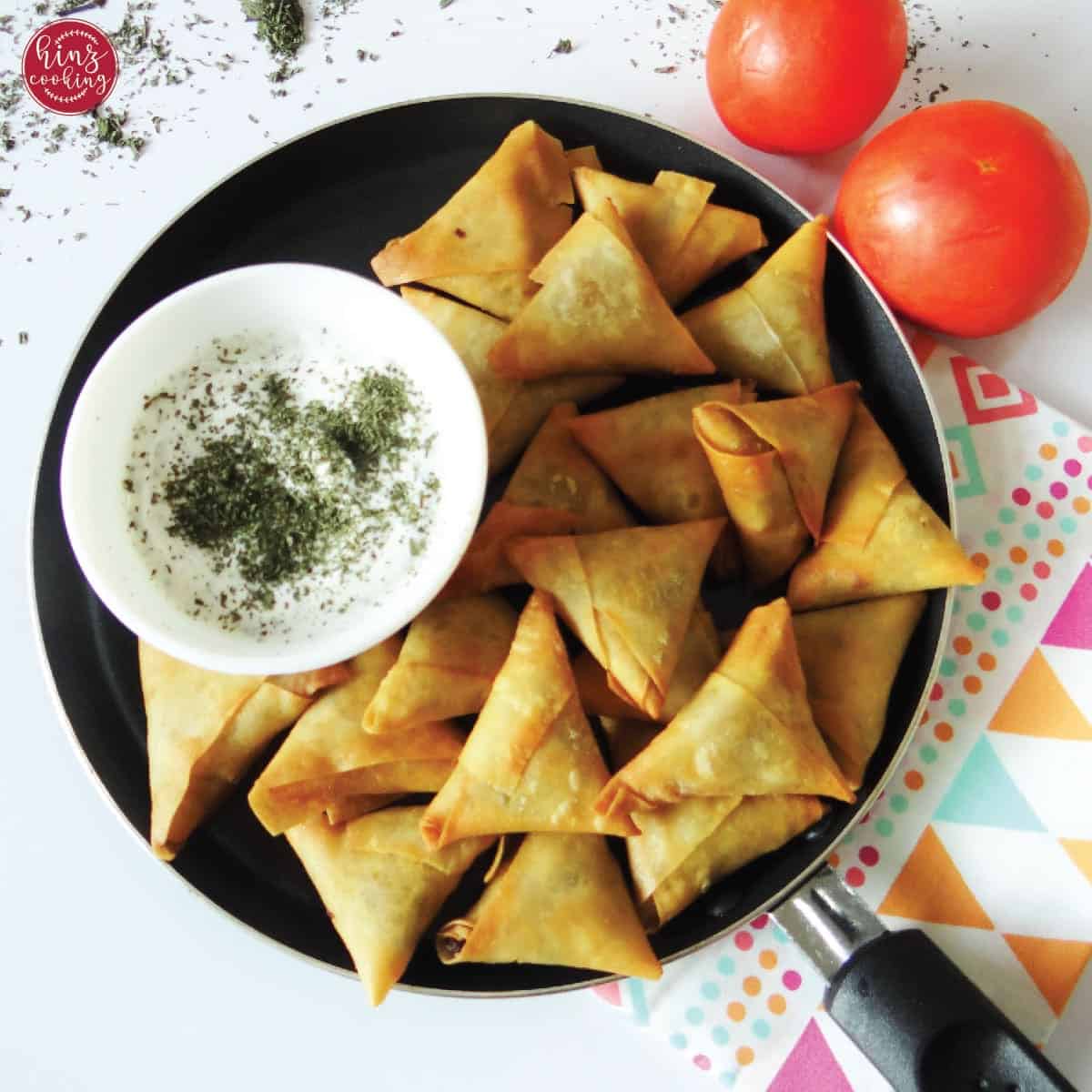
- Plain yogurt with a pinch of dried mint — lighter alternative to chutney, preferred in Levantine-style serving.
For a full snack spread:
- Keema Samosa — serve both versions together for a mixed samosa platter
- Indian Samosa — Potato Version — the third samosa type for a complete trio
- Chana Chaat — spiced chickpea chaat alongside the samosa platter for a complete Ramadan iftar spread
- Roasted Chickpeas (Air Fryer) — lighter snack to balance the fried items
How To Store & Freeze Cheese Samosa
Freezing uncooked samosas (best method):
Method 1 — tray freeze: Line a tray with parchment paper. Place filled raw samosas in a single layer without touching. Freeze for 1–2 hours until solid. Transfer to a ziplock freezer bag. They will not stick together. Keeps for up to 1 month without preservatives.
Method 2 — flour method: Place a layer of flour at the bottom of an airtight container. Add a layer of samosas. Sprinkle flour between each layer. Repeat. Freeze for 1 hour then shake gently to separate. This method works well when you do not have tray space.
To cook from frozen: Deep fry directly from frozen at 170°C / 340°F (slightly lower than fresh) for 7–8 minutes. Air fry from frozen at 190°C for 14–16 minutes, flipping halfway. Do not thaw first.
Storing cooked samosas: Airtight container in the refrigerator for up to 5 days. To re-crisp: air fryer at 180°C for 4–5 minutes, or shallow fry for 30 seconds per side. Avoid microwaving — the patti becomes soft and chewy.
Frequently Asked Questions
Cheese samosa is a deep-fried South Asian snack made by filling thin samosa patti pastry sheets with a seasoned cheese mixture — typically spiced paneer, mozzarella, or fresh white cheese — folding into a triangular shape, and deep frying until crispy golden-brown. It is popular as a street food, party snack, and Ramadan iftar dish across Pakistan, India, and the Arab world.
Sambousek (also spelled Samboosa, Sambusa, Sambousak) is the Arabic Gulf version of cheese samosa. It is most commonly filled with Akkawi white cheese or mozzarella and served as a Ramadan iftar snack or party appetiser across UAE, Saudi Arabia, Kuwait, Bahrain, and the wider Levant. The technique is the same as South Asian samosa — the filling is simpler and less spiced.
For the Pakistani spiced version: paneer (Indian cottage cheese) gives the most authentic flavor. For Western audiences and the Sambousek version: low-moisture mozzarella gives the best gooey melt without releasing excess water. Feta works beautifully with fresh herbs for a Levantine style. Cheddar gives a stronger, bolder flavor. See the full cheese guide at the top of this post.
Besan is chickpea flour. Roasting it briefly in a dry pan (1–2 minutes until light golden) removes its raw bitter taste and gives it a mild nutty flavor. In cheese samosa filling, it binds the spiced cheese mixture and absorbs any moisture that the cheese releases during frying — which is what keeps the patti crispy rather than soggy. Do not skip it.
The flour paste seal was either too thin or not held firmly enough. Make the paste thicker (more flour, less water) and press each sealed edge for a full 5 seconds after applying. Also check that no filling is touching the sealed edges — cheese touching the seal prevents bonding.
Yes — spring roll pastry sheets are the closest widely available substitute and are sold in most Asian supermarkets and many mainstream supermarkets. Wonton wrappers are slightly thicker but workable. Avoid filo pastry — it is too delicate for this folding method.
Yes. Preheat to 200°C / 390°F for 3–4 minutes. Spray generously with oil on all sides. Air fry 10 minutes, flip, spray again, air fry 8–10 more minutes until deep golden. The result is very close to deep fried. For frozen uncooked samosas: air fry at 190°C for 14–16 minutes from frozen, flipping halfway.
Mini samosa is made with slim, narrow samosa patti (half the width of regular sheets) and uses a smaller quantity of filling — about half a teaspoon. The folding technique is identical to regular samosa. Mini samosas are popular for parties and Ramadan platters because they are bite-sized and easy to eat without making a mess.
Approximately 110–130 calories per samosa when deep fried, depending on the cheese used and the amount of oil absorbed. Air fryer cheese samosa is approximately 80–95 calories per piece.
Yes. Preheat oven to 220°C / 430°F. Brush frozen samosas generously with oil on all sides. Place on a lined baking tray. Bake 18 minutes, flip, brush with more oil, bake 12–14 more minutes until golden-brown. Increase baking time by 5–7 minutes compared to fresh samosas.
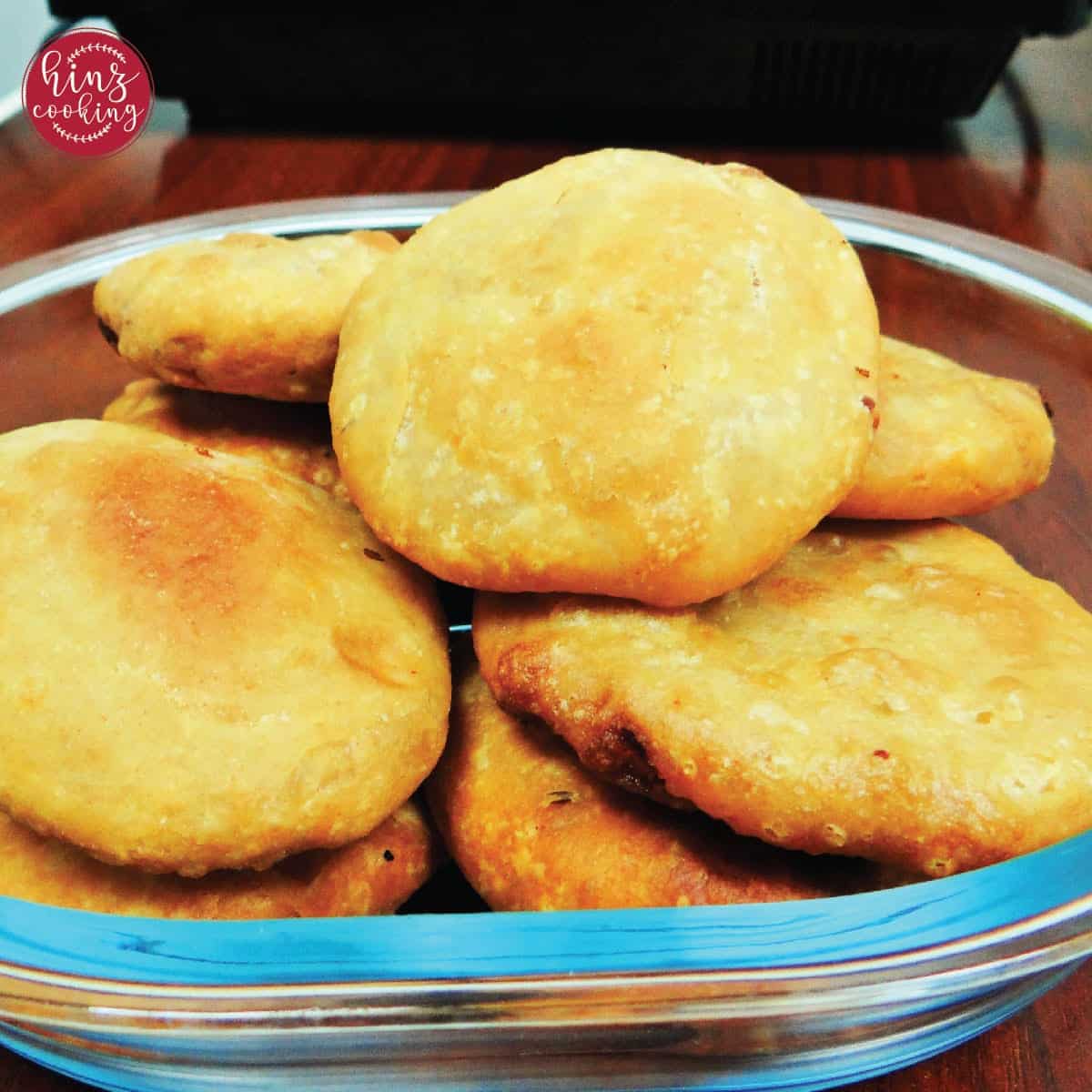
🥣 Which cheese do you like to add in cheese samosa?
⭐ Rate this recipe below
💬 Drop your questions in the comments
📲 Follow along on Instagram for more recipes.
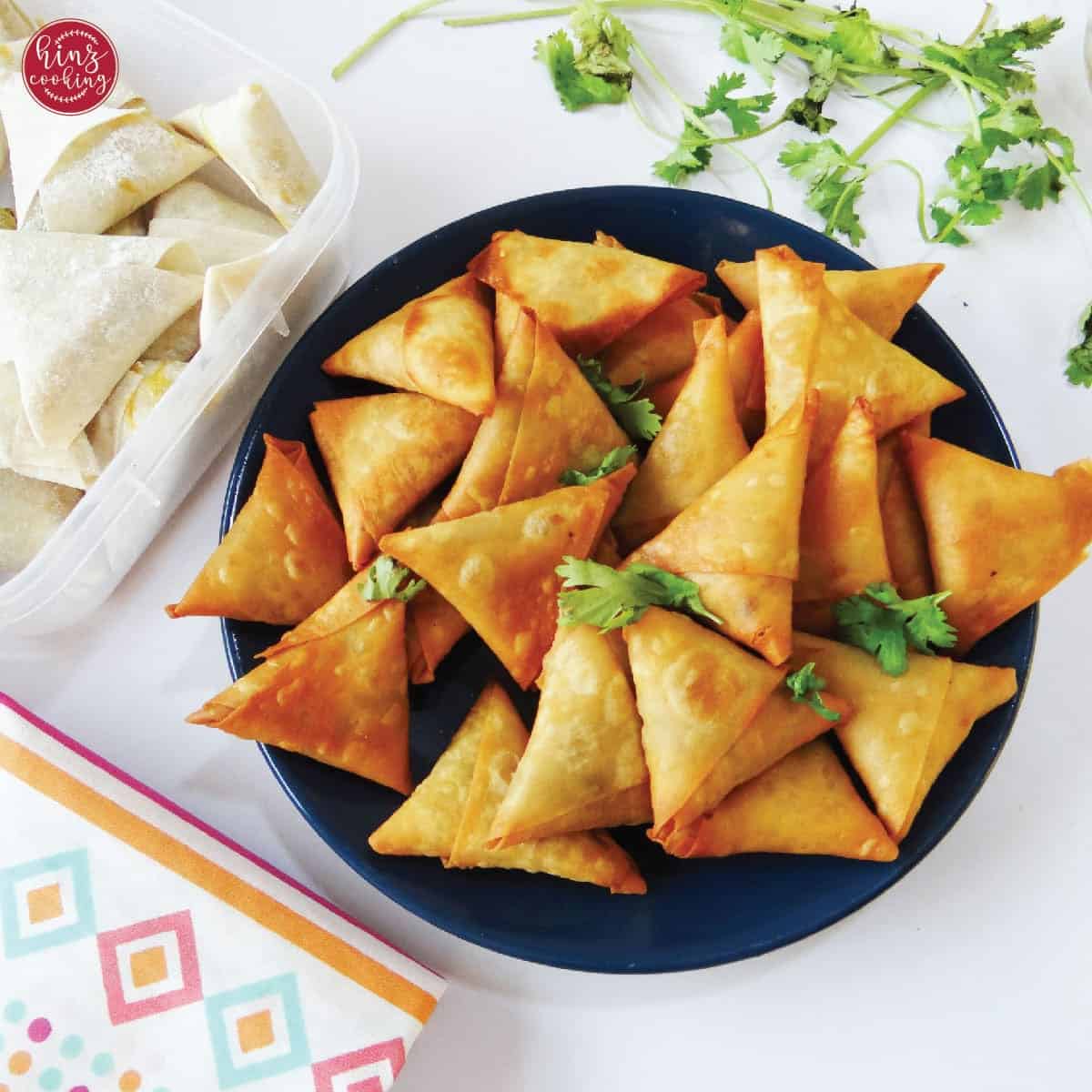
Cheese Samosa (Sambousek)
Ingredients
- 15 Samosa Sheet Sambosa leaves, Philo sheets
- 1 cup Cottage cheese
- 3 teaspoon Oil
- ½ teaspoon Cumin seeds
- 1 tablespoon Onion chopped
- 1 teaspoon Green chilies sliced
- ½ teaspoon Salt
- 1 teaspoon Red Chili Powder
- ½ teaspoon Black Pepper
- Oil - For deep frying
Instructions
Prepare Cheese Stuffing
- In a pan, pour oil and heat it up.
- Add cumin seed and sliced green chilies. Let it pop for few seconds.
- Now add freshly chopped onions and saute for few minutes until it starts to change color.
- Season with salt, red chili powder and black peppers.
- Add roasted gram flour (besan).
- Give a good mix to all the ingredients.
- Add shredded cottage cheese.
- Mix well.
- Add freshly chopped green coriander and give it good mix.
- Cool it down as it’s ready for stuffing.
Prepare Flour Paste:
- In a bowl, add wheat flour and water. Mix it well to make a thick paste.
- Use this paste to seal the edges of the samosa.
Samosa Folding
- Take samosa sheet and fold the samosa in zigzag direction. Note the steps in post or in video.

- Apply flour paste at the end of samosa wrap to seal the edges.
- Prepare all samosas.

Deep Frying
- Deep fry the cheese samosa in preheated canola oil at medium temperature until it forms a golden brown color. Properly drain the oil while taking it out and keep it on wire or absorbent paper. Never cover right after frying.
Video
Notes
- For super crispy and light samosas, opt for thin samosa sheets, as they fry up perfectly crunchy.
- A filling made of sautéed cheese mixed with herbs and spices adds a delicious flavor.
- Always use fresh samosa sheets; if they’re torn or too brittle, it’s best to avoid them.
- Store-bought sheets work fine, but if you’re making your own, ensure they’re rolled out thin.
- When frying, any vegetable oil like canola or sunflower will do the trick. Just remember not to crank the heat too high, or your samosas will darken and become soggy quickly.
- Keep an eye on the oil temperature while frying, and make sure not to overcrowd the pan to achieve that perfect crispiness.
Hinz
The crispiest cheese samosa recipe prepared with minimal spices is best to serve at lunch or dinner as a snack or an appetizer. Give it a try!
Osama
Delicious and tasty try it everyone cheese samosa