
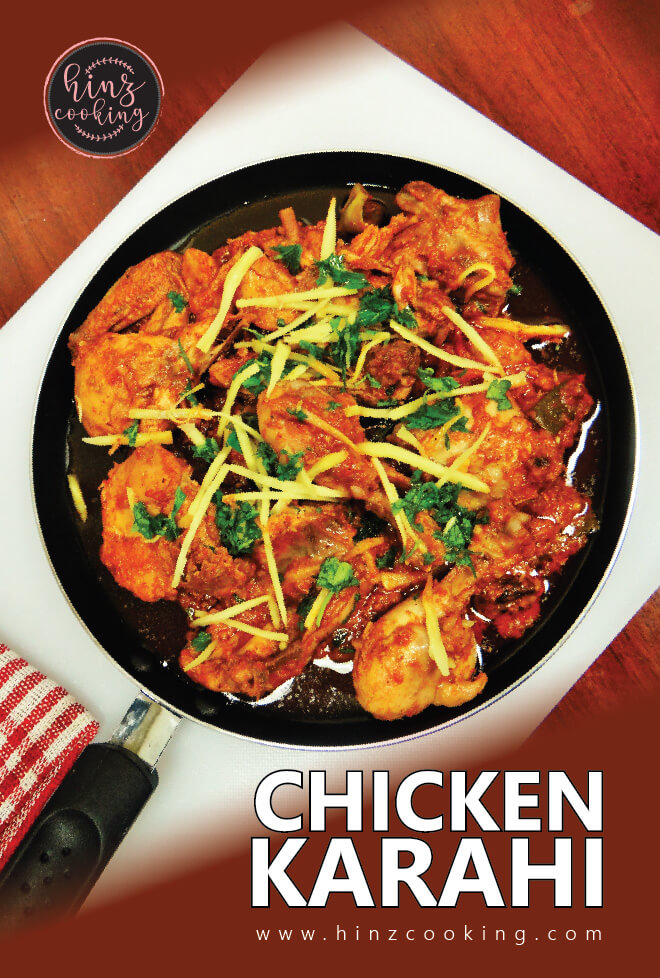
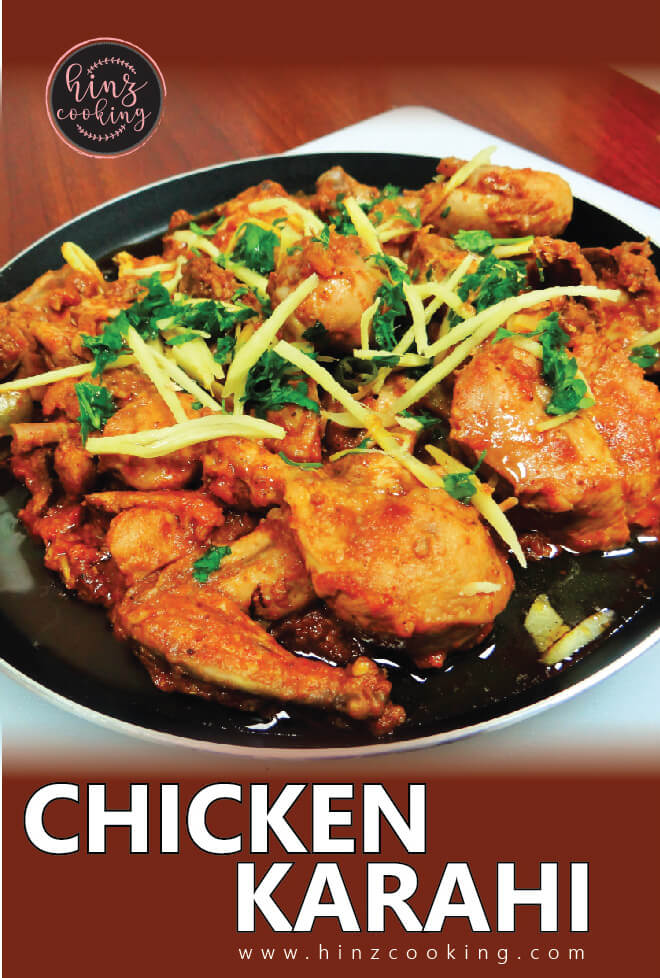
Chicken karahi is Pakistan's most beloved chicken curry — and the one dish every Pakistani home cook is judged by. Made in a wok (karahi) over high heat, it's built on fresh tomatoes, green chilies, and ginger rather than the cream and cashew base of butter chicken. The result is brighter, tangier, and more intensely flavored than any curry you'll find at a Western restaurant.
I first learned to make it properly from a street chef in the old Anarkali food street in Lahore — one of Pakistan's most famous food destinations. He showed me something most home recipes skip: the bhuna step, where the masala is cooked on screaming-high heat until the oil visibly separates from the tomatoes. That moment of separation is when the raw spice smell disappears, and the curry develops its deep, complex character. Skip it and your karahi tastes like a stew. Do it right and it tastes like the real thing.
This is that recipe. Tested in my Dubai kitchen over 8 years, served to my family hundreds of times.
Watch - How Did I Make Chicken Karahi
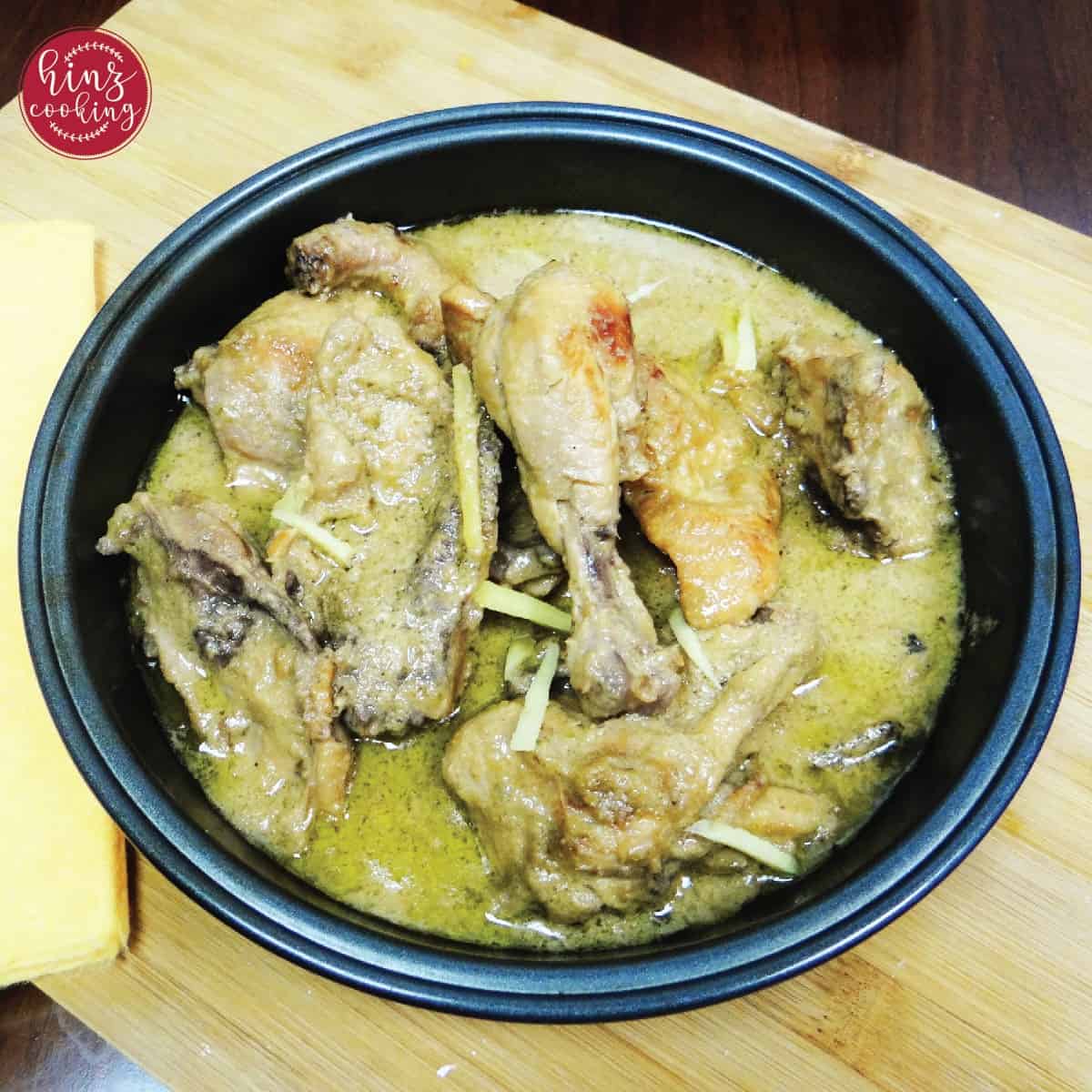
For more karahi variations, try my Restaurant-Style Chicken White Karahi — a creamy no-tomato version — and the smoky Peshawari Charsi Karahi. For all my Pakistani recipes, browse the full collection.
Jump to:
What is Chicken Karahi?
Chicken karahi — also called kadai chicken in Indian restaurants — is a Pakistani and North Indian chicken curry cooked and served in a karahi, the thick, wok-shaped iron pan it's named after. The defining features are fresh tomatoes as the base (no onion in many authentic versions), green chilies for heat, bone-in chicken for flavour, and the bhuna technique — high-heat dry roasting of the masala until the oil separates — that gives it its signature intensity.
Unlike butter chicken or tikka masala, which are cream-based and mild, karahi is tomato-forward, tangy, and cooked on high heat throughout. The texture is semi-dry — a thick, clinging masala rather than a pourable gravy. You scoop it with naan rather than pour it over rice.
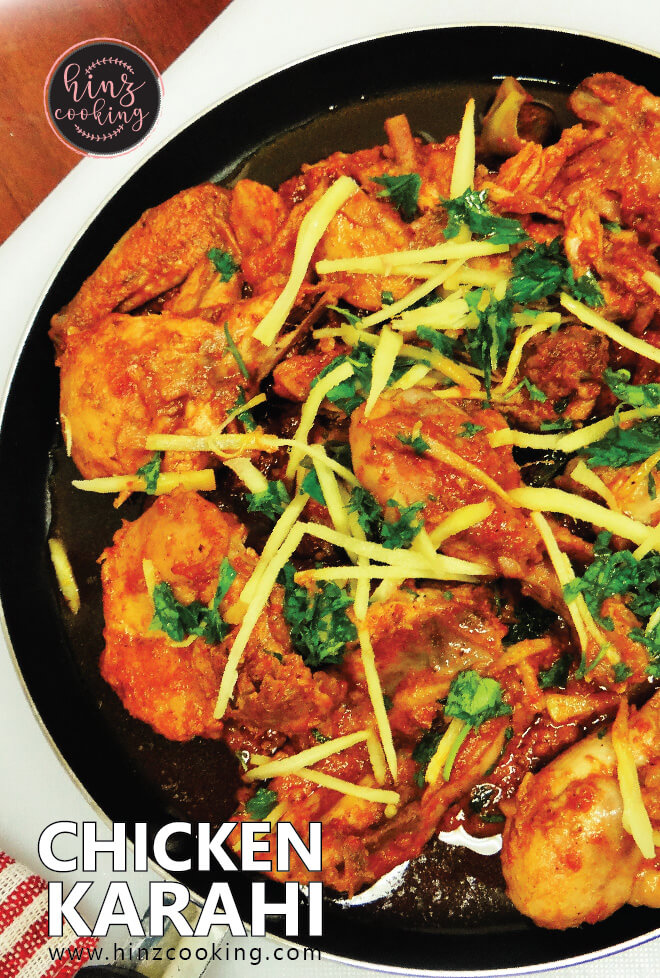
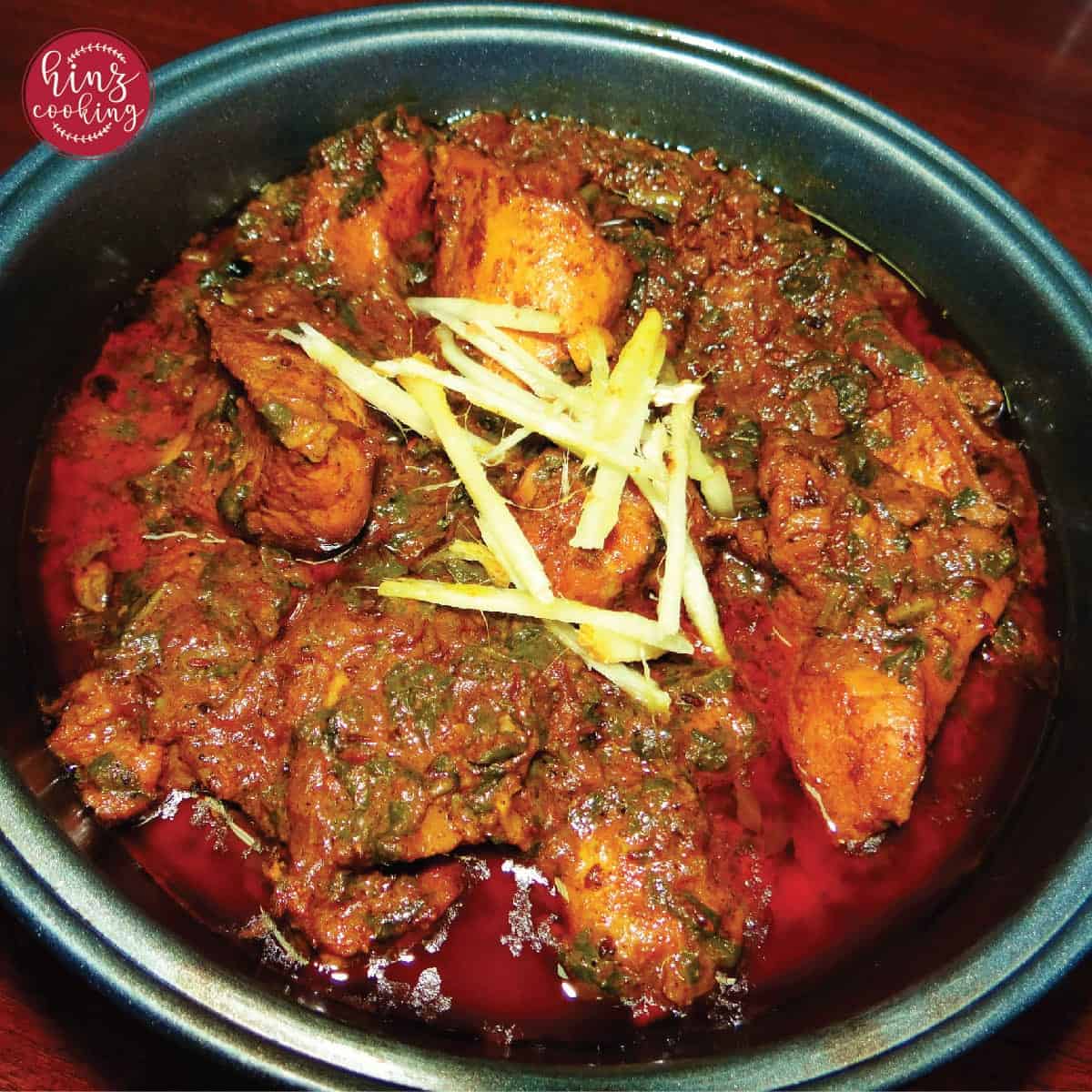
How does chicken karahi taste? Tangy and bright from the tomatoes, intensely aromatic from the ginger and whole spices, with a slight char on the chicken from the high-heat cooking. The green chilies add heat that builds gradually rather than hitting immediately. The ghee finish at the end adds a rich, nutty warmth that rounds everything out. If you've had karahi at a good Pakistani restaurant, this tastes exactly like that — if not better, because it's fresh off the heat.
Karahi vs Butter Chicken — what's the difference? Butter chicken has a cream and tomato puree base — rich, mild, and slightly sweet. Chicken karahi has fresh tomatoes and no cream — tangier, spicier, and more intensely flavoured. Karahi is cooked in a wok on high heat; butter chicken is simmered slowly. They're both Pakistani and Indian classics but completely different eating experiences.
Every region of Pakistan has its own karahi style. Lahori karahi — this recipe — uses yogurt for slight creaminess and plenty of whole spices. Peshawari Charsi Karahi uses almost no spices except salt and green chilies — pure, clean flavour. Karachi's Burns Road karahi is rich and oily in the traditional style. All three are worth knowing.
Ingredients
- Chicken (800g, bone-in): Bone-in is essential for authentic karahi — the bones release natural collagen into the curry as it cooks, giving the masala its characteristic body and richness. Boneless works for a quicker weeknight version but the flavour is noticeably lighter.
- Oil (1 tbsp) + Ghee (2 tsp): Cook in oil for the main cooking, then finish with ghee in the final high-heat step. The ghee tarka at the end is a Lahori technique — it gives the curry that last burst of aroma you smell on every food street.
- Whole garam masala: Black cardamom, green cardamom, cloves, cinnamon, black pepper — bloomed in hot oil for 30 seconds before anything else goes in. This step releases essential oils into the cooking fat and builds the flavour foundation of the whole dish.
- Ginger-garlic paste (2 tsp): Always fresh — not jarred. Freshly blended paste has a sharper, more aromatic quality that jarred paste can't replicate. For homemade spice blends and pastes, visit my masala guide.
- Tomatoes (1 cup, peeled and cubed): Fresh peeled tomatoes only — not tinned, not puree. Peel them after 5 minutes in the pot when the skin loosens. Skin left in the curry creates stringy texture.
- Yogurt (1 tbsp): Just one tablespoon — this is Lahori style where yogurt is minimal. It adds slight tang and helps bind the masala. Don't add more or the karahi becomes korma.
- Green chilies (4): Thick jalapeno-style chilies (moti hari mirch) are the authentic choice — they give heat and aroma without the sharpness of thin chilies. Use regular green chilies if you can't find them; just adjust the quantity.
- Red chili powder (1 tsp), Salt (1.5 tsp), Garam masala powder (1 tsp): Added at the bhuna stage — after the tomatoes have cooked down, not before.
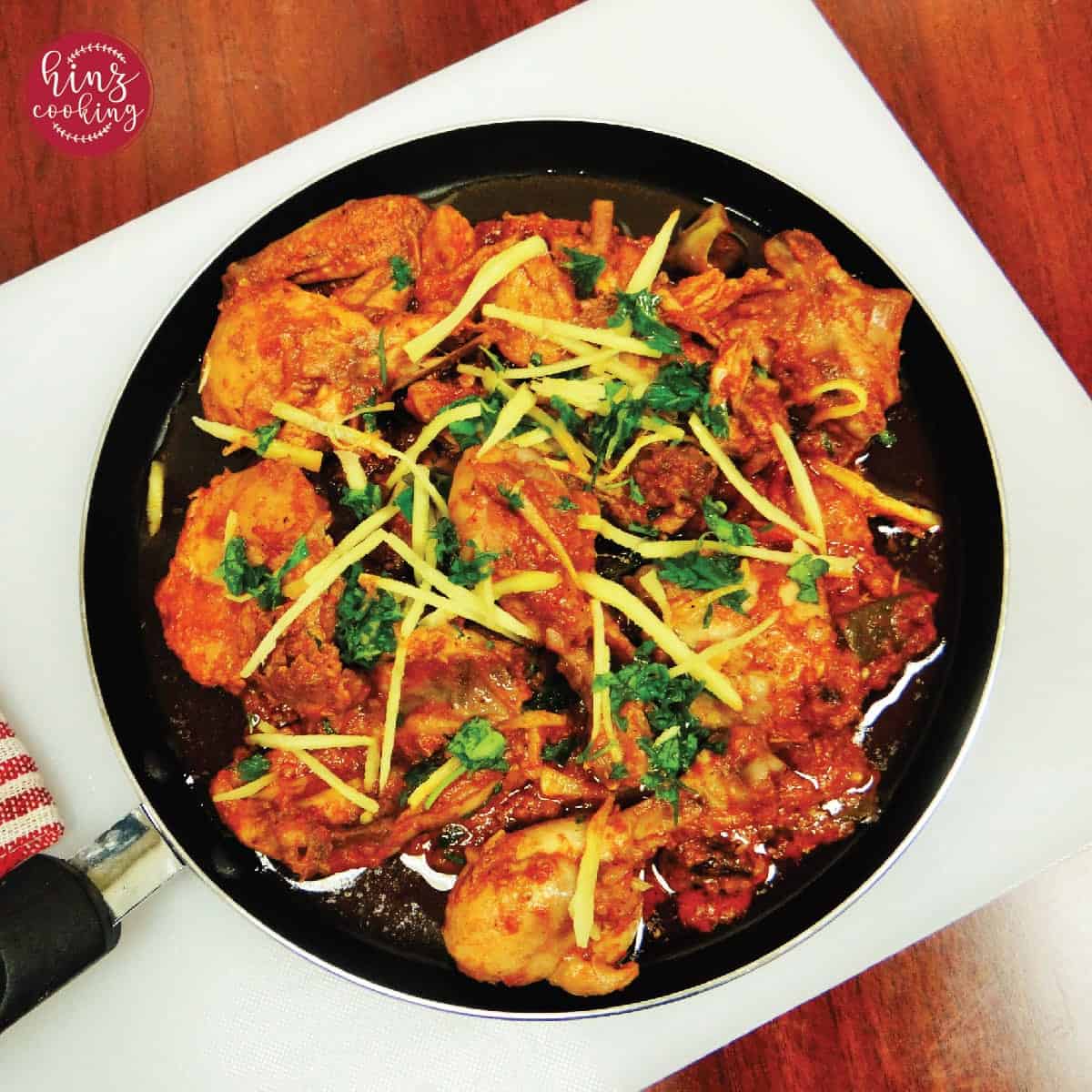
- Garnish: Julienned ginger and fresh coriander — these aren't optional decoration. The raw ginger on top adds a fresh sharpness that balances the richness of the cooked masala.
How to Make Chicken Karahi
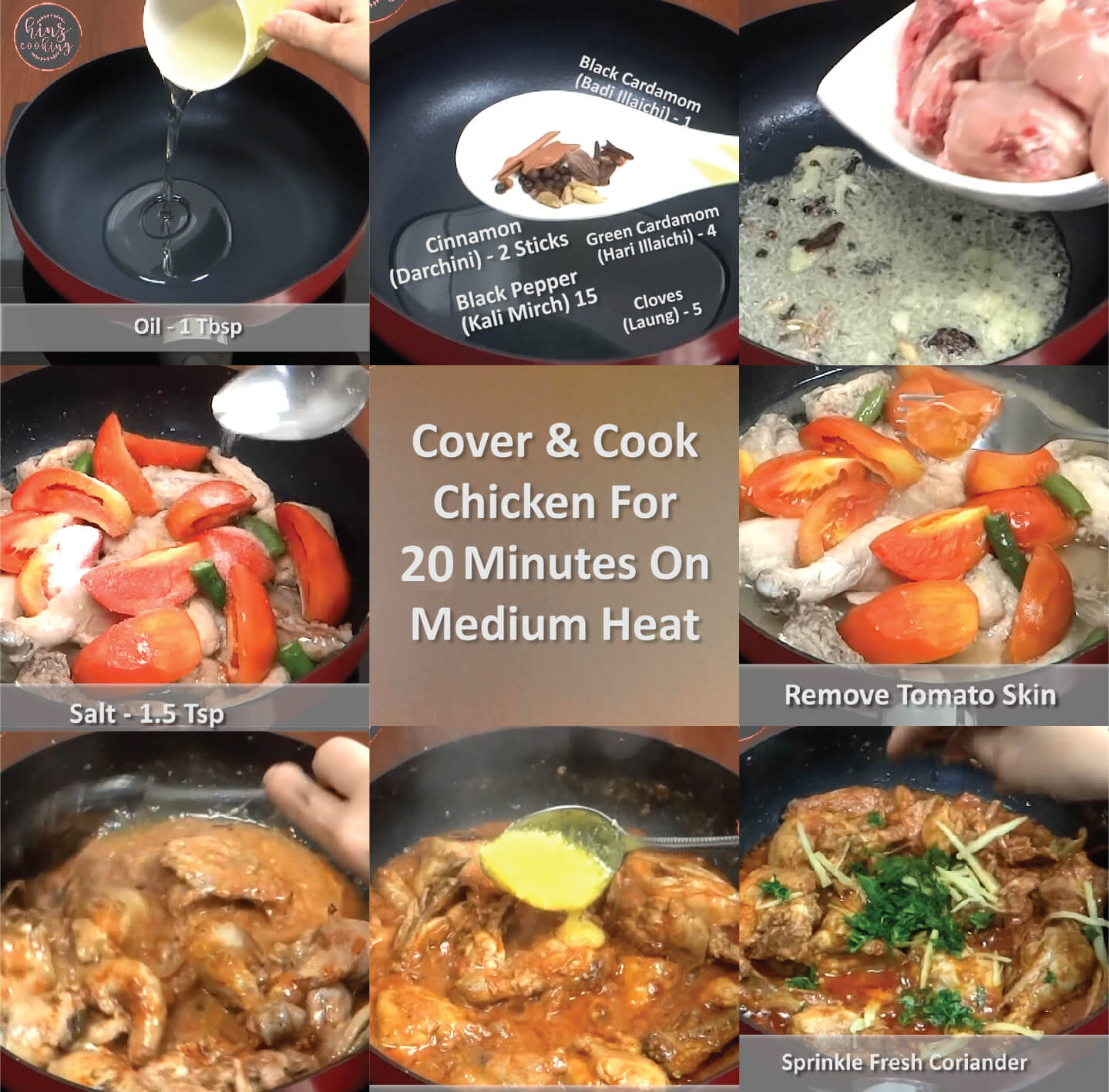
Step 1 — Bloom the whole spices Warm the karahi or heavy pan over medium heat. Add oil. Once hot, add the whole garam masala — black cardamom, green cardamom, cloves, cinnamon sticks, black peppercorns. Sauté for 30 seconds until you hear them pop and smell the spices releasing. This step is the flavour foundation.
Step 2 — Cook the ginger-garlic paste Add fresh ginger-garlic paste and cook on medium heat, stirring constantly, until it changes from pale yellow to golden and the raw smell disappears — about 2 minutes. Don't rush this step.
Step 3 — Sear the chicken Add bone-in chicken pieces and turn up to high heat. Cook for 3–4 minutes, turning, until the chicken begins to change colour and the outside shows a light sear. Add a small splash of water if the spices start to stick.
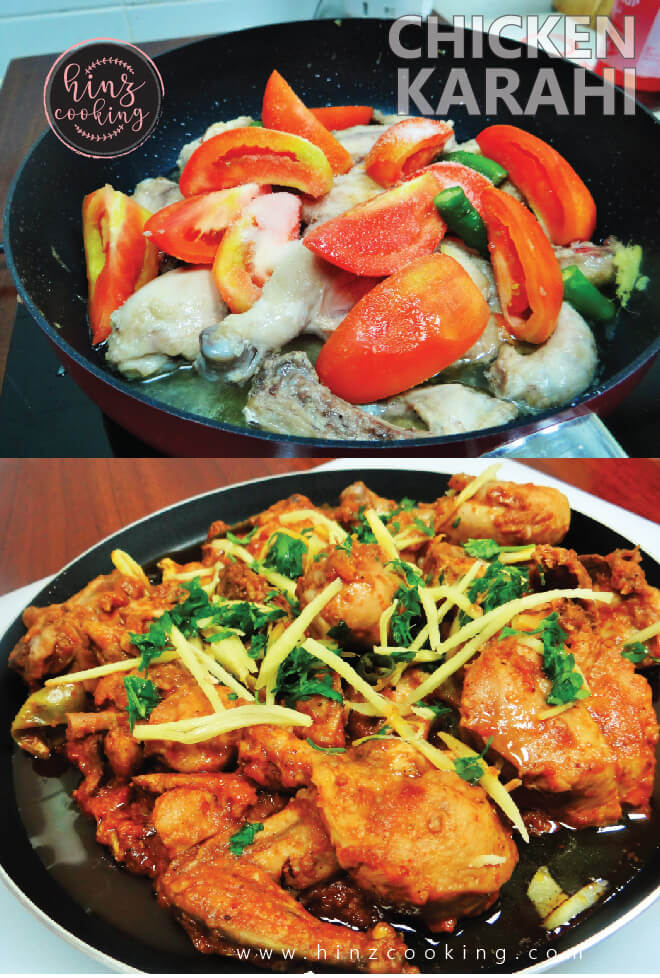
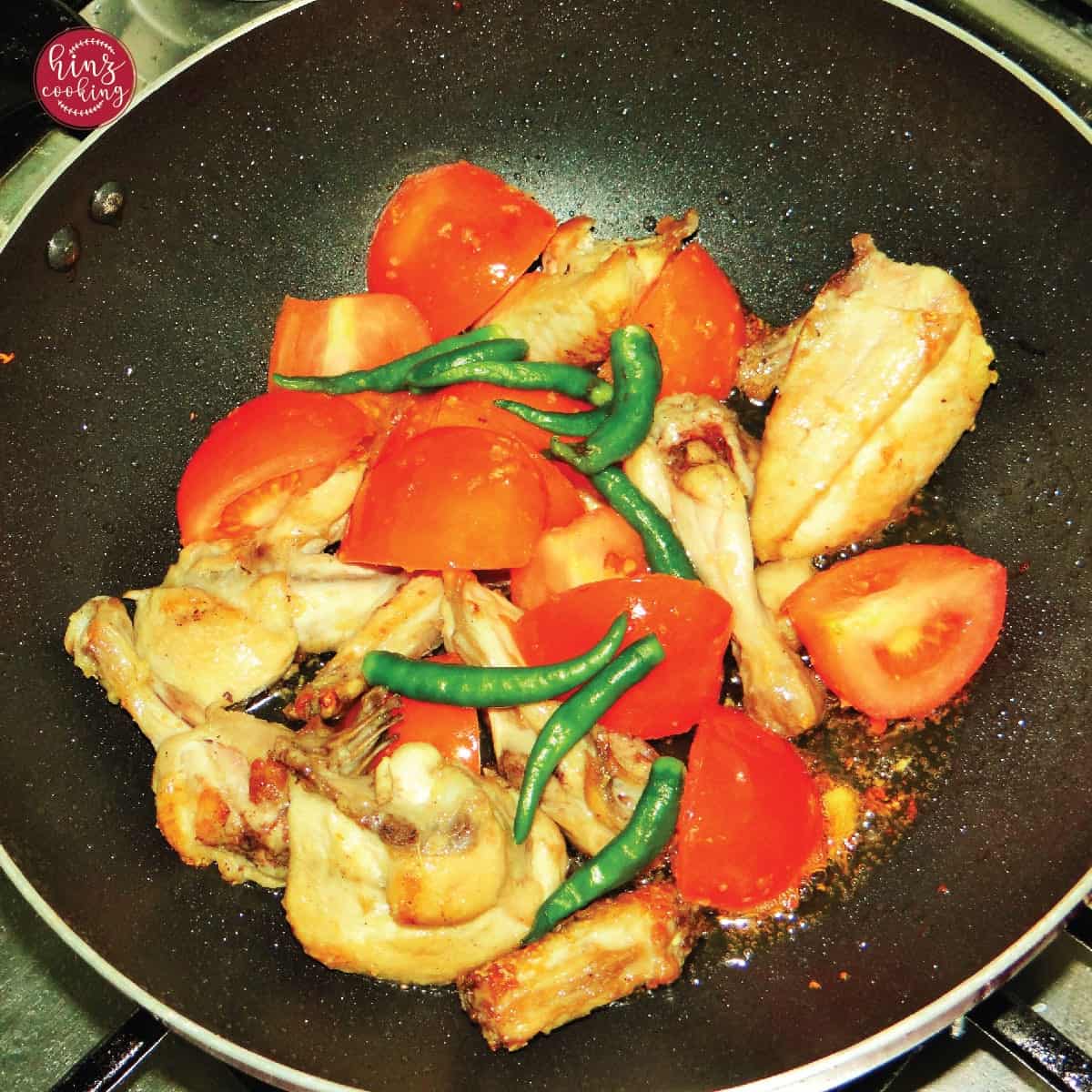
Step 4 — Add tomatoes and green chilies Add the peeled tomato cubes and whole green chilies. Stir through the chicken. Cover and cook on medium-low heat for 10 minutes. After 5 minutes, the tomato skins will be loose — remove them with a spoon if you didn't peel beforehand.
Step 5 — Mash and continue cooking Use a wooden spoon to press the softened tomatoes into the chicken, breaking them down into a rough paste. Cover and cook for another 10 minutes on medium-low.
Step 6 — The bhuna step (most important)
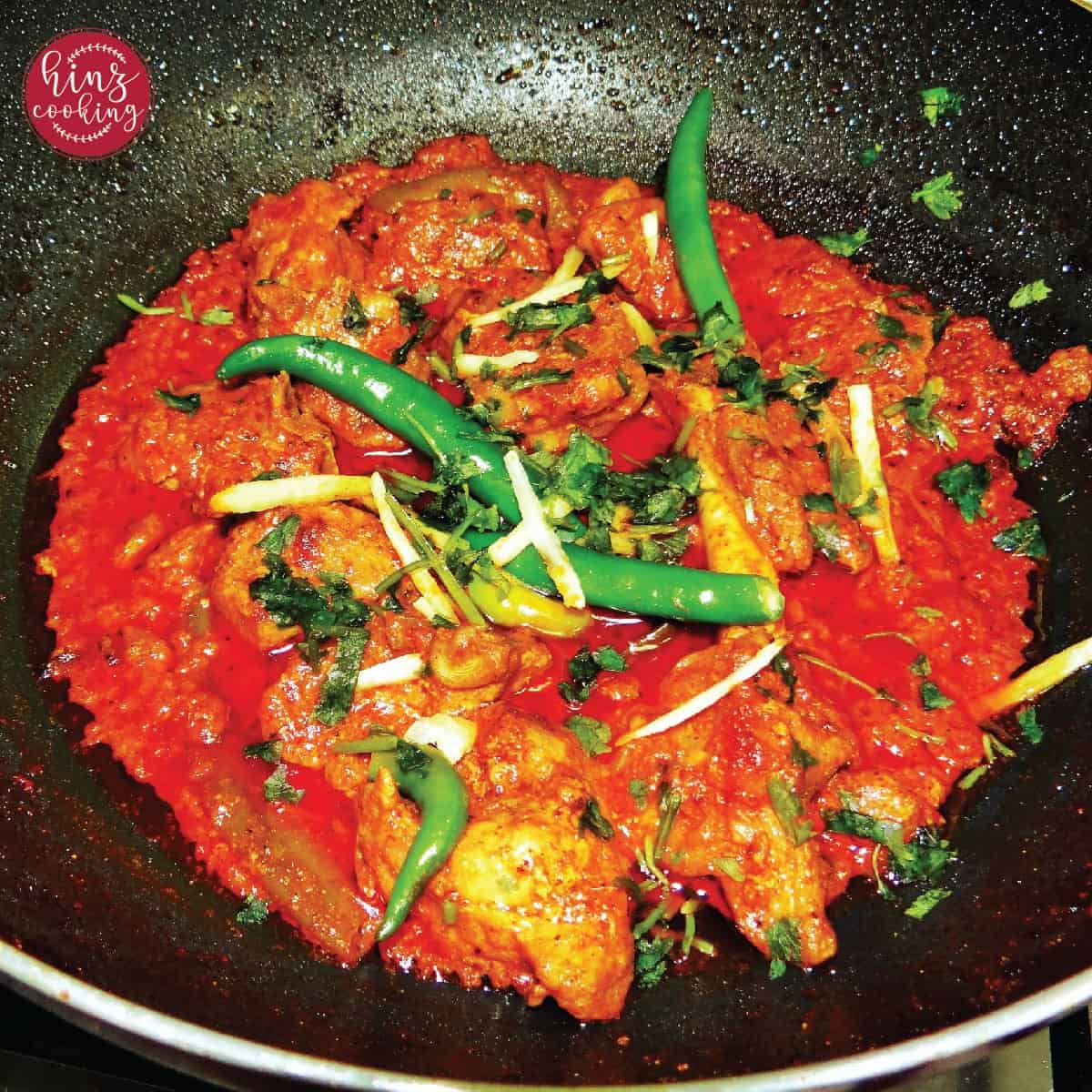
💡 Hina's Note — The Bhuna Technique: After 20 minutes of cooking, uncover the karahi and turn up to high heat. Add salt, red chili powder, and garam masala powder. Add the yogurt. Now cook on high heat, stirring constantly, until you see the oil begin to separate and pool at the edges of the masala — this takes 3–5 minutes. This is bhuna — the dry-roasting of the masala on high heat until all moisture evaporates and the oil releases. The moment you see that oil separation, the raw spice flavour is gone and the masala is properly cooked. This is the step that separates street-style karahi from home-cooking karahi. Learn more about bhuna and other South Asian cooking techniques in my complete guide.
Step 7 — Ghee finish Once the oil has separated and the masala is dry and clinging to the chicken, add 2 teaspoons of ghee and stir through on high heat for 60 seconds. You'll see the masala darken slightly and smell a rich, nutty aroma. This is the Lahori tarka finish.
Step 8 — Garnish and serve immediately Top generously with julienned ginger and fresh coriander. Serve immediately in the karahi — this dish waits for nobody. Serve with roghni naan or garlic naan to scoop up every drop of masala.
How to Make the Best Lahori Chicken Karahi — Tested Tips
- The bhuna step cannot be rushed. Oil separation is your visual cue that the masala is properly cooked. If you cover the pot during this step, the steam prevents the oil from releasing. Keep the lid off and the heat high.
- Bone-in chicken only for authentic flavour. The bones add natural body to the masala during cooking. Use breast, thigh, and leg pieces — all on the bone.
- Peel your tomatoes. Unpeeled tomato skin creates a stringy, unpleasant texture in the finished curry. After 5 minutes in the pot the skin loosens and lifts away cleanly with a spoon.
- Fresh ginger-garlic paste, always. Not jarred. Blend equal amounts of fresh ginger and garlic in a small blender — takes 2 minutes and makes a significant difference. For homemade Pakistani spice blends, see my masala guide.
- Use a cast iron karahi or heavy pan. The iron retains heat evenly at high temperatures — essential for the bhuna step. Thin non-stick pans lose heat when you turn up high and the masala steams instead of roasts.
- Add ghee at the very end. Not at the beginning. The ghee finish over high heat — tarka — is what gives Lahori karahi its characteristic aroma.
- Avoid overcooking after the bhuna. Once the oil separates, you have 3–4 minutes before the masala starts to burn. Garnish and serve immediately.
Flavor Variations
- Boneless Version: Quick-cooking boneless chicken works well for weeknight dinners.
- Creamy Twist: Add a spoon of fresh cream at the end for a slightly creamy texture.
- Extra Spicy: Increase green chilies or add a pinch of red chili powder.
- Vegetable Lahori Karahi: Add capsicum, peas, or bell peppers for a colorful, nutritious version.
- Restaurant-Style Finish: Fry the cooked karahi briefly on high heat with extra ghee for a slightly crisp, golden finish.
- No-Tomato Version: If you prefer karahi without tomatoes — or simply want a creamier, white sauce karahi — my Chicken White Karahi uses yogurt and cream as the base instead. It's the other great karahi style and just as authentic.
Serving
Chicken karahi is a complete meal with naan. Keep the sides simple so the karahi stays the centrepiece. Serve it in the pan it was cooked in — that's how it arrives at every Lahori food street stall.
For a full Pakistani dinner, pair chicken karahi with chicken biryani — this is the classic combination at Pakistani family gatherings (dawat). The karahi and biryani together feed a crowd and complement each other perfectly.
- Breads: Serve with roghni naan, garlic naan, chapati, or kulcha to scoop up the rich gravy.
- Rice: Pairs perfectly with Zeera rice, basmati rice, or vegetable pulao.
- Raita & Yogurt: A side of coriander mint raita, veg raita or boondi raita balances the spices.
- Salad & Pickles: Fresh onions, tomatoes, cucumbers, and achar (pickle) enhance the meal.
- Beverages: Complement with mint lemonade, chilled lassi, soft drinks or Karak Tea or Kashmiri Pink Tea for a full Lahori street-food experience.
- Sweets: Phirni/Kheer, Gajrela or Gajar ka Halwa
FAQS
Lahori Chicken Karahi is a classic Pakistani curry cooked in a wok-style pan (karahi) with tomatoes, green chilies, aromatic spices, and bone-in chicken. It’s famous for its rich, spicy, and flavorful gravy.
They are the same dish — karahi is the Urdu/Pakistani name, kadai is the Hindi/Indian name for the same wok-style pan. Both refer to chicken curry cooked in an iron wok on high heat with tomatoes and green chilies. The spice balance and technique vary slightly between Pakistani karahi (more ginger-forward, yogurt added) and Indian kadai chicken (often uses capsicum and onion), but the cooking vessel and method are identical.
Yes, boneless chicken works well and cooks faster. However, bone-in chicken provides extra flavor and richness to the curry.
It’s moderately spicy, but you can adjust the heat by changing the number or type of green chilies or adding a pinch of red chili powder.
Yes! Add a spoon of fresh cream at the end for a mild, creamy twist while keeping the authentic Lahori flavor.
Absolutely. The curry can be made a day ahead. Reheat gently on medium heat and add a little water or ghee to refresh the texture.
Preferably it's been cooked in an iron karahi (wok). But you can also try it in a deep frying pan or a big skillet. Try to avoid aluminum or steel pans as it's been cooked on high heat.
The best and most recommended chicken pieces for karahi are with bone. You can also make with boneless but the actual and authentic flavor comes up with bones. You can use the golden pieces of chicken like breast, thigh and leg to make karahi.
Special jalapeno-style thick green chilies are used for chicken karahi. Locally famous as moti hari mirch. I didn't find in my local grocery store so used regular green chili.
Yes — this is called White Karahi or Doodhi Karahi. Instead of a tomato base, white karahi uses yogurt and cream, giving it a completely different but equally authentic flavour profile. My Chicken White Karahi recipe is a restaurant-style version you can make at home.
Yes. Use the Sauté function for steps 1–3 (blooming spices, cooking ginger-garlic paste, searing chicken). Add tomatoes and chilies, then seal and pressure cook for 12 minutes. Release pressure manually, then return to Sauté mode for the bhuna step — cook uncovered on high until the oil separates, about 5 minutes. Finish with ghee. The bhuna step in the Instant Pot is shorter but still essential.
Related Ideas
🥣 Love this Lahori Chicken Karahi recipe?
⭐ Rate this recipe below
💬 Drop your questions in the comments
📲 Follow along on Instagram for more recipes.
Chicken Karahi Recipe (Authentic Lahori Street Style)
Equipment
- Wok
Ingredients
- 800 g Chicken
- 1 tablespoon Oil
- 2 teaspoon Ghee
- 1 Black Cardamom (badi Illaichi)
- 4 Green Cardamom (hari illaichi)
- 5 Cloves (laung)
- 2 sticks Cinnamon (darchini)
- 15 Black pepper corns (kali mirch)
- 2 teaspoon Ginger Garlic Paste
- 1 teaspoon Red Chili Powder
- 1.5 teaspoon Salt
- 1 teaspoon Garam Masala Powder
- 1 cup Tomato Cubes
- 1 tablespoon Yogurt
- 4 Green Chilies
- Julianne Ginger & Fresh Coriander For Garnishing
Instructions
- Warm a pan or karahi over medium heat and add oil.
- Add whole garam masala (cardamom, cloves, cinnamon, black pepper) and sauté for a few seconds until fragrant.
- Add fresh ginger-garlic paste and cook until it changes color and releases its aroma.
- Add chicken pieces and cook on high heat until they slightly change color. Pour a little water to prevent sticking.
- Mix in tomato cubes and green chilies. Cover and cook on medium-low heat for 10 minutes.Tip: If you haven’t peeled the tomatoes beforehand, you can remove the skin after 5 minutes.
- Use a spoon to mash the tomatoes into the chicken, creating a smooth curry base. Cover again and cook for another 10 minutes on medium-low heat.
- After 20 minutes, check the chicken. Evaporate excess water if needed, but avoid making it too dry.
- Mix in salt, red chili powder, and garam masala powder. Add yogurt and cook on high heat for a few minutes until the curry starts separating from the oil.
- Add 2 teaspoon ghee or butter and stir briefly for a rich, aromatic finish.
- Top with julienned ginger and fresh coriander. Serve hot with naan, roti, or kulcha for an authentic Lahori-style meal.
Video
Notes
- Use Bone-In Chicken: Adds natural broth and deeper flavor to the curry.
- Cook on Medium-High Heat: Helps chicken sear while keeping the gravy slightly thick and flavorful.
- Fresh Paste is Key: Always use fresh ginger, garlic, and onion paste for authentic aroma.
- Peel Tomatoes for Smooth Gravy: Removing tomato skin gives a silky texture to the curry.
- Adjust Spice Levels: Use thin green chilies for milder heat or thick jalapenos for spicier karahi.
- Add Ghee at the End: Enhances aroma and gives the final touch of richness.
- Avoid Overcooking: Keep some moisture in the curry; it shouldn’t be dry.
Hinz
It's a simple and tasty 'chicken karahi' for foodies. Street style recipe that will help to add flavor on your table. Must try <3